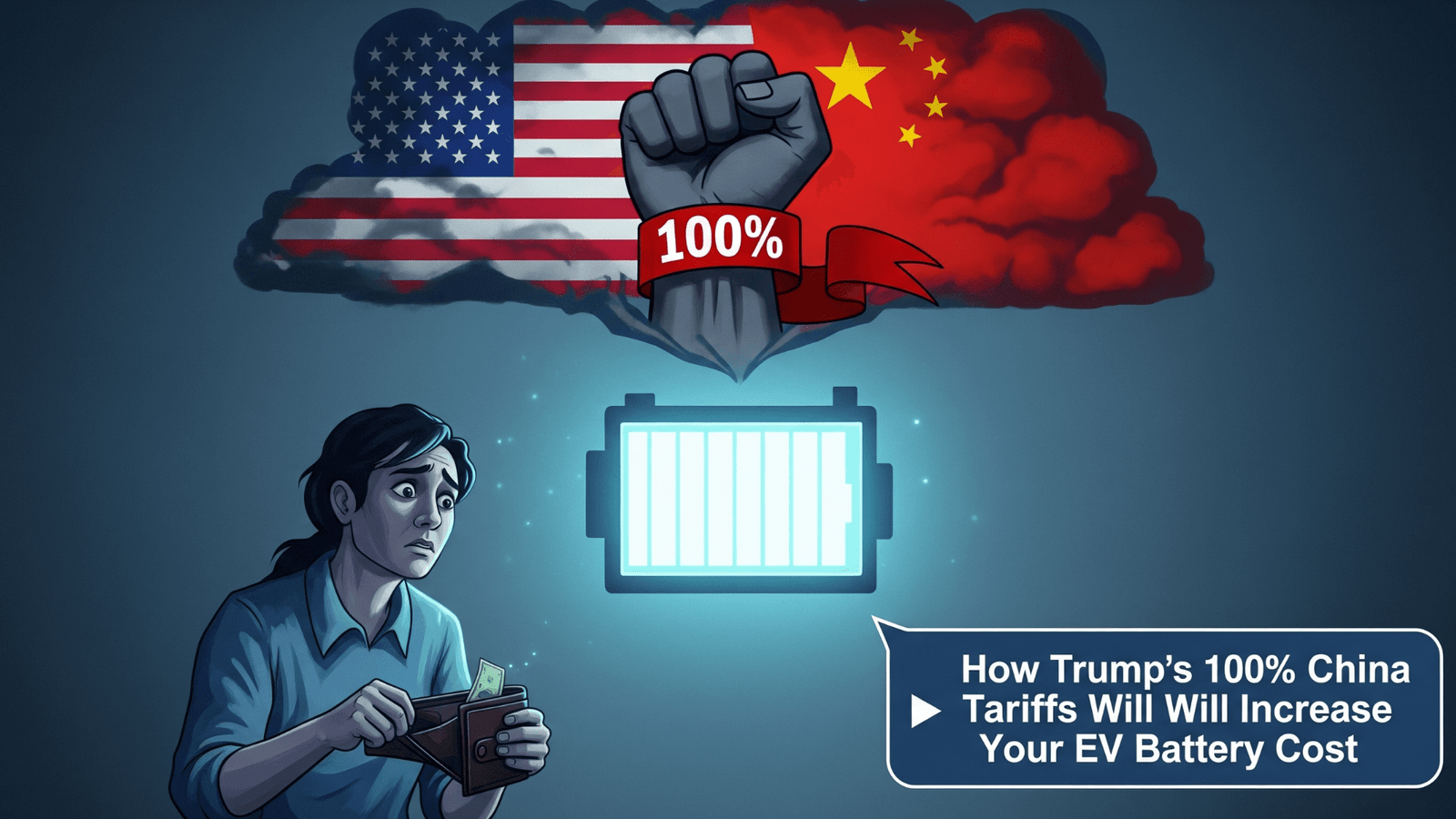
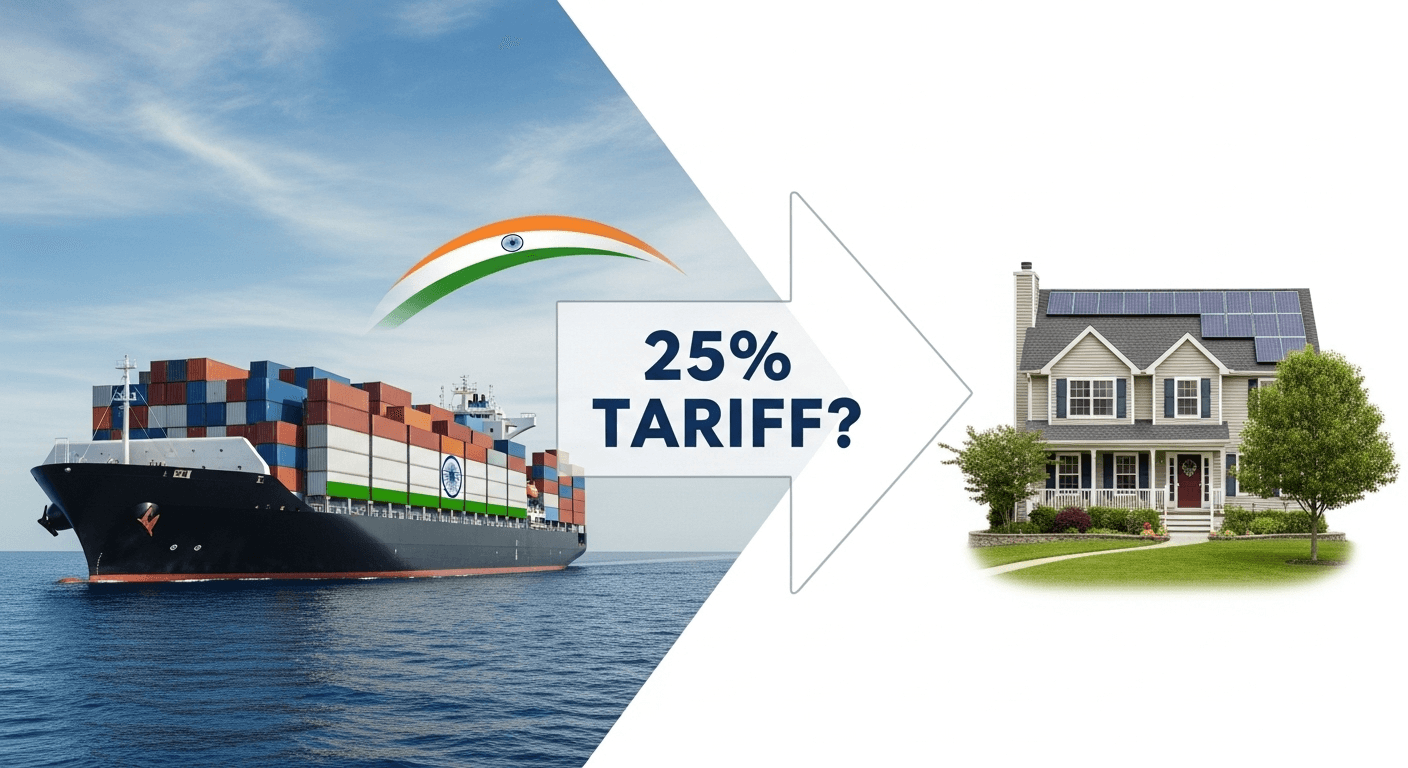
The new broad-duty tariff is a direct geopolitical action designed to make the EV supply chain dramatically more expensive.
EV Tariff Cost Risk Calculator
Estimate the potential cost increase on your battery pack from new import duties.
1. Select Your Vehicle’s Battery Size
Typical EV batteries range from 40 kWh to 120 kWh.
2. Select Your Battery Chemistry (Cost Basis)
NCM is higher cost; LFP is the cheaper alternative.
3. Estimated Tariff Cost Shock
Total Pack Cost (Est.)
$0
Duty Increase (100% Shock)
$0
Final Price with Duty (Est.)
$0
**VERDICT:** This duty represents the **direct financial risk** to the automaker, which may be transferred to you as a higher vehicle price or lost incentives.
The market instability created by the October 10th tariff announcement is forcing automakers to redefine their supply chains overnight. I will audit the true risk by separating the policy reality from the market panic and show you which brands and battery chemistries offer the best defense against this geopolitical storm.
1. THE GEOPOLITICAL BOMBSHELL: Two Distinct Tariff Actions
The current market shock is the result of two separate, compounding U.S. tariff actions aimed at decoupling the energy supply chain from China.
What is the impact of the 100% tariff on EV prices?
The tariffs create a surge in cost for automakers who have not localized their supply chains, affecting raw material costs, which are then passed to the consumer.
Up to 100% additional duties on battery cells, critical minerals, and components.
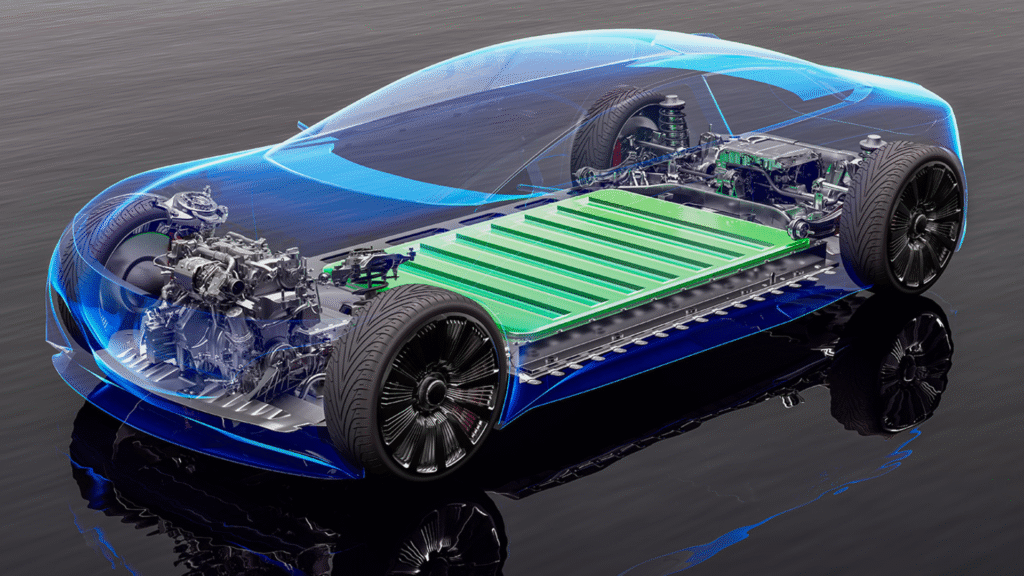
The true weapon is the Trump Broad Duty targeting battery materials used in final assembly, which dramatically increases the cost of battery packs for automakers still reliant on China for components.
2. THE MARKET SHOCK: Crypto Volatility and Geopolitics
The massive market volatility trending today was a direct, immediate response to the October 10th broad tariff announcement, underscoring the grid’s systemic risk.
The $19 billion crypto liquidation spike and the sell-off in equity indices (S&P 500, Nasdaq) were triggered exclusively by President Trump’s October 10 announcement.
Grid Instability: The crypto market’s massive, energy-intensive mining load contributes to grid instability, making it vulnerable to any economic shock that triggers mass power usage shifts.
The Investment Warning: The crash is a clear signal that geopolitical risk is now a primary driver of market value, demanding defensive investment in stable assets.
3. THE CONSUMER’S DEFENSE: Which Brands and Batteries Are Safe?
The tariffs force automakers to choose between cost savings (LFP) and range (NCM), with localization being the ultimate shield.
Tariff Impact on Batteries & U.S. Battery Market
The choice of battery chemistry is your first line of defense:
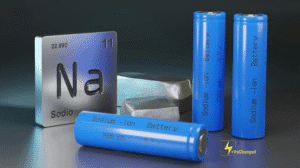
LFP (Lithium Iron Phosphate): These packs are roughly 20% cheaper per kWh than NCM packs and rely on more abundant iron and phosphate.
The Trade-off: LFP has lower energy density, limiting EV range to approximately 200–250 miles (vs. 300+ miles for NCM).
The Caveat: China produces over 95% of global LFP cells. Even U.S.-assembled LFP packs remain exposed until upstream materials (lithium hydroxide, cathode precursors) are localized.
Brand Localization: The Safest Strategy: Domestic cell assembly by brands like Ford and Tesla mitigates risk, but does not fully eliminate it. These plants remain dependent on imported upstream materials that are subject to global commodity markets and new tariffs.
4. THE INVESTOR’S HEDGE: Lithium, BESS, and Energy Storage
The tariffs act as a catalyst, accelerating a necessary, long-term investment trend toward domestic energy resilience.
Battery Storage Tariffs & BESS Tariff
Primary Driver: BESS market expansion is fundamentally driven by decarbonization mandates, grid-stabilization needs, and renewable integration forecasts.
The Accelerating Factor: The tariffs serve as an accelerating catalyst, boosting the strategic urgency to deploy localized BESS aggressively, as it provides security independent of volatile global commodity markets and geopolitical shocks.
The Investment Play: This policy accelerates opportunities for North American lithium mining, refining, and battery manufacturing stocks that can supply the domestic EV and grid markets.
The market is being driven by fear, but the underlying engineering truth is stability. The Trump tariffs act as a permanent market shock, forcing the entire industry to localize. For the consumer, this means short-term price volatility, but for the investor, it means high-value opportunities in domestic battery and energy storage companies. The new geopolitical risk is your ultimate guide to selecting the most resilient EV brands.
I’ve been driving, testing, and living with electric vehicles for years — from early compact EVs to today’s high-performance models. My journey into e-mobility started out of curiosity but quickly turned into a mission to help others make smarter EV choices. At VeCharged, I break down real-world ownership insights, cost analysis, and charging know-how so you can buy, sell, or switch to an EV with total confidence.
Vecharged is the consumer protection and education initiative of Cleanpower.eco, an organization dedicated to providing a clear, unbiased, and authoritative voice in the clean energy transition. The experts at Cleanpower.eco recognized a critical crisis of trust: the shift to electric vehicles and solar power is one of the most important and expensive decisions a family will make. Yet, the landscape is flooded with biased reviews, confusing marketing, and paid-for endorsements. Vecharged was created to be the shield against that confusion. We were founded on a simple, non-negotiable constitution: We are radically independent. We accept no advertising, sponsorships, or paid placements from any product manufacturer. We have no commercial interest in the products we review. Our only metric for success is your empowerment. Our loyalty is to you, the consumer. Full stop. We ground our brutally honest, hands-on analysis in a deep, foundational understanding of the engineering. We are not just reviewers; we are your advocates.
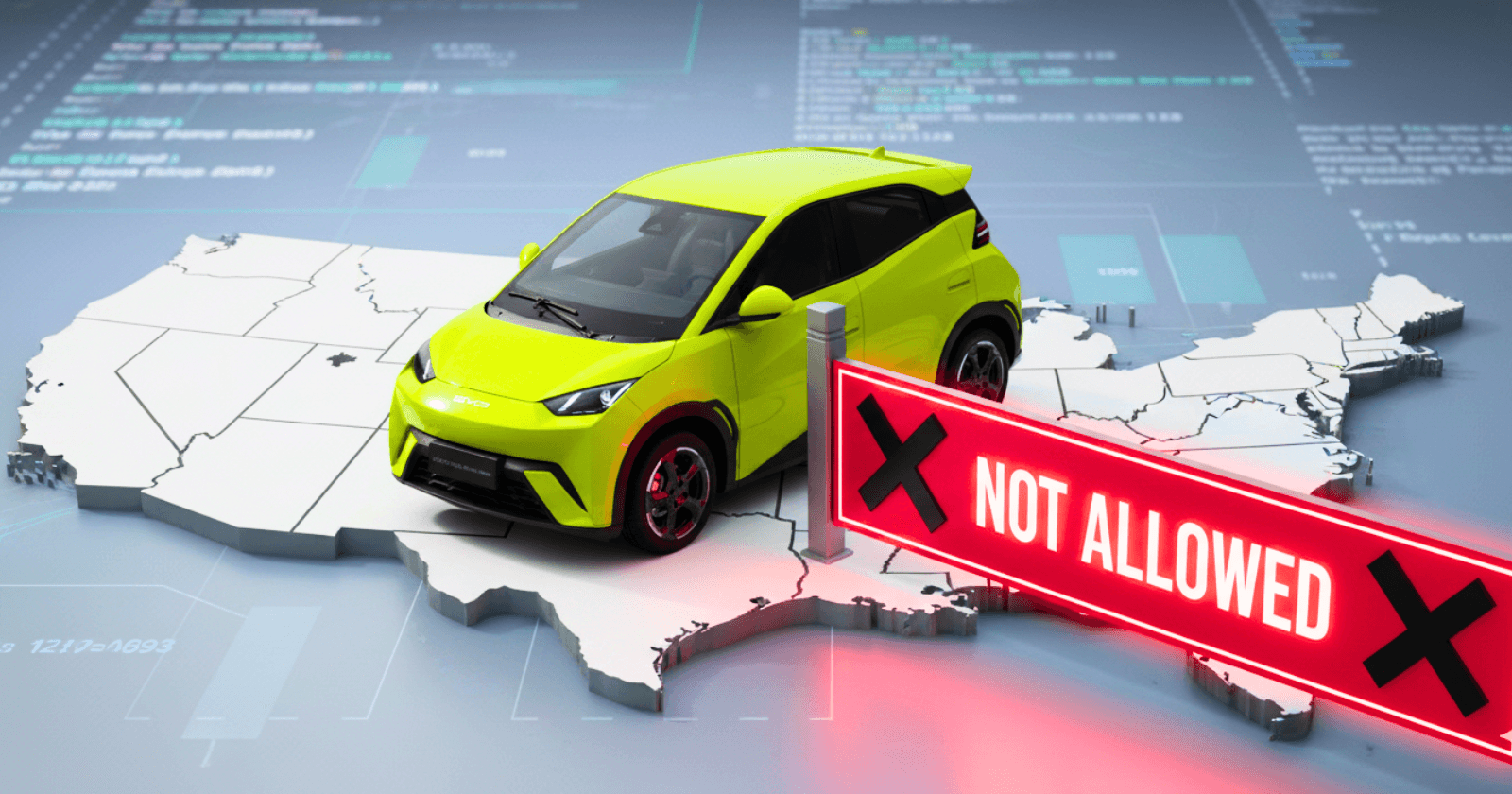
We Drove the $10,000 BYD Dolphin Mini. Here’s Why the U.S. Can’t Have It. For months, the automotive world has been buzzing about a car that seems too good to be true: a stylish, feature-packed electric vehicle with a staggering sub-$10,000 price tag. It’s the BYD Dolphin Mini (also known as the Seagull), and it’s
As the first generation of solar panels installed across America in the early 2000s now reaches maturity, that question is no longer theoretical. We’re at a critical turning point. But this isn’t a story about failure. It’s the story of a challenge that brilliant engineers and entrepreneurs are turning into a massive opportunity. The Slow
My Expert Guidance To Bypassing Artificial Limits While Managing Thermal Risk and Legal Exposure In my experience, no component on a stock e-bike lies more convincingly than the Controller. Manufacturers intentionally install a cheap, capped electronic brain to meet strict legal wattage caps (250W/750W). This creates an artificial bottleneck. Your motor is often capable of
When you hear that a tech giant like Google is “powering” its data centers with a new 600-megawatt solar farm, it’s easy to picture a simple extension cord running from the panels to the servers. The reality is far more complex and much more revolutionary. The most important part of this story isn’t just the