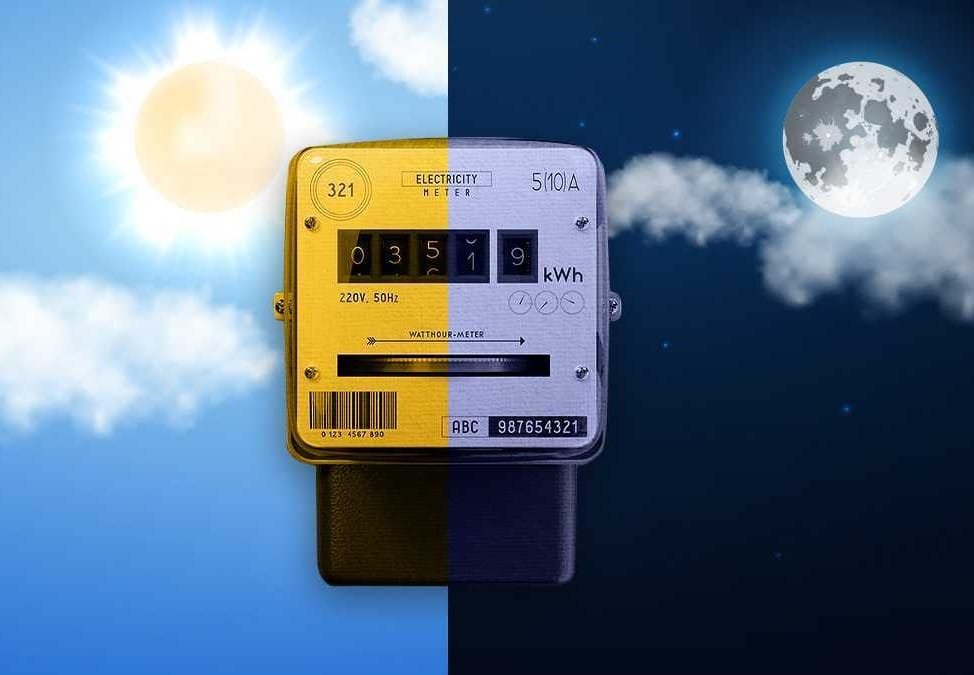
“Think of the new electricity rules like Happy Hour or Matinee tickets. If you go to the movies on a Tuesday afternoon, it’s cheap; if you go Friday night, you pay a premium. That is exactly what is happening to our electricity bills with TOD (Time of Day) Pricing.
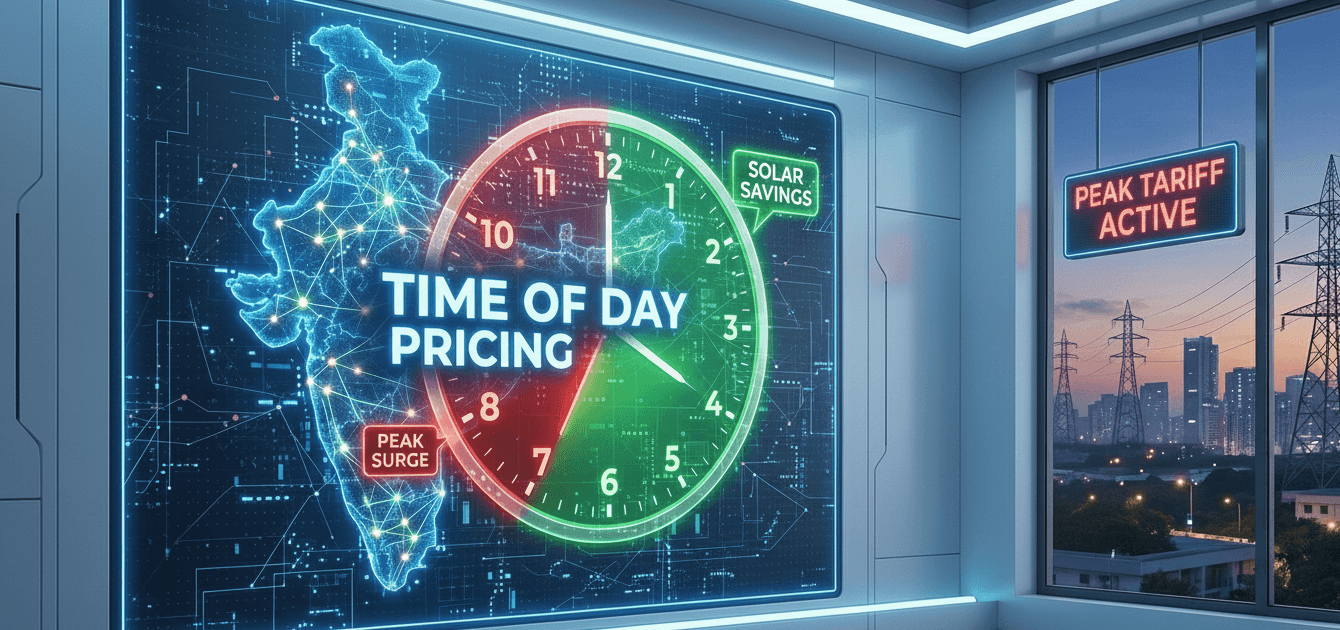
The government is moving toward a system where electricity isn’t one flat price anymore. Instead, it gets expensive when everyone needs it (Peak Hours) and cheaper when the sun is out (Solar Hours). This guide shows you how to use a “Power Wall” or home battery to stop paying those high prices.
1. The Big Shift: What is TOD?
Think of TOD as a “traffic jam” fee for the power grid.
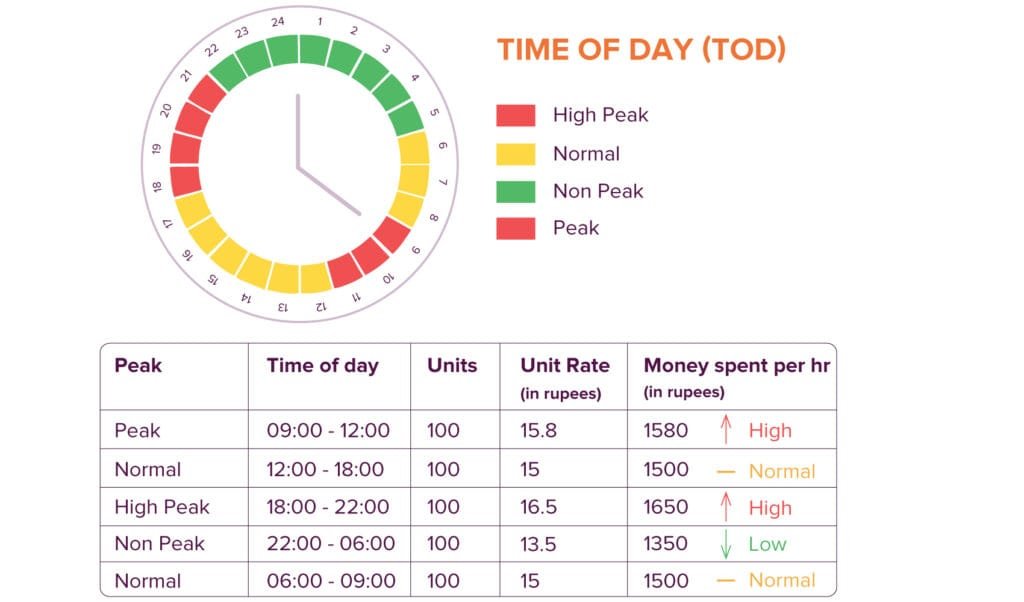
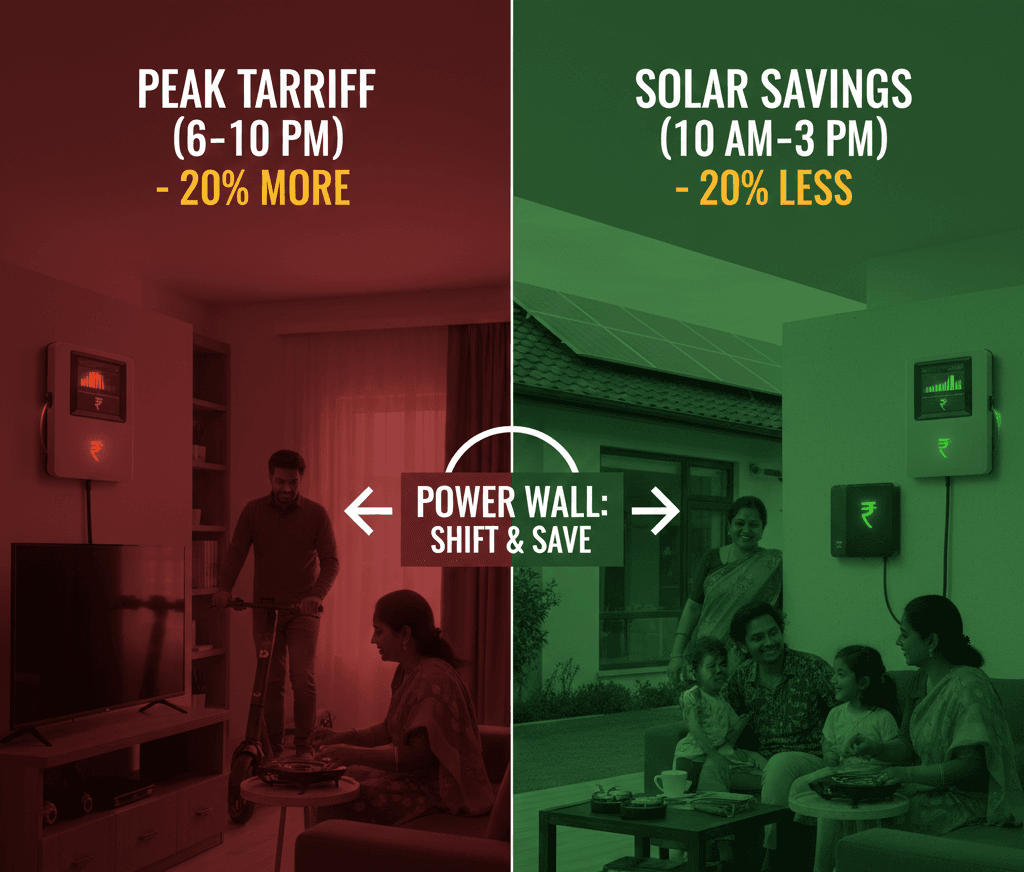
Solar Hours (Cheap): During the day, when solar power is everywhere, electricity is up to 20% cheaper.
Peak Hours (Expensive): In the evening (usually 6:00 PM to 10:00 PM), when everyone turns on their ACs and lights, the price jumps by 10% to 20%.
Why it matters to you:
If you do your laundry or charge your car at 7:00 PM, you are paying a “tax” just for being part of the crowd.
2. Who is this for?
For the Individual (The Smart Homeowner)
As a regular user, you probably use the most power exactly when it’s most expensive—in the evening.
The Solution: A battery wall. It “buys” power during the cheap solar hours and saves it. When the expensive evening rate kicks in, your house automatically switches to the battery. You’re watching TV and cooking dinner for “cheap,” while your neighbor is paying the peak-hour tax.
For the Business (The Smart Owner)
For offices or shops, the “Peak Hour” jump can eat into your monthly profits.
The Solution: Businesses often have higher “demand charges.” A battery system ensures you never cross that high-cost threshold. It’s like having a private fuel tank that you only refill when the price is at its lowest.
3. State of Play: Where is this happening?
By April 2025, almost every state in India is mandated to move residential users to this TOD system (provided you have a Smart Meter).
State Example
The “Peak” Surcharge
The “Solar” Discount
Maharashtra
High (Up to 25% extra)
Great rebates during day
Karnataka
Progressive
Focus on Solar alignment
Madhya Pradesh
~20% Surcharge
~20% Rebate in Solar hours
Basically: If you live in a high-surcharge state, a battery pays for itself much faster.
4. The Power Wall Strategy: Your Personal Energy Hack
A battery (like a Power Wall) isn’t just for when the lights go out anymore. It’s a financial tool.
Energy Arbitrage: This is a fancy word for “Buy Low, Use High.” Your battery charges at 2:00 PM (Cheap Rate) and powers your house at 8:00 PM (Expensive Rate).
Solar Pairing: If you have solar panels, the battery is a must. You store your own free “noon sun” to use for “midnight movies.”
No More Surprises: Dynamic pricing means the electric company can change rates based on demand. With a battery, you don’t care. You are “off-grid” during the expensive windows.
Taking Control of Your Bill
The shift to TOD (Time of Day) pricing might feel like a hidden tax on our evening routines, but it is also an opportunity. We are moving away from a world where we just “pay what we’re told” to a world where we can manage our own energy.
By using a Power Wall or battery system, you stop being a passive consumer and start being a smart manager. You aren’t just buying a backup for power cuts; you are installing a “financial filter” that blocks the high peak-hour rates and only lets the cheapest electricity into your home.
The Bottom Line:
The Problem: Electricity is getting more expensive exactly when you need it most (evenings).
The Tool: A Home Battery/Power Wall.
The Result: You “buy low” and “use high,” effectively opting out of the peak-hour tax and future-proofing your home against rising costs.
In the near future, the most successful households and businesses won’t be the ones that use the least power, but the ones that use it at the smartest time.
I’m a writer and analyst who explores the clean energy transition, with a focus on electric vehicles and solar power.
My journey began five years ago as a firm skeptic. Determined to debunk the hype around EVs, my in-depth research led to an unexpected conclusion: the future I was questioning was already here. This realization didn’t just change my mind; it put me in the driver’s seat of my own EV.
Today, I’m passionate about sharing the clarity I found. I provide the practical, data-driven insights people need to feel confident and excited about navigating their own path to a sustainable future.