A groundbreaking project in Fremont, California, has turned a fleet of electric school buses into a giant, mobile power plant. This isn’t just a test; it’s a brilliant blueprint for the future of clean energy.
Think about the humble school bus. For most of its life, it follows a predictable routine: a few hours of work in the morning, a few in the afternoon, and then… it sits idle. Parked and waiting, especially all summer long. For decades, this has been an accepted inefficiency.
But what if that idle time was its secret superpower?
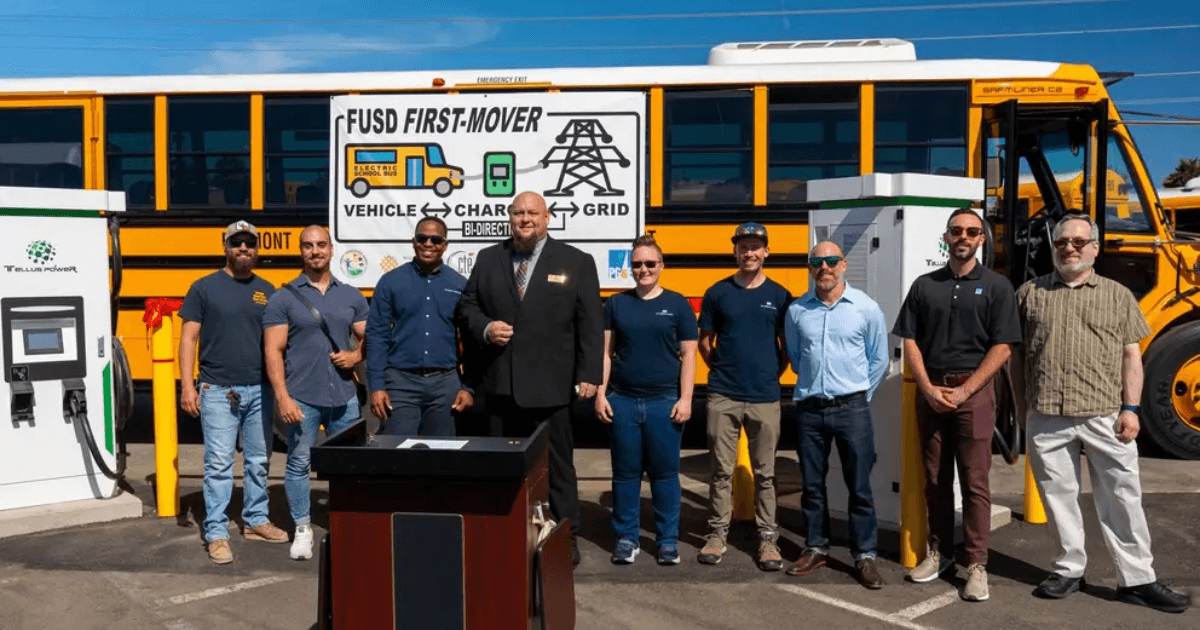
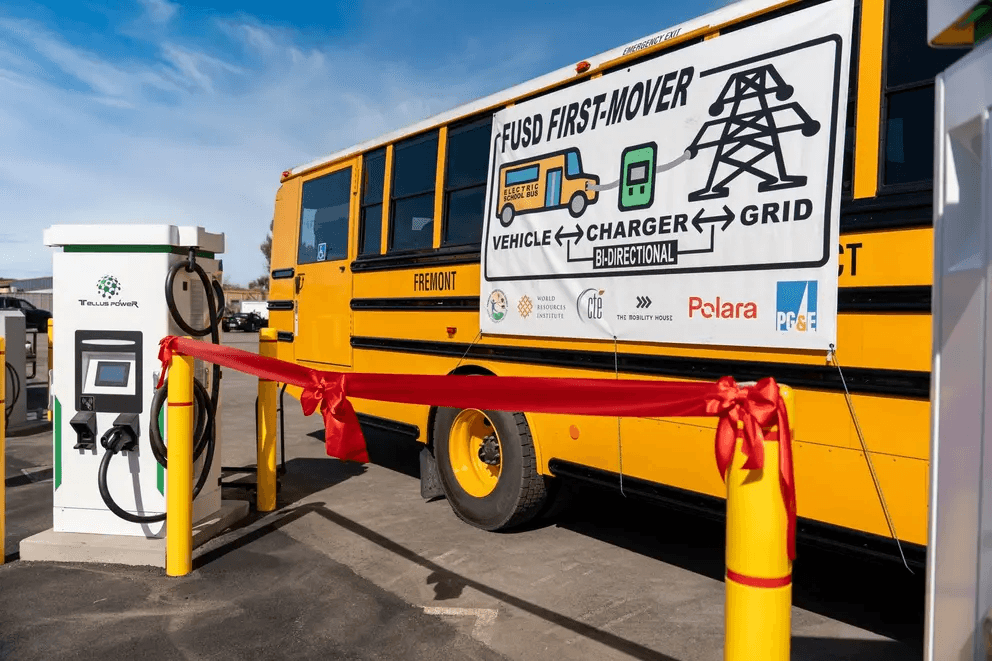
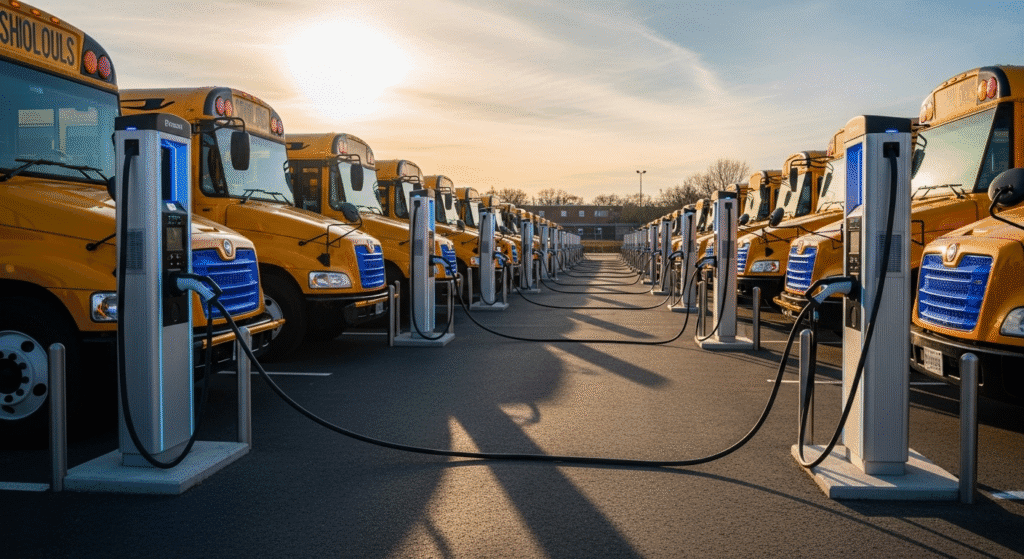
In Fremont, California, a revolutionary project is showing us the future, and it looks like a big, yellow battery on wheels. Thanks to a groundbreaking partnership between the Fremont Unified School District (FUSD), utility giant PG&E, and energy tech experts The Mobility House, a fleet of 14 electric school buses is now doing double duty. After dropping the kids off, they plug in and become a vital part of California’s energy grid.
This isn’t just about swapping diesel for electric. This is about transforming a simple vehicle into a dynamic community asset, and it’s a glimpse into how our cities will be powered in the very near future.
The “Aha!” Moment: Why School Buses are the Perfect Battery
The genius of this project, which utilizes cutting-edge Vehicle-to-Grid (V2G) technology, lies in its perfect logic. School buses are uniquely suited for this job:
They have predictable schedules: They are only needed for a few hours a day, leaving them plugged in and available during the late afternoon and early evening—the exact time when the electrical grid is under the most strain.
They have massive batteries: A single electric school bus can hold a battery large enough to power several homes for a full day. A fleet of them is a significant energy resource.
They are a community asset: They are already owned by the community, for the community. Using them to strengthen the local grid is a natural extension of their purpose.
The Technology, Made Simple: How V2G Actually Works
So how does a bus send power back to the grid?
Think of a normal EV charger as a one-way street; power only flows into the vehicle. The Fremont project uses special bidirectional chargers. These create a two-way superhighway for electricity.
The whole operation is managed by a sophisticated software platform called ChargePilot from The Mobility House.
During the day (when solar power is abundant and cheap): The buses charge their batteries.
In the late afternoon (when demand spikes and grid power is expensive): The ChargePilot system, in coordination with PG&E, can tell the buses to stop charging and, if needed, send a portion of their stored, clean energyback to the grid.
This helps prevent blackouts during heatwaves and reduces the need for expensive, polluting “peaker” power plants. It’s a smart, elegant, and clean solution to one of the grid’s biggest challenges.
The “Triple Win”: The Benefits for Everyone
This project is a perfect example of a “triple win,” creating value for the school, the community, and the environment.
For Students & The Community (Cleaner Air): The 14 electric buses are replacing older, dirty diesel models, drastically reducing harmful emissions in the neighborhoods they serve. “This project is more than electrifying buses — it’s about innovating energy,” says Mike Delaney, a VP at PG&E.
For the School District (Lower Costs): Not only does the district save a massive amount of money on diesel fuel and maintenance, but it can also earn revenue. By participating in programs like PG&E’s Emergency Load Reduction Program, the district gets paid for providing valuable grid services.
For the Grid (More Stability): The bus fleet acts as a “virtual power plant,” providing a flexible, on-demand resource that makes the entire electrical grid more resilient and less prone to outages. As Gregor Hintler, CEO of The Mobility House North America, notes, the buses’ “predictable routes and large batteries” give them tremendous potential to balance grid needs.
A Blueprint Ready for the Nation
This isn’t happening in a vacuum. The Fremont project, supported by funding from the California Energy Commission, builds on earlier successful V2G school bus deployments in Oakland and with the transportation company Zum.
It has created a proven, replicable model that can now be adopted by school districts across California and the entire country. It shows that electrifying transportation isn’t just a climate goal; it’s a smart financial decision and a powerful investment in community resilience.
The next time you see a school bus, think differently. You’re not just looking at a way to get kids to school. You’re looking at the future of the electric grid.
Suhas Shrikant is the founder of Vecharged and an engineering enthusiast specializing in high-power off-grid solar systems. He has designed and built over a dozen custom systems and uses his hands-on, field-tested experience to create Vecharged’s expert guides and reviews.
Vecharged is the consumer protection and education initiative of Cleanpower.eco, an organization dedicated to providing a clear, unbiased, and authoritative voice in the clean energy transition. The experts at Cleanpower.eco recognized a critical crisis of trust: the shift to electric vehicles and solar power is one of the most important and expensive decisions a family will make. Yet, the landscape is flooded with biased reviews, confusing marketing, and paid-for endorsements. Vecharged was created to be the shield against that confusion. We were founded on a simple, non-negotiable constitution: We are radically independent. We accept no advertising, sponsorships, or paid placements from any product manufacturer. We have no commercial interest in the products we review. Our only metric for success is your empowerment. Our loyalty is to you, the consumer. Full stop. We ground our brutally honest, hands-on analysis in a deep, foundational understanding of the engineering. We are not just reviewers; we are your advocates.
The rumble of diesel engines is gradually fading as the quiet hum of electric motors takes over fields and farms. Electric tractors are revolutionizing agriculture, offering a sustainable, efficient, and surprisingly powerful alternative to traditional machinery. Let’s take a closer look at the top contenders in the electric tractor arena: Solectrac e25: This compact workhorse
They promise zero fuel costs and insane torque, but can they handle the brutal reality of a full day’s work? As a systems designer, I’m here to tell you: they’re not just a new tractor; they’re a new way of thinking about the farm itself. My name is Suhas. For years, I’ve designed systems to
Electric boating is the wave of the future! quieter, cleaner, and easier to maintain than traditional gasoline-powered boats. Whether you’re a seasoned sailor or a curious newcomer, this guide provides everything you need to know about electric boating in 2024. Unveiling the Electric Motor: Powering Your Boating Journey Electric boat motors are similar to their
Have you guys seen the new Polestar 4? This electric SUV is setting the competition ablaze, and for good reason. Polestar, the Swedish automaker co-owned by Volvo and Geely, is coming in hot with a serious contender to the Tesla Model Y throne. Alright Gearheads, buckle up! We’re about to dissect this electric beast and