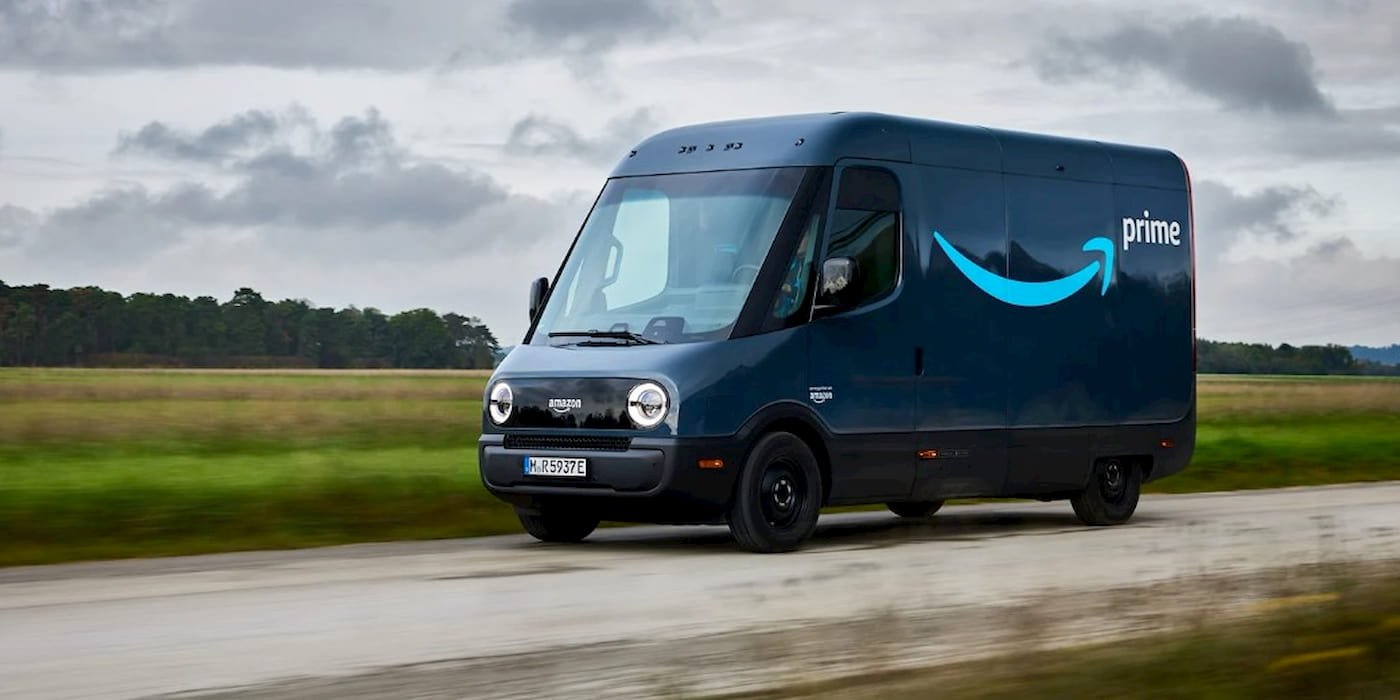
I was in my office the other day, and I realized something was missing: the familiar clatter and roar of the diesel delivery truck that usually rattles the windows around lunchtime. It was replaced by a near-silent, electric hum.
That’s when it hit me. For years, we’ve talked about the “future” of electric delivery. But it’s not a future-tense concept anymore. This silent revolution is already happening on our streets, driven by a force more powerful than any climate pledge: cold, hard economics. The giants of logistics have done the math, and the conclusion is undeniable. The future of delivery is electric.
America’s Giants Made the First Move
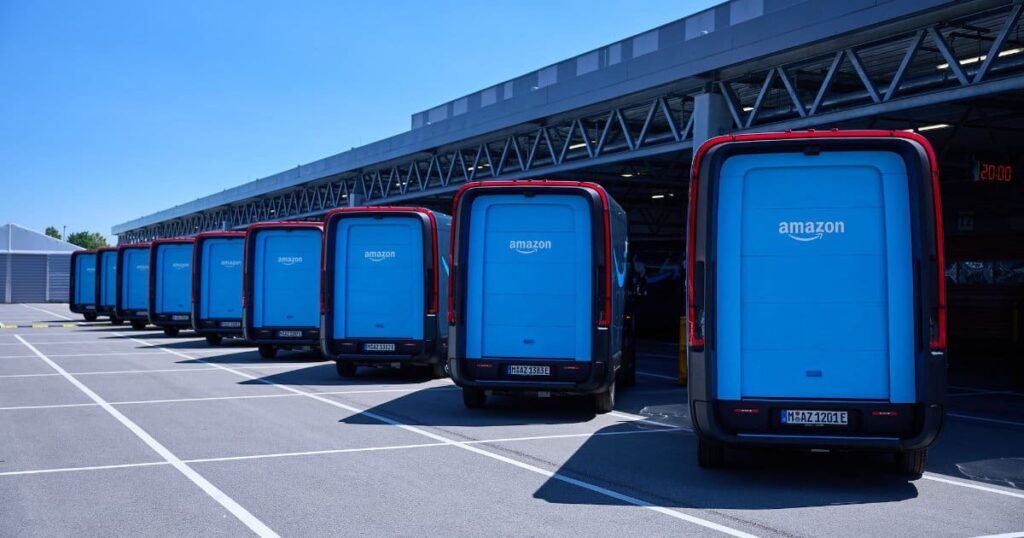
From an industry perspective, the tipping point in the US was Amazon’s landmark order for 100,000 electric vans from Rivian. This wasn’t a PR stunt; it was a ruthless economic calculation. With around 20,000 of these futuristic vans now quietly navigating American suburbs, the race is on.
Other logistics titans are following suit, though the rollout is a marathon, not a sprint:
GM’s BrightDrop unit is actively supplying its Zevo electric vans to FedEx and Walmart.
The USPS has begun its slow but massive modernization, with nearly 10,000 new electric Ford E-Transits now replacing its iconic, aging mail trucks on routes across the country.
The Global Adaptation: How the World is Innovating
While America focuses on the large van, the revolution is taking different shapes globally, adapting to the unique density of other regions.
In India, the last-mile is being conquered on two and three wheels. In 2025 alone, a record 1.1 million electric two-wheelers were sold. Delivery partners for giants like Zomato and Swiggy are switching to e-scooters because it directly increases their take-home pay. In crowded city markets, electric cargo three-wheelers, like the Mahindra Treo Zor, are the undisputed champions of efficiency.
In Europe, companies like DHL are deploying fleets of e-cargo bikes. In dense Dutch cities like Amsterdam, these now handle over 60% of inner-city deliveries, navigating historic streets where vans can’t go.
The Engineer’s View: It’s All About the Numbers
Forget the green headlines for a second. Let’s talk about the only thing that drives this kind of massive industrial shift: money. The Total Cost of Ownership (TCO) is the killer app here. The data from fleet operators is undeniable.
Fuel Costs: Charging with electricity is 45-75% cheaper per mile than filling up with gasoline or diesel.
Maintenance: This is where the engineers smile. An electric motor has a tiny fraction of the moving parts of a combustion engine. That means no oil changes, no spark plugs, and 40-60% lower maintenance costs over the vehicle’s life.
The Reality Check: Speed Bumps on the Road
Now, I’m an engineer, which means I’m a professional optimist grounded in reality. The transition to a fully silent city is not happening overnight. I see three huge roadblocks we’re still working to solve:
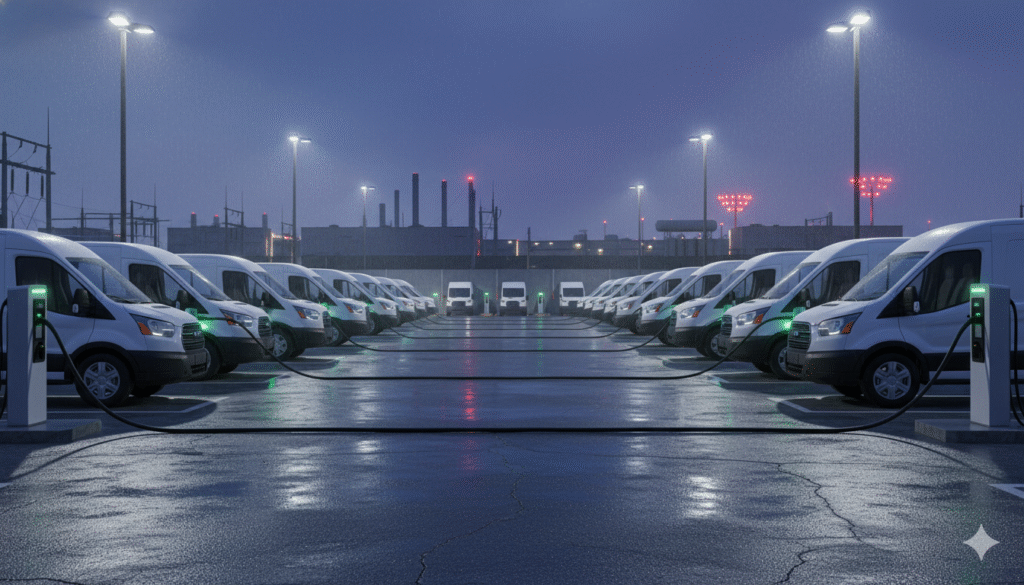
The Depot Charging Problem: Charging one car is easy. Charging a fleet of 100 vans overnight requires a multi-million dollar upgrade to a building’s electrical infrastructure. It’s a massive engineering and logistical challenge.
The Upfront Cost: Electric commercial vehicles are still more expensive to purchase than their diesel counterparts. For a small business owner, that initial hurdle is significant, though government incentives are helping to close the gap.
The Battery Question: High-mileage delivery vehicles push batteries to their limit. While modern packs are proving incredibly durable, planning for their eventual replacement after 8-10 years is a real cost that businesses can’t ignore.
Even with these challenges, the outcome is clear. Any time the most profitable choice and the right choice for our cities are one and the same, the result is inevitable. The silent delivery isn’t just a trend; it’s the new sound of progress.
I’m a writer and analyst who explores the clean energy transition, with a focus on electric vehicles and solar power.
My journey began five years ago as a firm skeptic. Determined to debunk the hype around EVs, my in-depth research led to an unexpected conclusion: the future I was questioning was already here. This realization didn’t just change my mind; it put me in the driver’s seat of my own EV.
Today, I’m passionate about sharing the clarity I found. I provide the practical, data-driven insights people need to feel confident and excited about navigating their own path to a sustainable future.
Vecharged is the consumer protection and education initiative of Cleanpower.eco, an organization dedicated to providing a clear, unbiased, and authoritative voice in the clean energy transition. The experts at Cleanpower.eco recognized a critical crisis of trust: the shift to electric vehicles and solar power is one of the most important and expensive decisions a family will make. Yet, the landscape is flooded with biased reviews, confusing marketing, and paid-for endorsements. Vecharged was created to be the shield against that confusion. We were founded on a simple, non-negotiable constitution: We are radically independent. We accept no advertising, sponsorships, or paid placements from any product manufacturer. We have no commercial interest in the products we review. Our only metric for success is your empowerment. Our loyalty is to you, the consumer. Full stop. We ground our brutally honest, hands-on analysis in a deep, foundational understanding of the engineering. We are not just reviewers; we are your advocates.
When you hear “AI,” you probably think of ChatGPT or apps that create art from a few words of text. But the most powerful artificial intelligence isn’t just on your screen—it’s silently revolutionizing the physical world, starting in your garage and on your roof. The same kind of intelligence is now making your electric vehicle’s
An Engineer’s Guide to the Post-Credit Negotiation Where Manufacturer Rebates and Data Fill the Gap While major financial publications, including the Wall Street Journal, focus on the macroeconomic fallout and sales slowdowns caused by the incentive lapse, Vecharged provides the actionable strategy. This is not a report on the industry problem; it is your definitive
1. The Engineering Explained: The “Double Isolation” Software Fault 2. The New Reality: When Your Car is a Computer on Wheels 3. A Real-World Safety Guide for Affected Owners 4. Putting It in Perspective: An EV Problem or a Modern Car Problem? 5. The Vecharged Verdict Heer Worah I’m a writer and analyst who explores
My expert guidance for navigating the post-credit market dip and locking in your final federal incentives. Let’s be clear: The $7,500 New EV Tax Credit did not expire because of the government shutdown. The major $7,500 EV Tax Credits and the $4,000 Used EV Credits were officially repealed on September 30, 2025, by the One