The “Electric Revolution” in America didn’t just slow down last week; it completely redrew its map. Last week, Ford Motor Company officially confirmed a massive $19.5 billion strategic pivot, marking the most dramatic shift in the industry’s history since the launch of the Model T.
In a move that has stunned the market, Ford is discontinuing the all-electric F-150 Lightning this month. However, the Detroit giant isn’t retreating from electricity; it is fixing how that power is delivered. At Vecharged, we have long maintained that infrastructure is the “bottleneck of progress.” Today’s reality proves that the US market is moving toward a pragmatic “Electric-Lite” future.
The Death of the Pure-EV Lightning
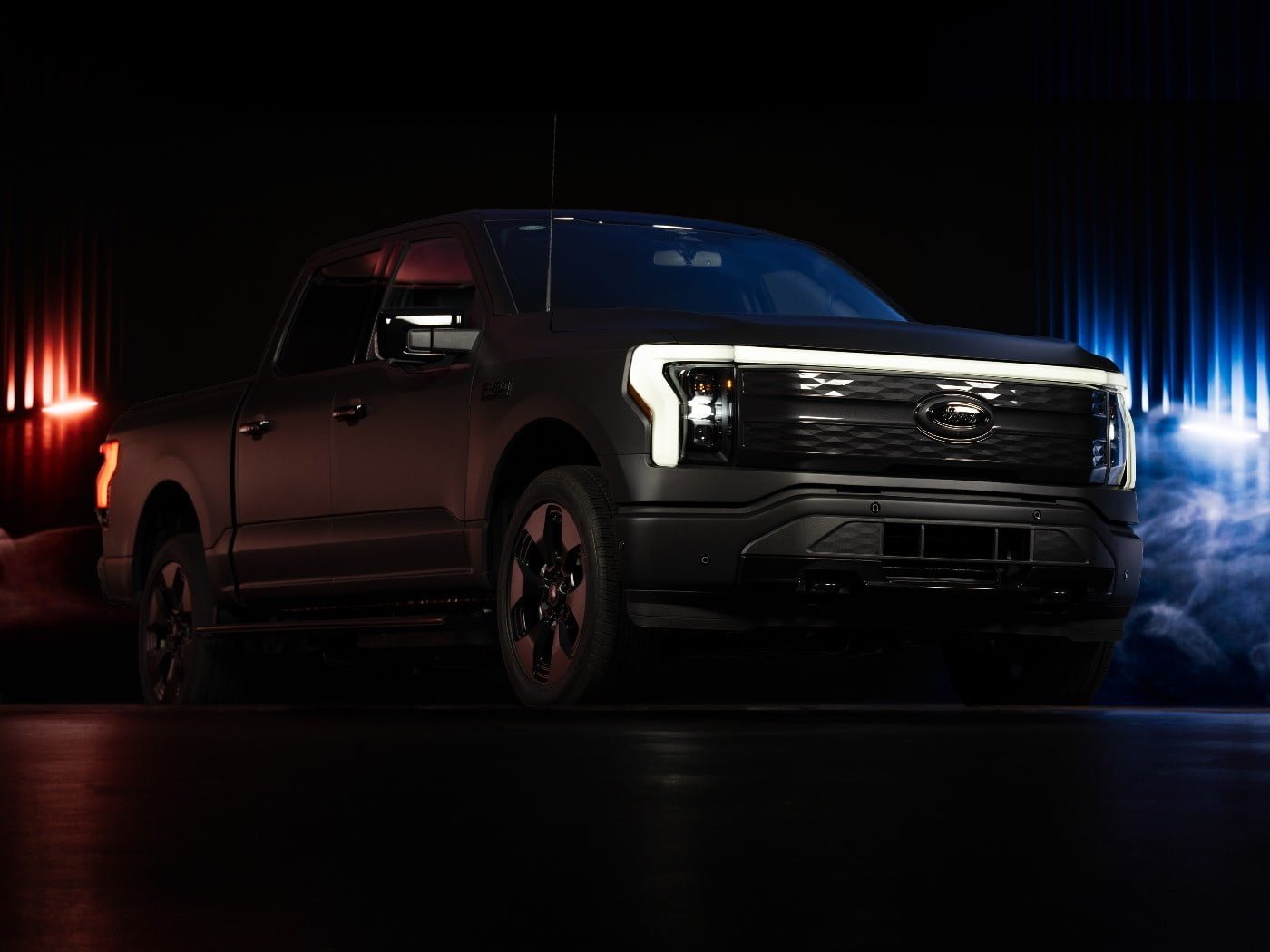
Despite its “Truck of the Year” accolades, the current F-150 Lightning has reached the end of the road. Ford confirmed that production at the Rouge Electric Vehicle Center is wrapping up this month due to high production costs and a sharp drop in consumer demand following the expiration of federal tax credits in September. The math was simply unsustainable: Ford’s EV division has lost over $13 billion since 2023, with per-vehicle losses reportedly nearing $50,000.
The Rise of the EREV: What is it?
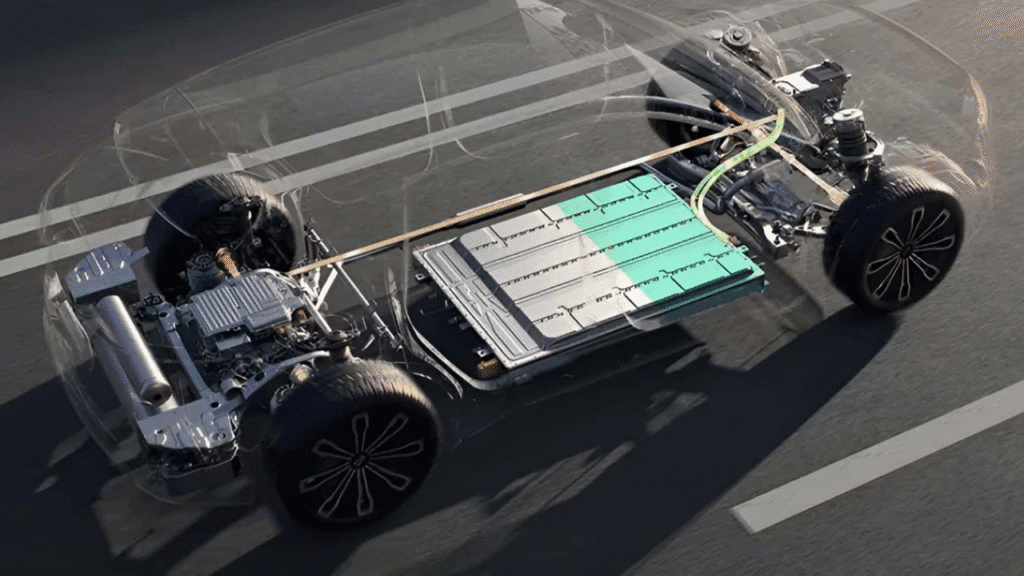
Ford isn’t abandoning the Lightning name; it is evolving it into an EREV (Extended-Range Electric Vehicle). Unlike a traditional hybrid, an EREV is propelled 100% by electric motors, preserving the silent, high-torque “shove” that owners love. The game changer is an onboard gasoline generator that has no link to the wheels; it exists solely to recharge the battery while you drive. This shift allows Ford to target a 700+ mile range, effectively killing range anxiety and the “towing wall” that limited the original truck.
A $19.5 Billion “Clean Slate”
This pivot comes with a staggering $19.5 billion accounting charge. Ford is scrapping its next-gen pure-electric truck (codenamed T3) and several electric vans to redeploy capital into higher-return areas. Most notably, Ford is entering the Battery Energy Storage System (BESS) market. By repurposing its Kentucky battery plants to build massive storage containers for data centers and power grids, Ford is transforming from a mere automaker into a diversified energy infrastructure player.
Toyota’s Victory Lap
While Ford retools, Toyota’s “Multi-Pathway” strategy is paying off. As of December 2025, over 50% of Toyota’s US sales are now “electrified” (mostly hybrids and PHEVs). By refusing to go “all-in” on pure batteries too early, Toyota maintained record profits while competitors are now spending billions just to catch up to the hybrid trend.
Key Focus: The Bridge Has Been Built
The Death of Range Anxiety: A 700-mile target means you can tow cross-country without searching for a charger.
Affordability First: Ford is shifting pure-EV development to a new Universal Platform for $30,000 models in 2027.
Infrastructure Security: EREVs provide a “backup plan” for those living in charging deserts or areas with unreliable grids.
Utility without Compromise: You get the performance of an EV with the refueling convenience of a traditional truck.
vecharged’s Take
The “Backup Tank” isn’t a failure of the electric movement; it is the bridge that finally makes electric power viable for every American driveway. For the last three years, car buyers have been in an identity crisis: Do I go green and risk the headache, or stay with gas and feel left behind? The answer is Multi-Energy. Providing 700 miles of range with an electric heart is more “pro-EV” than selling a truck that people are afraid to use for actual work.
I’m a writer and analyst who explores the clean energy transition, with a focus on electric vehicles and solar power.
My journey began five years ago as a firm skeptic. Determined to debunk the hype around EVs, my in-depth research led to an unexpected conclusion: the future I was questioning was already here. This realization didn’t just change my mind; it put me in the driver’s seat of my own EV.
Today, I’m passionate about sharing the clarity I found. I provide the practical, data-driven insights people need to feel confident and excited about navigating their own path to a sustainable future.
Vecharged is the consumer protection and education initiative of Cleanpower.eco, an organization dedicated to providing a clear, unbiased, and authoritative voice in the clean energy transition. The experts at Cleanpower.eco recognized a critical crisis of trust: the shift to electric vehicles and solar power is one of the most important and expensive decisions a family will make. Yet, the landscape is flooded with biased reviews, confusing marketing, and paid-for endorsements. Vecharged was created to be the shield against that confusion. We were founded on a simple, non-negotiable constitution: We are radically independent. We accept no advertising, sponsorships, or paid placements from any product manufacturer. We have no commercial interest in the products we review. Our only metric for success is your empowerment. Our loyalty is to you, the consumer. Full stop. We ground our brutally honest, hands-on analysis in a deep, foundational understanding of the engineering. We are not just reviewers; we are your advocates.
Selling an electric car is very different from selling a petrol or diesel vehicle. Buyers today care less about the odometer and more about battery health, charging history, warranty coverage, and software features. The good news is that a well-maintained EV can still command strong resale value if you prepare it properly. This guide gives
By Rahul — EV owner, reviewer, and long-time clean energy enthusiast Financing or leasing an electric car in early 2026 is not the same as it was just one year ago. The biggest shift was the end of all federal EV tax credits on September 30, 2025, including: Manufacturers can no longer claim any of
By Rahul — EV Enthusiast & Automotive Analyst at VeCharged ⚠️ Important Disclaimer (Must Read) The Clean Vehicle Credit program (new EV $7,500 credit + used EV $4,000 credit) ended on September 30, 2025. This single policy change fundamentally shifts the cost comparison between new and used EVs. If you’re planning to buy or sell
For the last decade, the electric vehicle revolution was defined by range, speed, and charging networks. As we close out 2025, the conversation is fundamentally shifting. For a growing number of buyers, the most important feature of their next car won’t be how it drives—but how it powers their life when it’s parked. Vehicle-to-Home (V2H)