For years, the promise of an electric vehicle has been simple: drive without gasoline. But what if your EV could do more? What if it could power your entire home during a blackout, or even earn you money while you sleep?
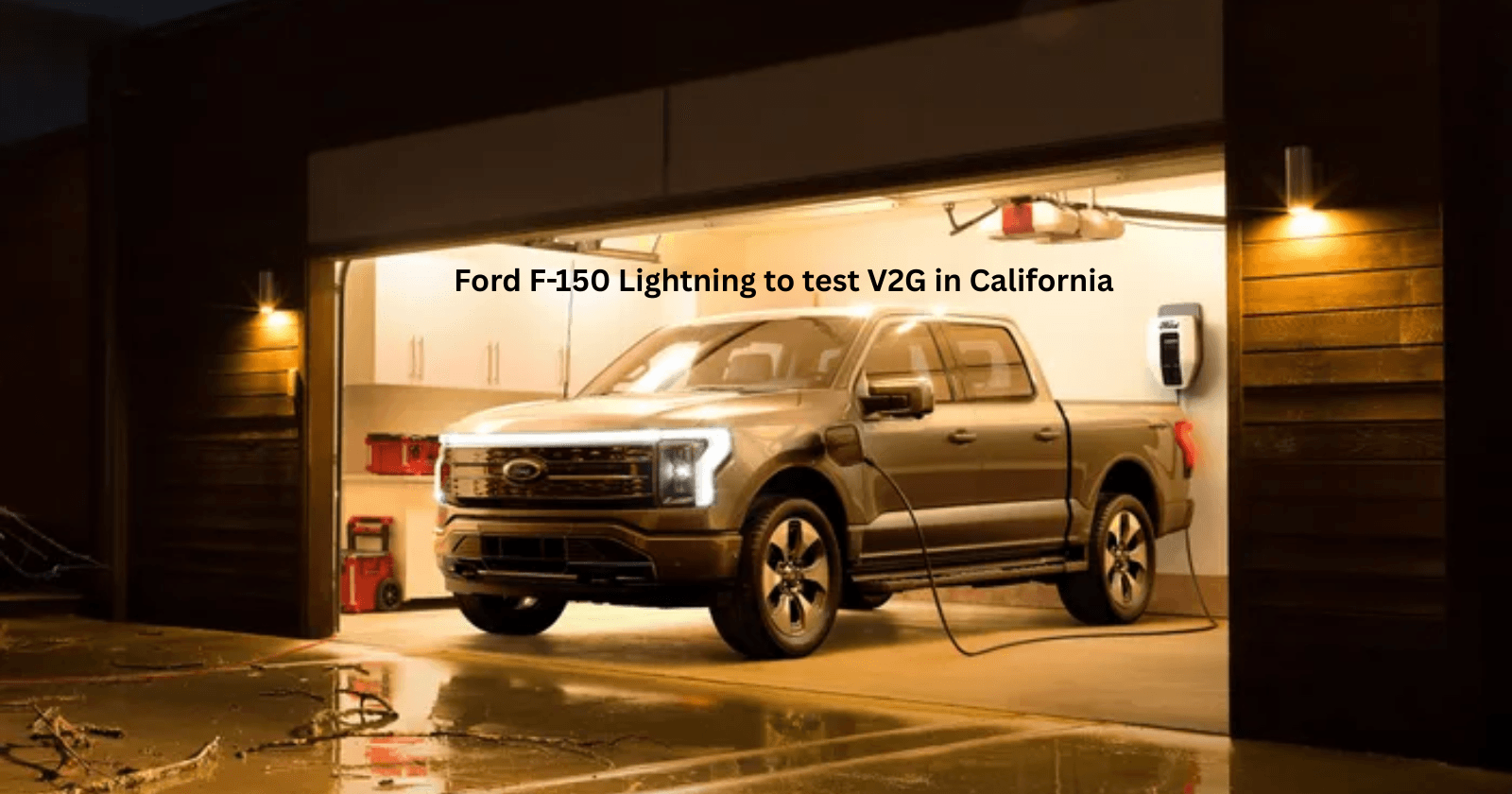
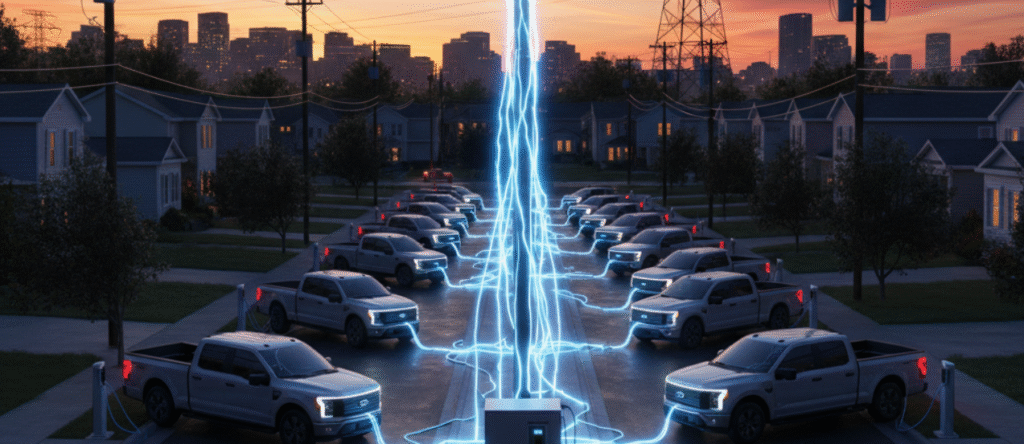
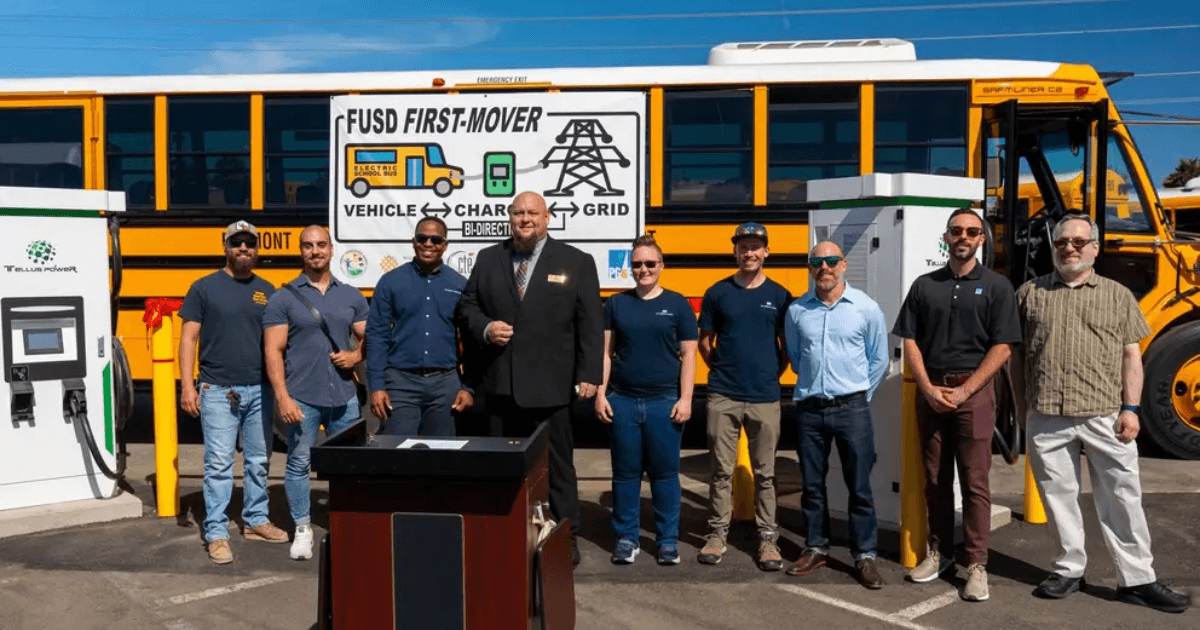
That future is no longer a concept—it’s happening right now. In a groundbreaking project in the US, a fleet of Ford F-150 Lightning trucks is now operating as the nation’s first residential “virtual power plant,” using Vehicle-to-Grid (V2G) technology to send power back to the grid and support the community.
While this specific project is a first, the technology it uses is poised to revolutionize home energy. Let’s break down what V2G is and what it means for every EV owner.
What is Vehicle-to-Grid (V2G) Technology?
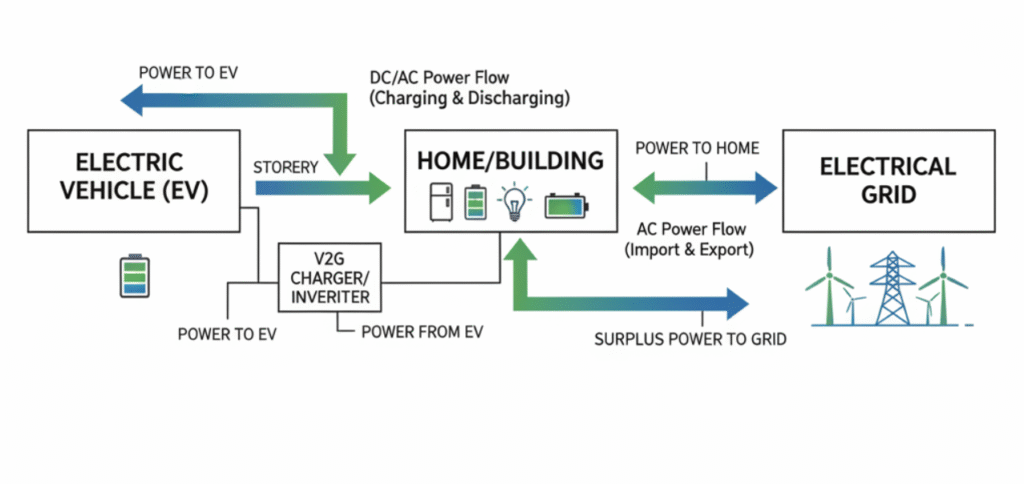
In simple terms, V2G turns your electric vehicle into a giant battery on wheels that can both charge from and discharge to the electrical grid.
Standard Charging (V1G): Power only flows one way—from the grid into your car.
V2G Charging: Power can flow two ways. You can charge your car as normal, but you can also send that stored energy back to power your house (this is called Vehicle-to-Home or V2H) or even sell it back to the utility company.
The V2G Advantage: Pros and Cons
Turning millions of EVs into a distributed energy network has massive benefits, but there are things to consider.
Pros
Cons
✅ Blackout Protection: Your EV’s massive battery can power your home’s essentials for hours or even days during an outage.
❌ Battery Degradation: Repeatedly charging and discharging will add cycles to your battery, potentially shortening its lifespan over the long term.
✅ Earn Money: Utility companies can pay you to use the power from your car during peak demand hours (e.g., hot summer afternoons).
❌ Specialized Hardware: V2G requires a special bidirectional charger, which is more expensive than a standard home charger.
✅ Grid Stability: A network of EVs can act as a giant “virtual power plant,” helping to balance the grid and prevent blackouts.
❌ Utility Program Required: You can only sell power back to the grid if your local utility company has a V2G program in place.
How the First US V2G Project Works
The pioneering project in the US involves a partnership between a solar company and local homeowners who have a Ford F-150 Lightning.
Here’s the process:
Homeowners charge their trucks using their home’s solar panels during the day.
In the evening, when electricity demand is highest, the utility can draw a small, controlled amount of power from the trucks’ batteries to serve other customers.
The homeowners are compensated for the energy they provide, effectively lowering their bills or even earning a profit.
What Does This Mean for You?
The era of your car just being a car is ending. As more automakers like Ford, GM, and Hyundai build V2G capabilities into their new EVs, your vehicle is transforming into a key part of your home’s energy ecosystem.
Even if you don’t join a virtual power plant, the ability to power your home from your car (V2H) is a feature that will provide immense peace of mind. Imagine your next power outage, but instead of flashlights and melted ice cream, you simply plug your house into your car and carry on as normal.
This is the future of energy resilience, and it’s parked in your driveway.
Suhas Shrikant is the founder of Vecharged and an engineering enthusiast specializing in high-power off-grid solar systems. He has designed and built over a dozen custom systems and uses his hands-on, field-tested experience to create Vecharged’s expert guides and reviews.
Vecharged is the consumer protection and education initiative of Cleanpower.eco, an organization dedicated to providing a clear, unbiased, and authoritative voice in the clean energy transition. The experts at Cleanpower.eco recognized a critical crisis of trust: the shift to electric vehicles and solar power is one of the most important and expensive decisions a family will make. Yet, the landscape is flooded with biased reviews, confusing marketing, and paid-for endorsements. Vecharged was created to be the shield against that confusion. We were founded on a simple, non-negotiable constitution: We are radically independent. We accept no advertising, sponsorships, or paid placements from any product manufacturer. We have no commercial interest in the products we review. Our only metric for success is your empowerment. Our loyalty is to you, the consumer. Full stop. We ground our brutally honest, hands-on analysis in a deep, foundational understanding of the engineering. We are not just reviewers; we are your advocates.
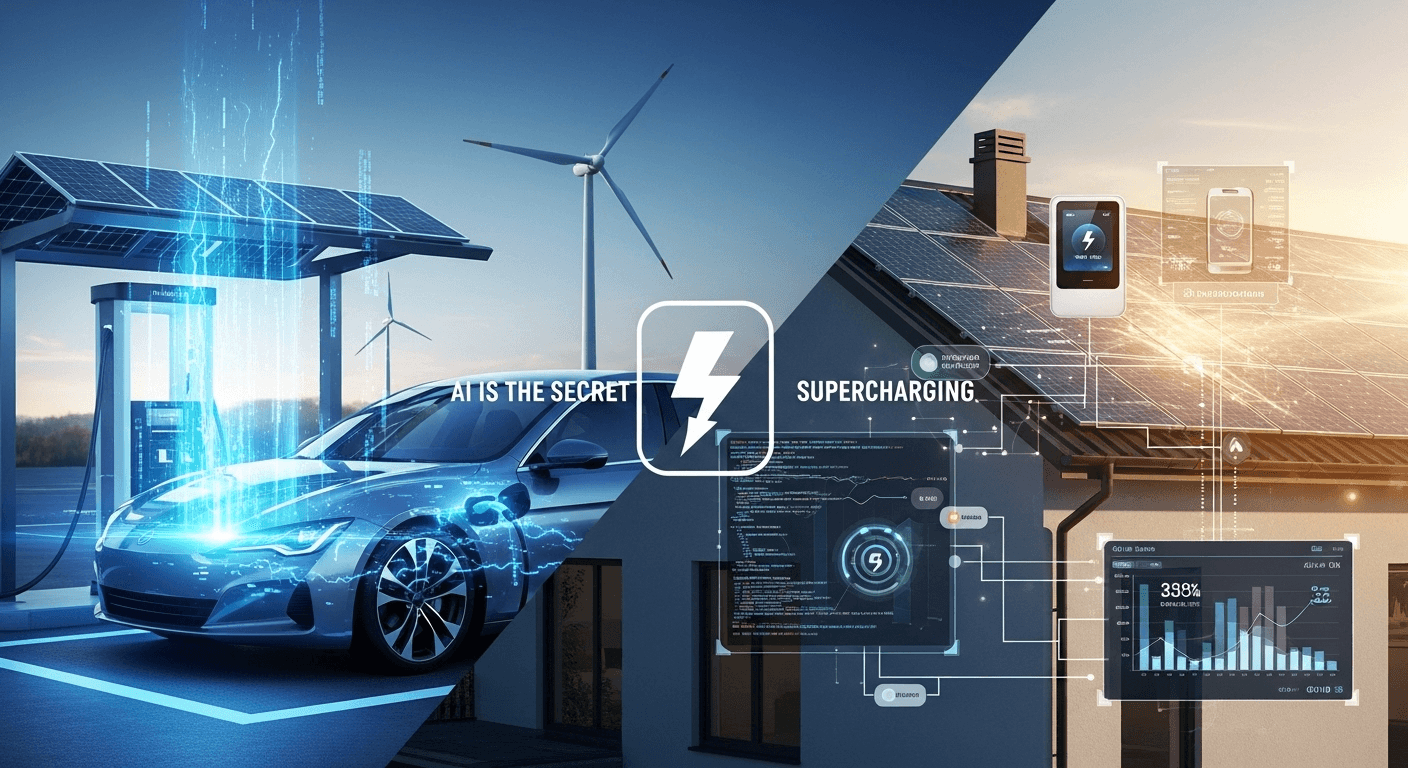
When you hear “AI,” you probably think of ChatGPT or apps that create art from a few words of text. But the most powerful artificial intelligence isn’t just on your screen—it’s silently revolutionizing the physical world, starting in your garage and on your roof. The same kind of intelligence is now making your electric vehicle’s
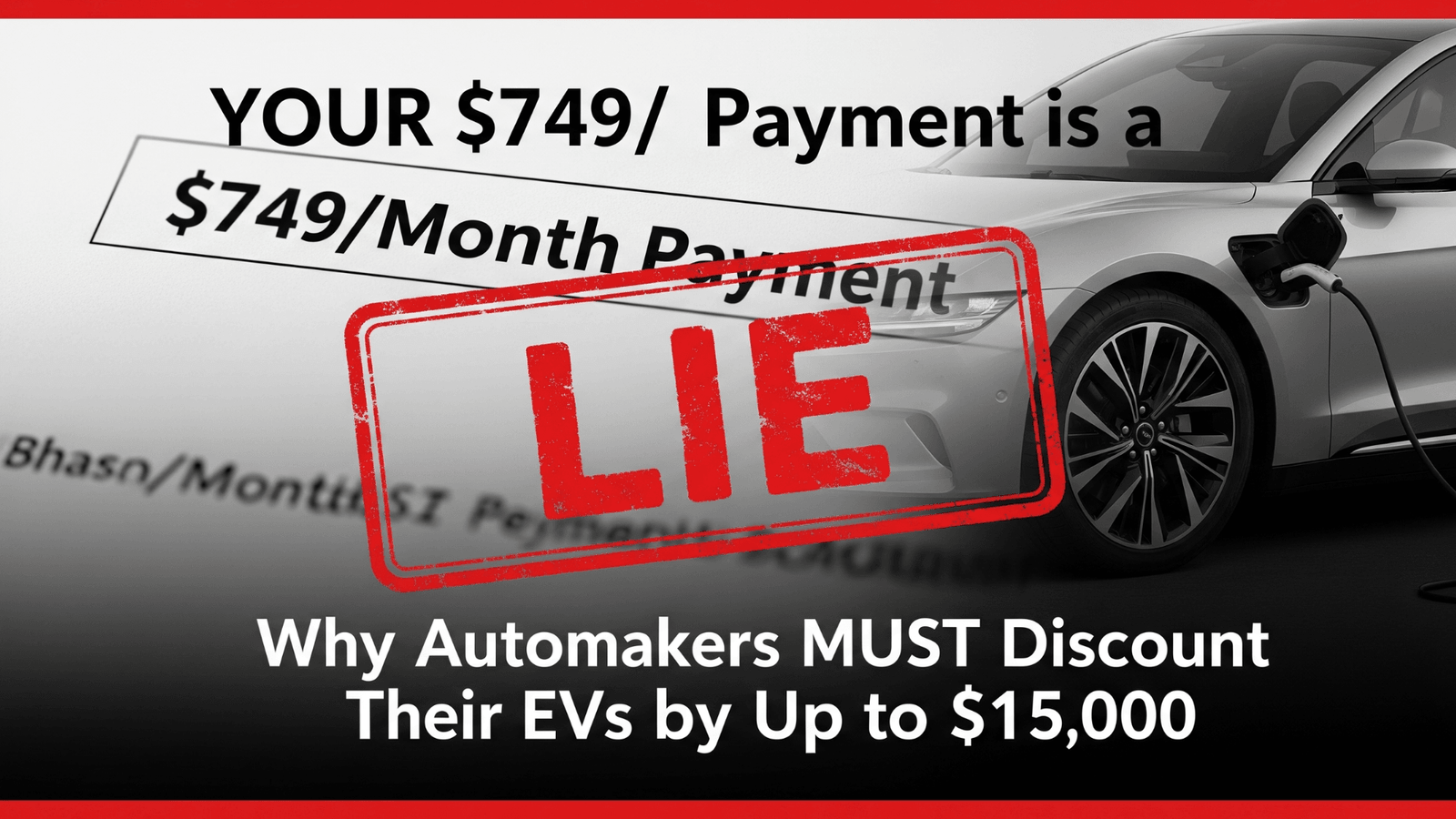
An Engineer’s Guide to the Post-Credit Negotiation Where Manufacturer Rebates and Data Fill the Gap While major financial publications, including the Wall Street Journal, focus on the macroeconomic fallout and sales slowdowns caused by the incentive lapse, Vecharged provides the actionable strategy. This is not a report on the industry problem; it is your definitive
1. The Engineering Explained: The “Double Isolation” Software Fault 2. The New Reality: When Your Car is a Computer on Wheels 3. A Real-World Safety Guide for Affected Owners 4. Putting It in Perspective: An EV Problem or a Modern Car Problem? 5. The Vecharged Verdict Heer Worah I’m a writer and analyst who explores
My expert guidance for navigating the post-credit market dip and locking in your final federal incentives. Let’s be clear: The $7,500 New EV Tax Credit did not expire because of the government shutdown. The major $7,500 EV Tax Credits and the $4,000 Used EV Credits were officially repealed on September 30, 2025, by the One