For the last decade, the electric vehicle revolution was defined by range, speed, and charging networks. As we close out 2025, the conversation is fundamentally shifting. For a growing number of buyers, the most important feature of their next car won’t be how it drives—but how it powers their life when it’s parked.
Vehicle-to-Home (V2H) technology has long been a futuristic concept relegated to pilot programs and engineering labs. But in late 2025, that future officially began its move toward commercial reality. With major rollouts from Polestar and GM Energy, the electric vehicle is evolving from a simple mode of transportation into a comprehensive home energy asset.
For owners of these next-generation models, the EV is no longer just a car. It is a potential backup generator, a smart grid participant, and a money-saving appliance.
The Turning Point: Moving Beyond “Demo Mode”
November 2025 marked a pivotal moment as bidirectional charging finally began to leave the drawing board for consumer driveways.
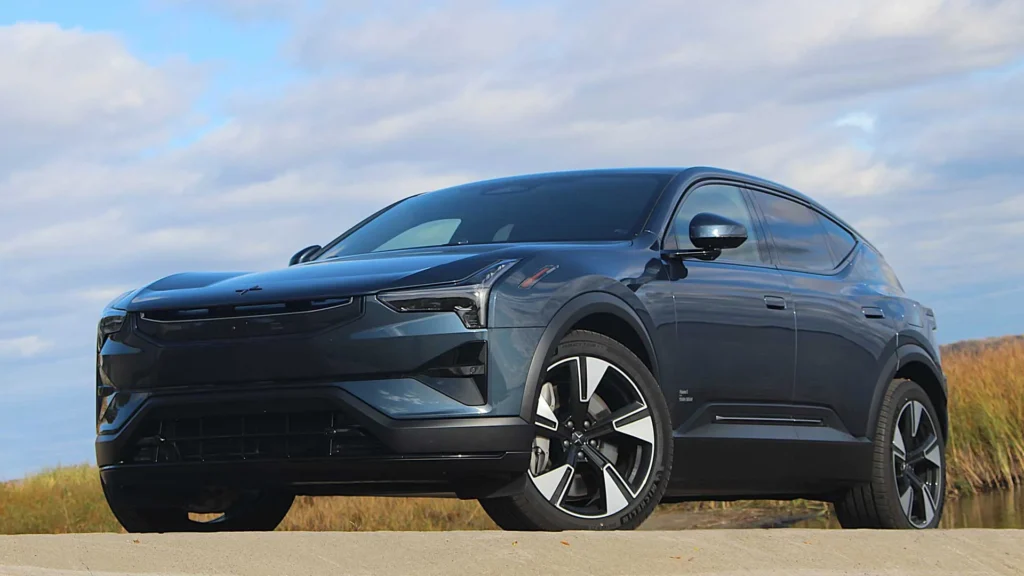
In California, Polestar launched its first commercial V2H offering, partnering with energy tech firm dcbel to turn the Polestar 3 into a dynamic energy hub. While this initial rollout focuses on California, Polestar is simultaneously laying the groundwork for a global shift, working with partners like Zaptec in Europe to enable similar capabilities in the near future.
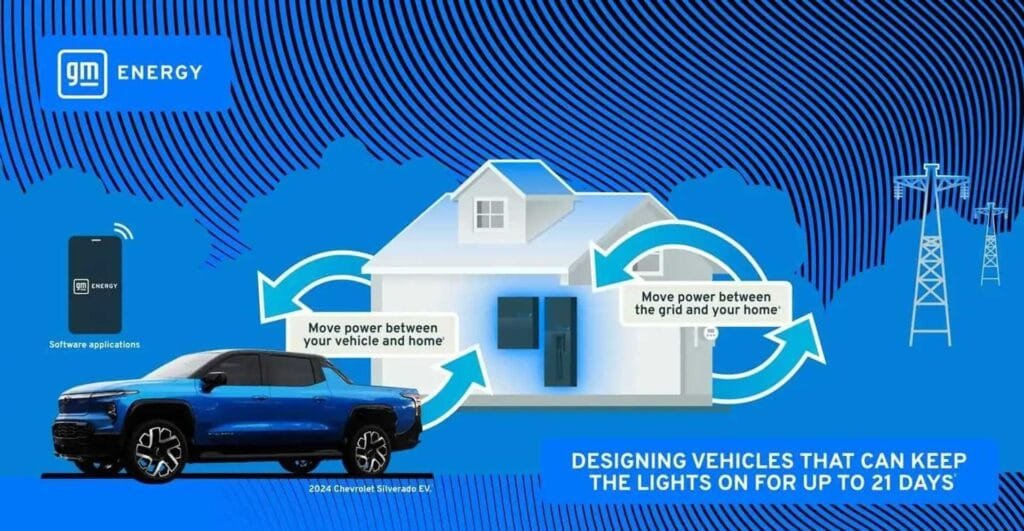
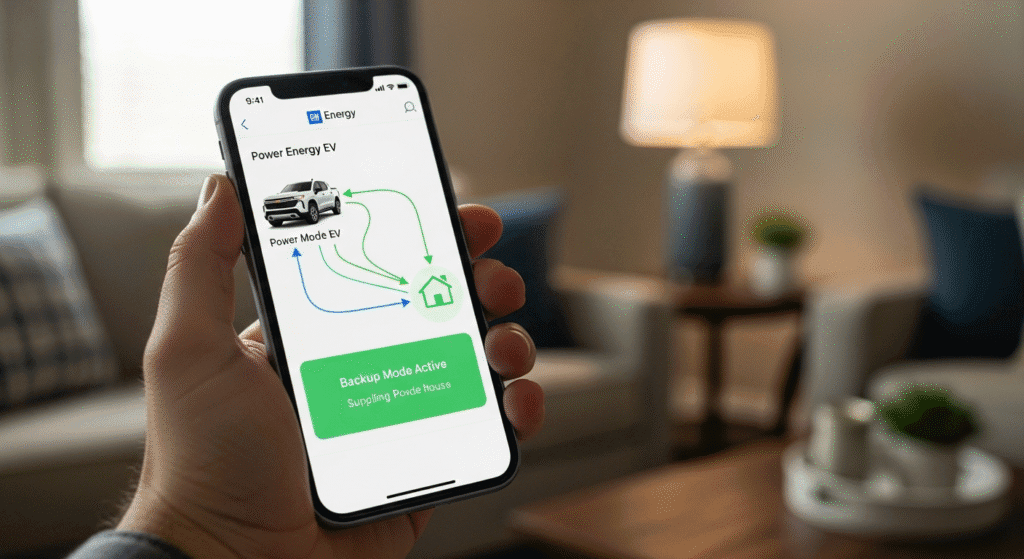
Meanwhile, GM Energy has expanded the ecosystem for its Ultium-based vehicles, such as the Chevrolet Silverado EV and Equinox EV. What began as pilot announcements in 2024 has matured into a commercially available system in 2025, signaling that energy independence is moving from a luxury niche toward a mass-market feature.
The Killer App: Blackout Protection and “Days of Autonomy”
The appeal of V2H is visceral because it addresses a growing anxiety: grid instability. With aging infrastructure and increasingly severe weather events, homeowners are looking for security. However, the level of protection depends heavily on the vehicle’s hardware and the home’s setup.
The Heavy Hitter (Silverado EV): The Chevrolet Silverado EV, equipped with a massive ~200 kWh battery, sets the benchmark. Analysts and installers estimate that under optimal conditions—when paired with residential solar panels and strict energy rationing—it could theoretically power a home for up to 21 days. Without solar, homeowners can still realistically expect roughly one week of resilient backup power.
The Efficient Luxury (Polestar 3): The Polestar 3 carries a smaller, efficient 111 kWh battery. While it doesn’t match the raw capacity of the Silverado, it remains a potent energy asset. Polestar estimates that with careful energy management and solar support, the vehicle can sustain a home for up to 10 days.
This changes the Return on Investment (ROI) calculation for buying an EV. You aren’t just paying for transportation; you are potentially avoiding the cost of a dedicated whole-home standby generator, which can run between $10,000 and $20,000 depending on the home size and installation complexity.
The Financial Arbitrage: Slashing Energy Bills
While emergency backup is the headline feature, the daily economic benefits are arguably more significant. V2H allows homeowners to engage in energy arbitrage:
Charge the EV during off-peak hours (often overnight) when electricity is cheap.
Discharge that stored energy to power the home during peak evening hours when utility rates skyrocket.
By cycling energy this way, owners can slash hundreds of dollars from their annual utility bills. Furthermore, in markets testing “grid services,” utilities are beginning to pay owners for grid stabilization, turning idle cars into revenue-generating assets.
The Market Explosion
The data supports the hype, though the timeline varies by region. The “Power Plant on Wheels” concept is driving significant economic interest.
Rapid Expansion: While exact market valuations fluctuate, industry consensus forecasts a massive surge. Multiple sources project the V2H and bidirectional charging market to grow at a Compound Annual Growth Rate (CAGR) of over 25% through 2035.
The Trajectory: We are moving from a niche market in the low billions today toward a comprehensive ecosystem projected to reach tens of billions by the early 2030s.
The Conflict: Why Utilities Are Worried
This distributed energy revolution is not without friction. Traditional utilities are bracing for impact.
As homeowners gain partial independence from the grid, the traditional utility business model faces disruption. Utilities are facing a dual reality: they need the grid stabilization that V2H can provide, but they are wary of the loss of control and revenue as consumers become their own power plants.
While some forward-thinking providers are embracing the shift with incentives, others are scrambling to adapt infrastructure to handle bidirectional power flows.
Conclusion: A New Era of Ownership
The arrival of functional, commercial V2H technology in late 2025 is a watershed moment. It blurs the line between the automotive and energy industries.
Analysts expect that by 2030, potentially millions of homes could be powered—at least periodically—by the vehicles in their driveways. The future of energy is no longer just about the central grid; it’s about the battery sitting in your garage.
I’m a writer and analyst who explores the clean energy transition, with a focus on electric vehicles and solar power.
My journey began five years ago as a firm skeptic. Determined to debunk the hype around EVs, my in-depth research led to an unexpected conclusion: the future I was questioning was already here. This realization didn’t just change my mind; it put me in the driver’s seat of my own EV.
Today, I’m passionate about sharing the clarity I found. I provide the practical, data-driven insights people need to feel confident and excited about navigating their own path to a sustainable future.
Vecharged is the consumer protection and education initiative of Cleanpower.eco, an organization dedicated to providing a clear, unbiased, and authoritative voice in the clean energy transition. The experts at Cleanpower.eco recognized a critical crisis of trust: the shift to electric vehicles and solar power is one of the most important and expensive decisions a family will make. Yet, the landscape is flooded with biased reviews, confusing marketing, and paid-for endorsements. Vecharged was created to be the shield against that confusion. We were founded on a simple, non-negotiable constitution: We are radically independent. We accept no advertising, sponsorships, or paid placements from any product manufacturer. We have no commercial interest in the products we review. Our only metric for success is your empowerment. Our loyalty is to you, the consumer. Full stop. We ground our brutally honest, hands-on analysis in a deep, foundational understanding of the engineering. We are not just reviewers; we are your advocates.
Yes, it’s real. Lyft is giving away free Day Passes every Saturday in August. But there are crucial tips the official site won’t tell you. Here’s the inside scoop on how to make the most of it. If you live in New York City, you know the summer transportation dilemma. The subway is an oven,
As an engineer and a power sports enthusiast, I know the joy you want to share with your child. I also know the fear. This is my definitive, safety-first guide to choosing the perfect, age-appropriate electric dirt bike. My name is Suhas, and while I often write about high-performance machines, some of my most important
It’s the most hyped electric dirt bike in history. We’re cutting through the noise with a complete technical breakdown, answering every question from top speed and weight to voltage and cost. Every so often, a product arrives that doesn’t just enter a market—it fundamentally redefines it. The Stark Varg is one of those products. When
The legendary Light Bee X gets key upgrades for 2025, including a more powerful battery. But in a more crowded market, is it still the best, and is it the right bike for you? We break it down. For years, the Sur-Ron Light Bee X has existed in a class of its own. It’s not