1. The Engineering Explained: The “Double Isolation” Software Fault
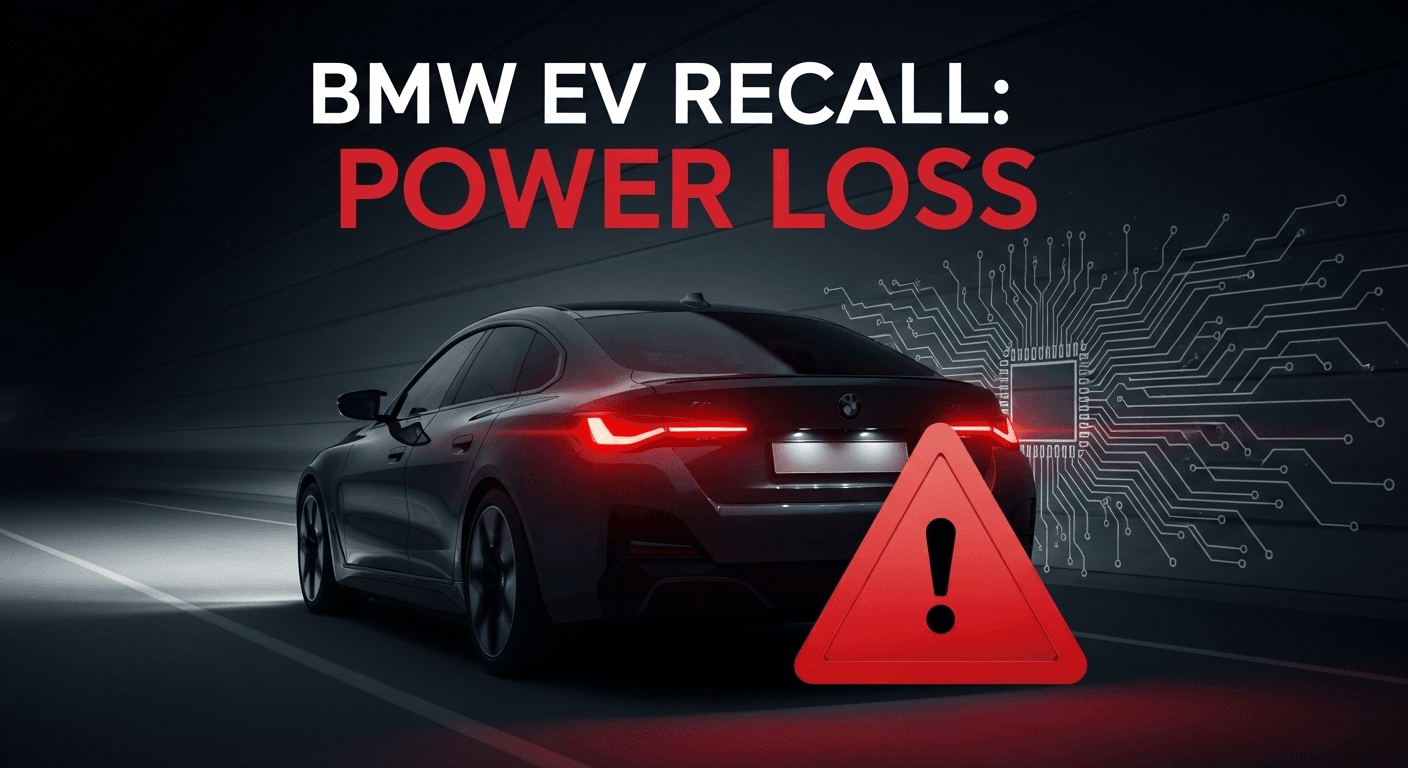
Think of your EV’s high-voltage system as having an extremely sensitive security system. The “double isolation” test is a constant self-check to make sure no electricity is leaking. The software bug in these BMWs has made the security system too sensitive. It’s like a smoke alarm that goes off from a piece of toast; it detects a ‘fault’ that isn’t really there and triggers a safety protocol: temporarily cutting motor power. The software update is designed to correctly tell the difference between toast and a real fire.
2. The New Reality: When Your Car is a Computer on Wheels
This section replaces the incorrect “Marketing vs. Reality” section.
The focus is on the nature of the modern “software-defined vehicle.”
We discuss how millions of lines of code control everything from acceleration to safety systems. This allows for incredible features and OTA updates, but it also means a software bug can be as critical as a mechanical failure.
Key Point: This BMW recall is a perfect example of this new reality. The fix is simple (a software patch), but the potential consequence of the bug is serious.
3. A Real-World Safety Guide for Affected Owners
This section provides corrected, practical advice based on the actual recall.
We explicitly state that there are no charging-related restrictions (like parking outside or avoiding DC fast charging).
The focus is on driving behavior: be aware of your surroundings, leave extra space for maneuvers, and be cautious when pulling into intersections or merging onto highways until the software is updated.
4. Putting It in Perspective: An EV Problem or a Modern Car Problem?
We re-frame this section to focus on software.
This isn’t a fundamental flaw in EV technology. It’s a software integration issue, a type of recall that is becoming increasingly common across all modern vehicles, including gasoline cars with advanced driver-assist systems.
We emphasize that the OTA update capability is a major advantage for EVs, allowing for a quicker and more convenient fix than requiring a dealership visit for a mechanical part replacement.
5. The Vecharged Verdict
The BMW EV recall for the motor software fault is a critical lesson in the new reality of car ownership. The most complex component in your vehicle is no longer just the engine or the battery, but the software that orchestrates everything. While the temporary loss of power is a significant safety concern that requires immediate attention, this recall is ultimately a software problem with a straightforward software solution. It underscores the need for manufacturers to invest in rigorous software testing. For owners, it’s a reminder to treat software update notifications with the same urgency as a “check engine” light, ensuring your vehicle’s digital brain is always operating as safely and reliably as its physical components.
I’m a writer and analyst who explores the clean energy transition, with a focus on electric vehicles and solar power.
My journey began five years ago as a firm skeptic. Determined to debunk the hype around EVs, my in-depth research led to an unexpected conclusion: the future I was questioning was already here. This realization didn’t just change my mind; it put me in the driver’s seat of my own EV.
Today, I’m passionate about sharing the clarity I found. I provide the practical, data-driven insights people need to feel confident and excited about navigating their own path to a sustainable future.
Vecharged is the consumer protection and education initiative of Cleanpower.eco, an organization dedicated to providing a clear, unbiased, and authoritative voice in the clean energy transition. The experts at Cleanpower.eco recognized a critical crisis of trust: the shift to electric vehicles and solar power is one of the most important and expensive decisions a family will make. Yet, the landscape is flooded with biased reviews, confusing marketing, and paid-for endorsements. Vecharged was created to be the shield against that confusion. We were founded on a simple, non-negotiable constitution: We are radically independent. We accept no advertising, sponsorships, or paid placements from any product manufacturer. We have no commercial interest in the products we review. Our only metric for success is your empowerment. Our loyalty is to you, the consumer. Full stop. We ground our brutally honest, hands-on analysis in a deep, foundational understanding of the engineering. We are not just reviewers; we are your advocates.
When you hear “AI,” you probably think of ChatGPT or apps that create art from a few words of text. But the most powerful artificial intelligence isn’t just on your screen—it’s silently revolutionizing the physical world, starting in your garage and on your roof. The same kind of intelligence is now making your electric vehicle’s
An Engineer’s Guide to the Post-Credit Negotiation Where Manufacturer Rebates and Data Fill the Gap While major financial publications, including the Wall Street Journal, focus on the macroeconomic fallout and sales slowdowns caused by the incentive lapse, Vecharged provides the actionable strategy. This is not a report on the industry problem; it is your definitive
1. The Engineering Explained: The “Double Isolation” Software Fault 2. The New Reality: When Your Car is a Computer on Wheels 3. A Real-World Safety Guide for Affected Owners 4. Putting It in Perspective: An EV Problem or a Modern Car Problem? 5. The Vecharged Verdict Heer Worah I’m a writer and analyst who explores
My expert guidance for navigating the post-credit market dip and locking in your final federal incentives. Let’s be clear: The $7,500 New EV Tax Credit did not expire because of the government shutdown. The major $7,500 EV Tax Credits and the $4,000 Used EV Credits were officially repealed on September 30, 2025, by the One