Is an EV Really Cheaper? A Look at the 5 Hidden Costs
When I bought my first electric car, I had visions of driving past gas stations with a smug grin, my wallet feeling heavier every day. No more oil changes. No more engine maintenance. The savings, I thought, would be endless.
And for the most part, I was right. The big, obvious costs of my old gas car vanished. But over time, a new set of expenses—quieter, more subtle ones—started to appear.
This isn’t a story about how EVs are secretly expensive. They aren’t. For most people, the savings are real and significant. This is the honest conversation I wish someone had with me before I bought mine. It’s about understanding the new costs you’re trading for the old ones.
Let’s open the ledger and look at the real, complete picture.
First, The Obvious Wins (The “Savings” Column)
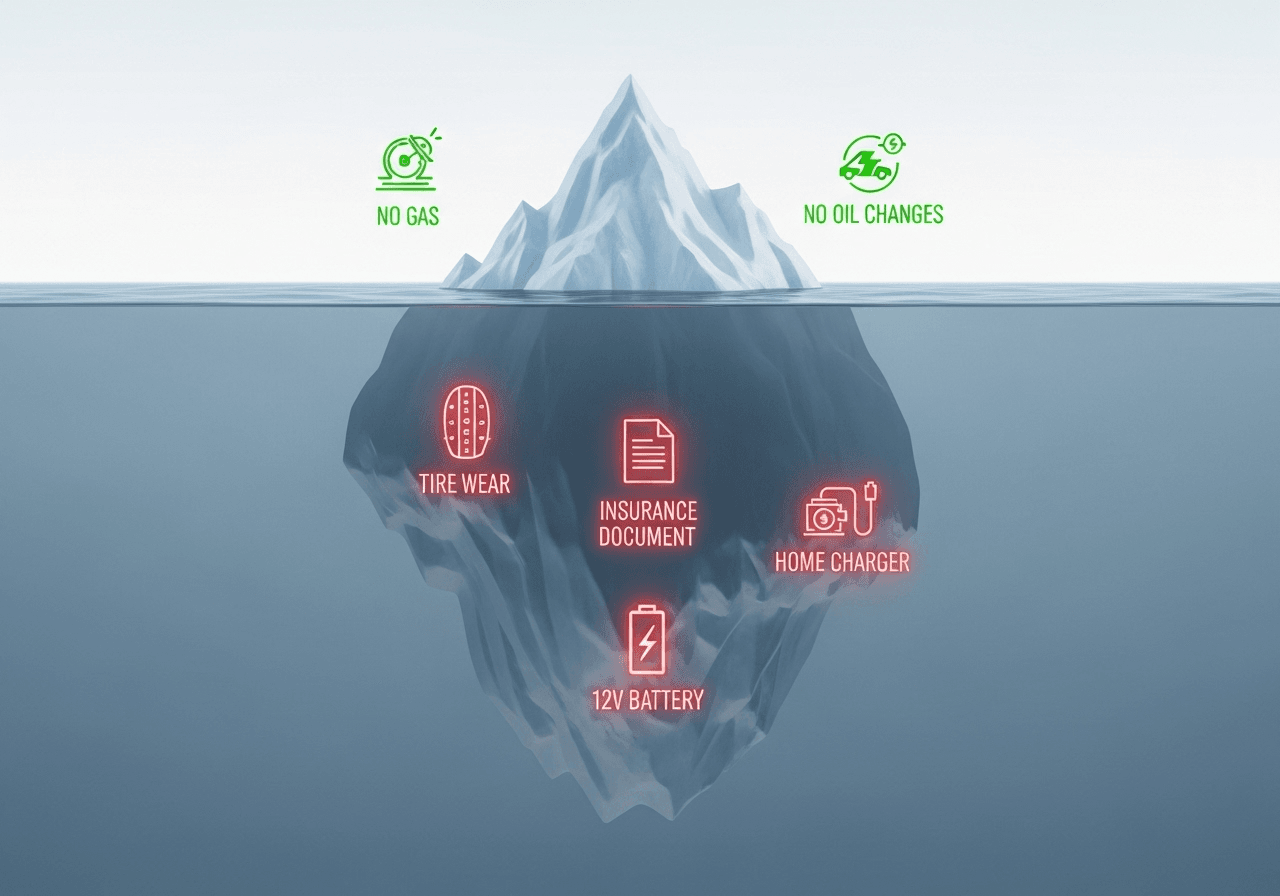
Let’s get this out of the way, because the savings are huge. With an EV, you say goodbye to:
Gasoline: (Average savings: $1,500 – $2,500 per year)
Oil Changes: (Average savings: $200 – $400 per year)
Engine Maintenance: No spark plugs, belts, or exhaust systems to fix. (Savings: Variable, but significant over time)
This is the amazing part of EV ownership. But it’s only half the story.
The Silent Costs Nobody Talks About (The “New Expenses” Column)
Here are the new line items that showed up on my financial radar.
1. Your Tires Will Vanish (A Little Faster Than Usual)
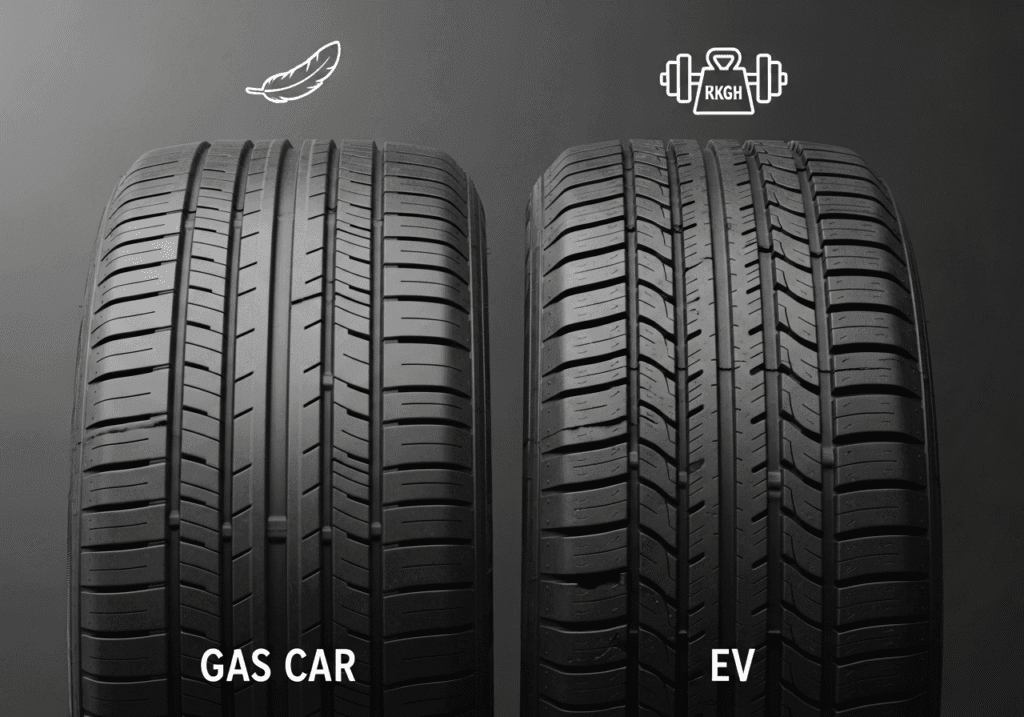
This was my first surprise. After about 25,000 miles, my tires were already nearing the end of their life. My old gas car could easily go 40,000 miles on the same set. What was going on?
The “Why”: Two things are happening. First, EVs are heavy. That giant battery pack adds a lot of weight. Second, they have instant torque. That thrilling, silent acceleration is fantastic, but it puts a much higher strain on the rubber.
The Cost: Expect to replace your tires about 20-30% sooner than you would on a comparable gas car. If a set of tires costs you $1,000, this could be an extra “silent cost” of a few hundred dollars every couple of years.
The Takeaway: It’s a real cost, but a manageable one. Budget for it, and don’t be shocked when your mechanic gives you the news a bit earlier than you’re used to.
2. The Insurance Question: A Tale of Two Premiums
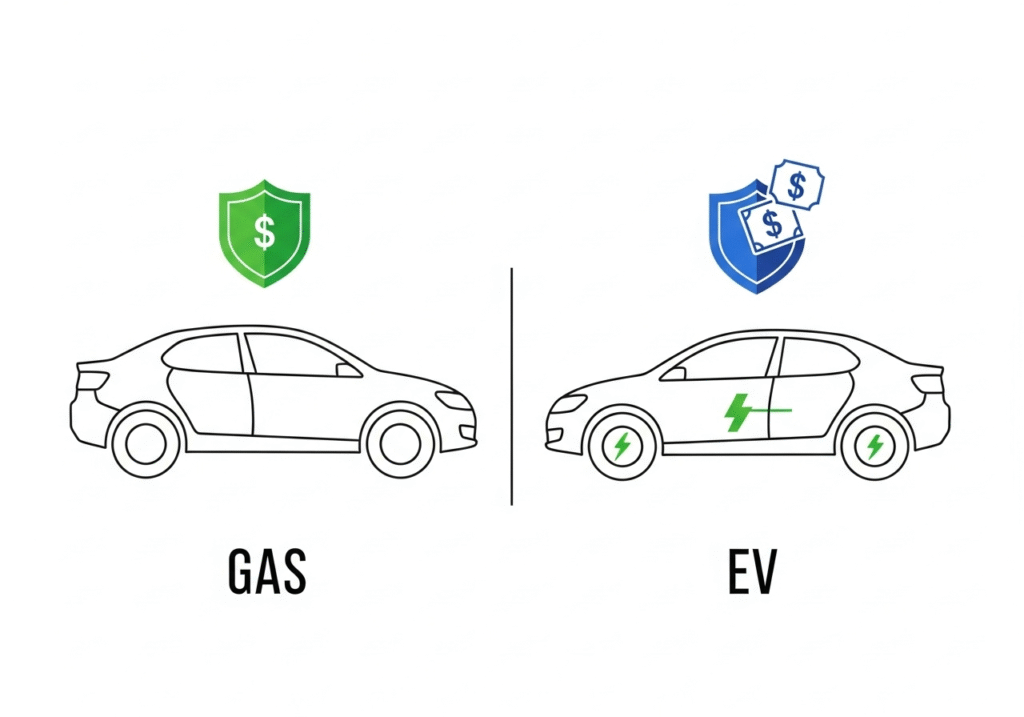
My insurance bill went up when I switched to an EV, and it wasn’t by a small amount. This is a common story.
The “Why”: It’s simple risk assessment for the insurance companies. EVs generally have a higher purchase price, and their specialized components (like the battery pack, sensors, and cameras) are more expensive to repair after an accident than a simple steel bumper.
The Cost: This varies wildly, but it’s not uncommon for an EV’s insurance premium to be 15-25% higher than a similar gas-powered car.
The Takeaway: Before you buy an EV, get an insurance quote first! The monthly premium is a real part of your total cost of ownership, and it can eat into your gas savings if you’re not prepared.
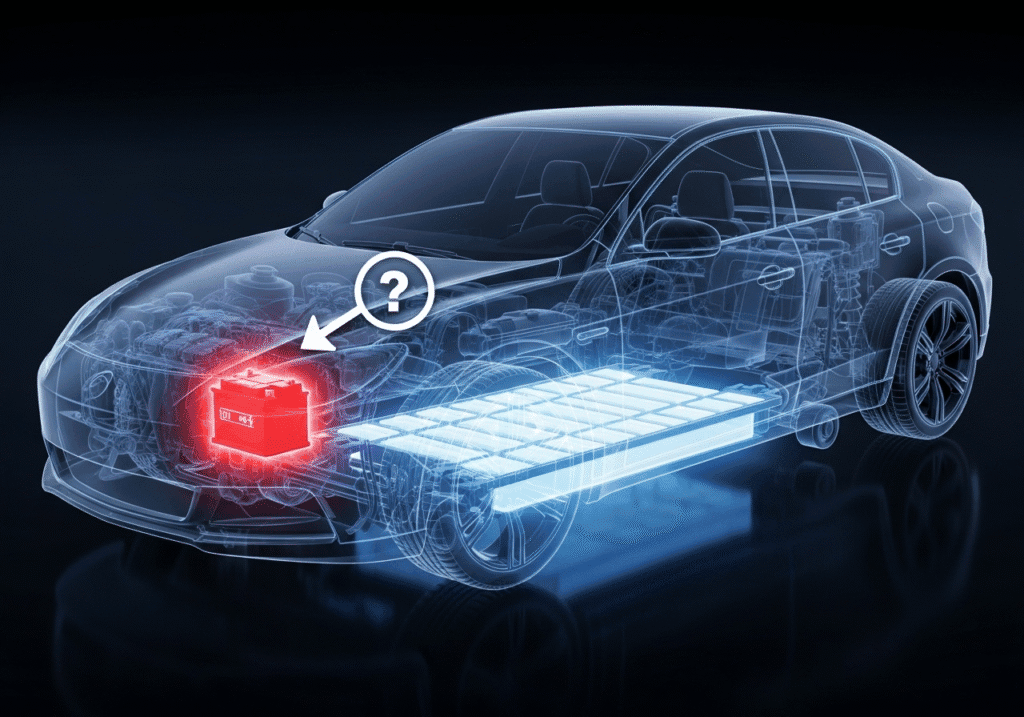
3. The “Other” Battery (The $200 Annoyance)
Yes, your super-advanced, futuristic electric car has the same Achilles’ heel as a 1998 Honda Civic: a little black box called a 12-volt battery.
The “Why”: While the giant lithium-ion battery powers the wheels, this little guy runs all the basics: your car’s computer, the door locks, the interior lights, and the screen. And just like in a gas car, it wears out and dies, usually every 3-5 years.
The Cost: A new 12-volt battery can cost anywhere from $150 to $300, installed.
The Takeaway: This isn’t a huge expense, but it’s a “gotcha” moment that can leave you stranded if you’re not expecting it. It’s a reminder that even an EV has some old-school parts that need replacing.
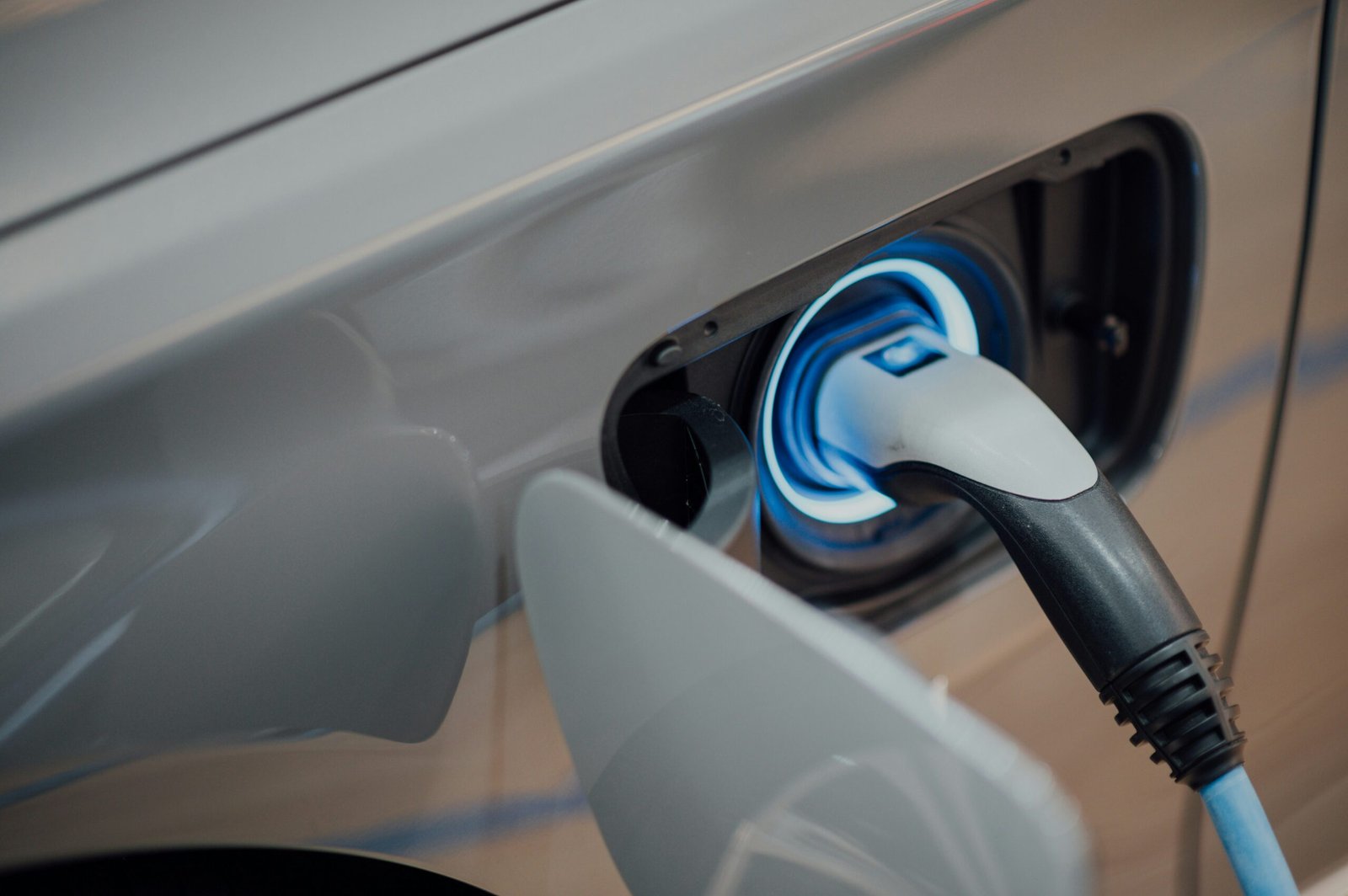
4. The Home Charger: Your First Big “Fuel” Purchase
You can technically charge an EV from a standard wall outlet, but it’s like trying to fill a swimming pool with a garden hose. To own an EV properly, you need a Level 2 home charger.
The “Why”: A Level 2 charger provides fast, reliable overnight charging, making your EV ownership experience seamless.
The Cost: The charger itself can cost between $400 and $800. The professional installation by an electrician can range from $500 to $1,500+, depending on your home’s wiring.
The Takeaway: Factor in a one-time cost of around $1,500 as part of the initial “price” of getting into EV ownership. The good news is that there are often federal and state tax credits to help offset this cost.
5. The Post-Warranty Fear: Specialized Repairs
With a gas car, you know that after the warranty expires, you might need to replace a transmission or an alternator. With an EV, the long-term fears are different.
The “Why”: While the electric motor is incredibly reliable, other high-tech parts can fail. A broken charge port, a malfunctioning touch screen, or a faulty battery cooling pump are not things your local mechanic can easily fix.
The Cost: This is the great unknown. A new touch screen could be $1,500. A new charge port could be over $2,000.
The Takeaway: This isn’t a guaranteed cost, but a risk to be aware of. Just as you’d set money aside for potential gas car repairs, it’s wise to do the same for an EV. The problems are different, but the need for a “just-in-case” fund is the same.
The Final Verdict: So, Is It Still Worth It?
After laying all this out, you might be wondering if you’ve been sold a false promise. Let me be clear:
For most people, the answer is a resounding yes. An EV is still significantly cheaper to own over its lifetime.
The game isn’t about avoiding costs; it’s about understanding what you’re trading. You’re trading a few loud, obvious, and frequent costs (gas!) for a handful of quieter, less frequent, and newer costs (tires, insurance).
Owning an EV isn’t about eliminating every expense. It’s about being a smarter, more informed owner. You’re stepping into the future of driving, and now you know exactly what to expect when you get there. And that knowledge is the most valuable thing you can have.
Suhas Shrikant is the founder of Vecharged and an engineering enthusiast specializing in high-power off-grid solar systems. He has designed and built over a dozen custom systems and uses his hands-on, field-tested experience to create Vecharged’s expert guides and reviews.
Vecharged is the consumer protection and education initiative of Cleanpower.eco, an organization dedicated to providing a clear, unbiased, and authoritative voice in the clean energy transition. The experts at Cleanpower.eco recognized a critical crisis of trust: the shift to electric vehicles and solar power is one of the most important and expensive decisions a family will make. Yet, the landscape is flooded with biased reviews, confusing marketing, and paid-for endorsements. Vecharged was created to be the shield against that confusion. We were founded on a simple, non-negotiable constitution: We are radically independent. We accept no advertising, sponsorships, or paid placements from any product manufacturer. We have no commercial interest in the products we review. Our only metric for success is your empowerment. Our loyalty is to you, the consumer. Full stop. We ground our brutally honest, hands-on analysis in a deep, foundational understanding of the engineering. We are not just reviewers; we are your advocates.
Selling an electric car is very different from selling a petrol or diesel vehicle. Buyers today care less about the odometer and more about battery health, charging history, warranty coverage, and software features. The good news is that a well-maintained EV can still command strong resale value if you prepare it properly. This guide gives
By Rahul — EV owner, reviewer, and long-time clean energy enthusiast Financing or leasing an electric car in early 2026 is not the same as it was just one year ago. The biggest shift was the end of all federal EV tax credits on September 30, 2025, including: Manufacturers can no longer claim any of
By Rahul — EV Enthusiast & Automotive Analyst at VeCharged ⚠️ Important Disclaimer (Must Read) The Clean Vehicle Credit program (new EV $7,500 credit + used EV $4,000 credit) ended on September 30, 2025. This single policy change fundamentally shifts the cost comparison between new and used EVs. If you’re planning to buy or sell
For the last decade, the electric vehicle revolution was defined by range, speed, and charging networks. As we close out 2025, the conversation is fundamentally shifting. For a growing number of buyers, the most important feature of their next car won’t be how it drives—but how it powers their life when it’s parked. Vehicle-to-Home (V2H)