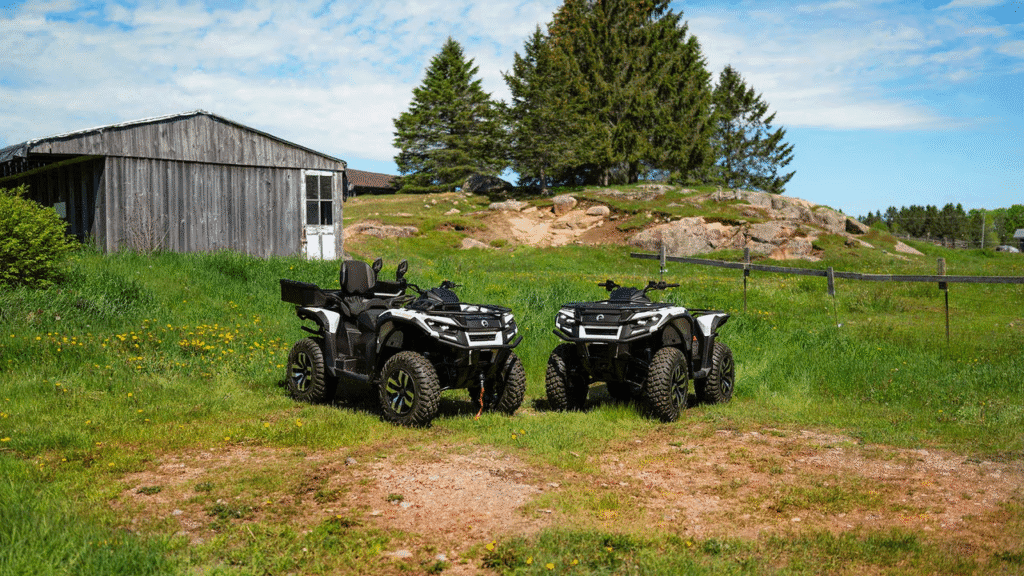
The idea is almost perfect. A powerful, capable ATV that can glide through the woods in near silence. No gas cans, no fumes, no startling the wildlife. Just the sound of the tires on the trail and the instant, massive torque of an electric motor. It’s the dream of every hunter, farmer, and landowner.
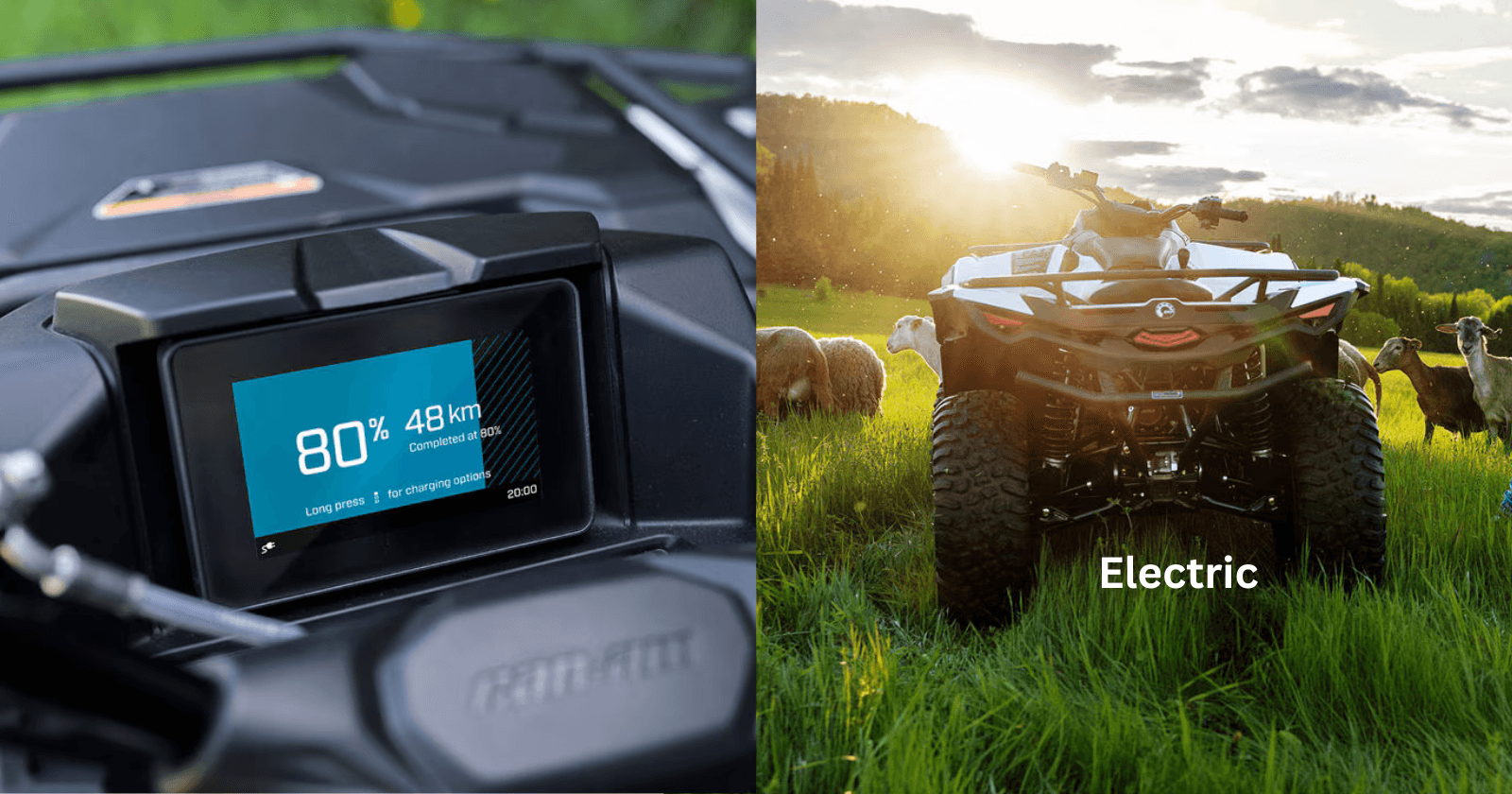
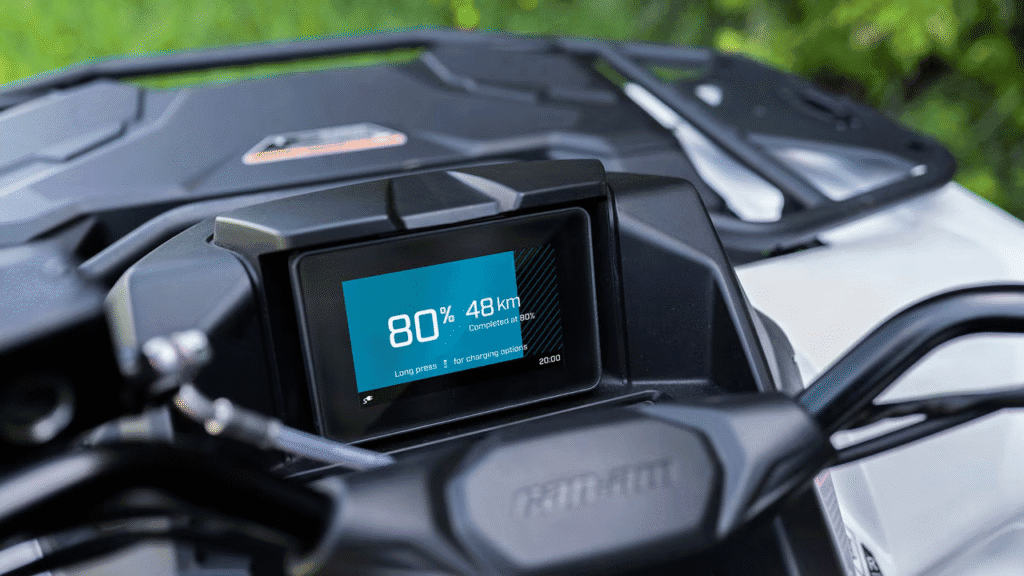
And then you look at the specs. You see a legendary brand like Can-Am, a name synonymous with performance, offering an electric ATV with… lead-acid batteries? A 20-mile range? An 8-hour charge time?
Suddenly, the dream is clouded with confusion. Is this a gimmick? Is the technology just not ready? Why does a top-tier brand seem to be using decade-old tech?
As an engineer, this is the kind of disconnect that fascinates me. We’re here to answer the tough questions. This is not another “Top 5” list. This is the Vecharged “Reader-First Shield,” a deep-dive analysis designed to protect your wallet and empower you with the truth about the state of electric ATVs today.
First, A Reality Check: The Off-Grid Task Calculator
Before you even think about which model to buy, you need to answer one question: what is the job you need to do? We built this “Unfair Advantage” tool to translate your daily tasks into a clear verdict on the technology you actually need.
Vecharged Off-Grid Task & Range <a href="https://vecharged.com/portable-power-playground/">Calculator</a>
Your Vecharged Recommendation:
The Elephant in the Room: Lead-Acid vs. Lithium-Ion Batteries
This is the single most important concept in the electric ATV market, and what other reviews won’t tell you.
Analogy: The Power Tool
A Lead-Acid Battery is the heavy, clunky, wired drill your dad used in the 90s. It’s reliable, it’s cheap, but it’s an anchor.
A Lithium-Ion Battery is the lightweight, powerful, fast-charging cordless drill you use today. It is a fundamentally superior technology in every meaningful way.
This is proven, cheap, and reliable technology. It is also completely obsolete for a modern performance vehicle.
This is the modern standard for any serious EV. It is more expensive upfront but provides a vastly superior ownership experience.
Case Study: The 2025 Can-Am Outlander Electric
Now let’s apply this knowledge to the Can-Am itself.
The Marketing Claim: “Whisper-quiet operation and zero emissions… a game-changer for modern landowners and hunters.”
The Vecharged Reality Check: The silent operation is a genuine, massive advantage. For hunters or ranchers, the ability to move across your property without spooking animals is a true game-changer.
The “Reader-First Shield” Warning: The performance specifications are a major compromise dictated by the lead-acid battery.
Range: “Up to 20 miles” (32 km). In the real world, on hilly terrain or in cold weather, this will be closer to 12-15 miles.
Charge Time: 8 hours for a full charge. This means your work day ends when the battery is empty. There is no “quick top-up.”
Weight: The electric model is significantly heavier than its gas-powered equivalent, which impacts handling on tight trails.
The Vecharged Verdict: Who Should (and Should NOT) Buy This ATV?
The Can-Am Outlander Electric is not a “bad” ATV. But it is a highly specialized tool, not a versatile one.
This ATV is a SMART choice for you if:
You are a farmer, rancher, or landowner with a clearly defined, short-range set of daily tasks.
Your property is under a few hundred acres.
“Silent operation” is the single most important feature for you.
You plan to charge it overnight and use it for a few hours of work the next day.
Our Protective Advice: You MUST AVOID this ATV if:
You are a recreational trail rider. The range is simply not sufficient for a day of exploring.
You need a machine for all-day, heavy-duty work. The 8-hour charge time will become a major bottleneck.
You expect the fast-charging convenience of a modern EV like a Tesla.
For many potential buyers, a better choice would be a traditional gas-powered Can-Am Outlander 450 (which is cheaper and more versatile) or a more expensive, lithium-ion powered competitor like the Polaris Ranger EV. The Can-Am Outlander Electric is a brilliant solution for a very narrow problem, and you need to be honest about whether that problem is yours.
Suhas Shrikant is the founder of Vecharged and an engineering enthusiast specializing in high-power off-grid solar systems. He has designed and built over a dozen custom systems and uses his hands-on, field-tested experience to create Vecharged’s expert guides and reviews.
Vecharged is the consumer protection and education initiative of Cleanpower.eco, an organization dedicated to providing a clear, unbiased, and authoritative voice in the clean energy transition. The experts at Cleanpower.eco recognized a critical crisis of trust: the shift to electric vehicles and solar power is one of the most important and expensive decisions a family will make. Yet, the landscape is flooded with biased reviews, confusing marketing, and paid-for endorsements. Vecharged was created to be the shield against that confusion. We were founded on a simple, non-negotiable constitution: We are radically independent. We accept no advertising, sponsorships, or paid placements from any product manufacturer. We have no commercial interest in the products we review. Our only metric for success is your empowerment. Our loyalty is to you, the consumer. Full stop. We ground our brutally honest, hands-on analysis in a deep, foundational understanding of the engineering. We are not just reviewers; we are your advocates.
The new Delta Pro 3 is a triumph of portable power engineering. We review its incredible capabilities and then ask the expert question: For stationary home backup, can you achieve true power independence for the same money? In the rapidly escalating arms race of portable power stations, a few products stand out as true behemoths.
They may look like regular tires, but EV-specific rubber is a high-tech marvel designed to handle instant torque, immense weight, and silence. Here’s everything you need to know. Tires are often the most overlooked component of any vehicle. For most cars, they are simple consumables. But for an electric vehicle, the right tires are a
H.R. 1 has passed, phasing out the popular Residential Clean Energy Credit. Our guide provides the verified timeline, a cost-of-waiting calculator, and a clear action plan. [Fact Checked] If you’ve seen the term “big beautiful bill” trending online in connection with solar energy, you might believe good news is on the way. What you’ve heard
A deep dive into Toyota’s claimed 10-minute charge for a 1,200 km range, why this changes everything for the electric vehicle industry, and what it means for you. For over a decade, the electric vehicle revolution has felt like a steady climb up a steep mountain. Every year, batteries get a little better, range increases