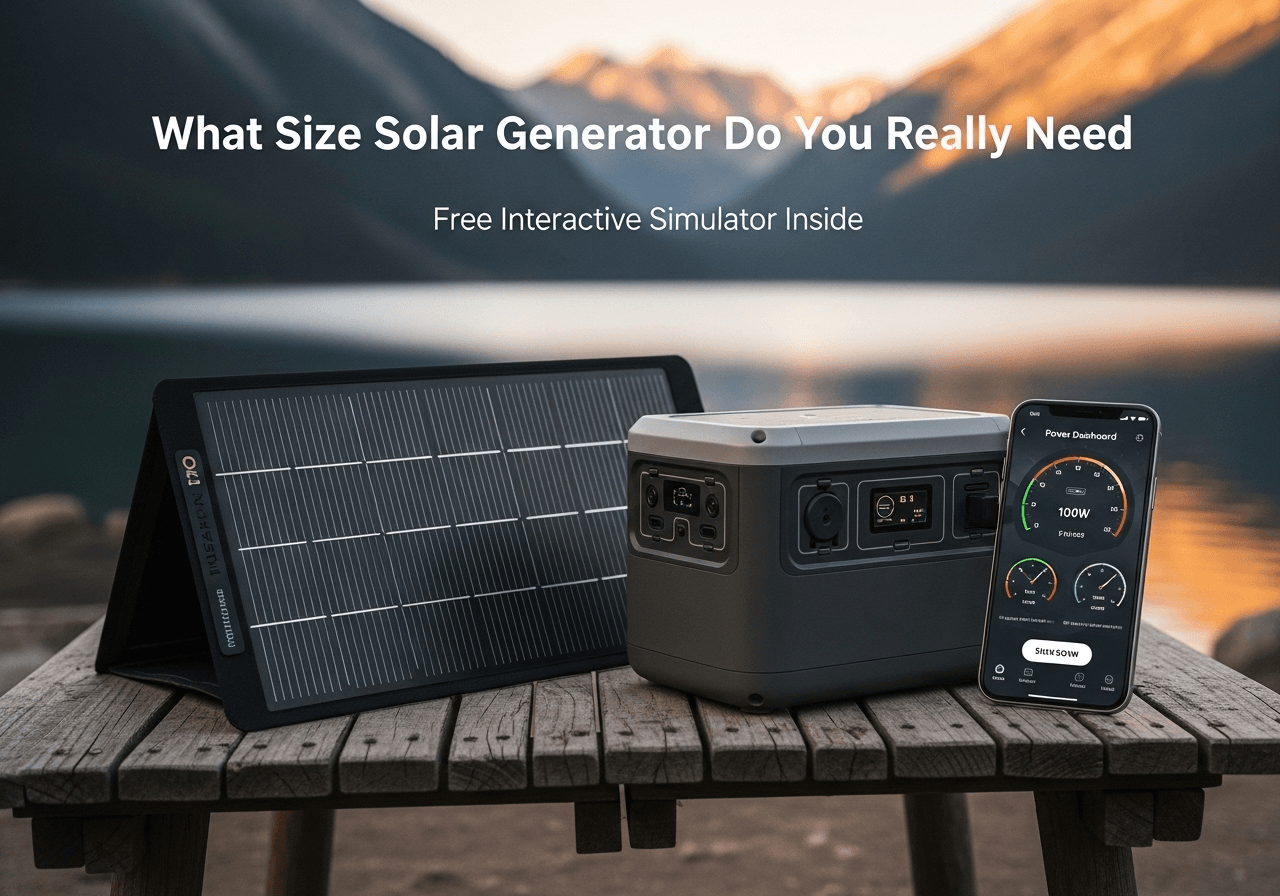
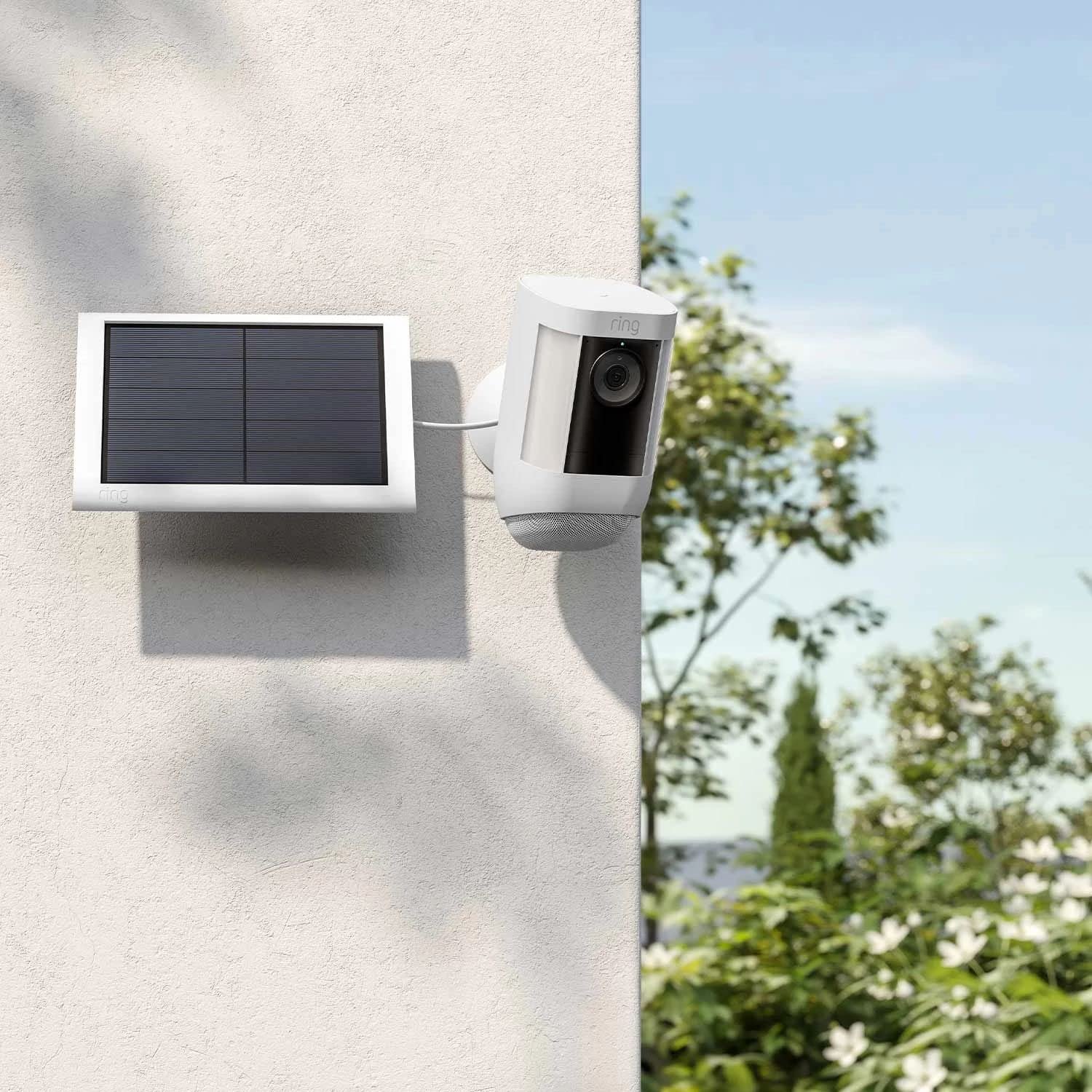
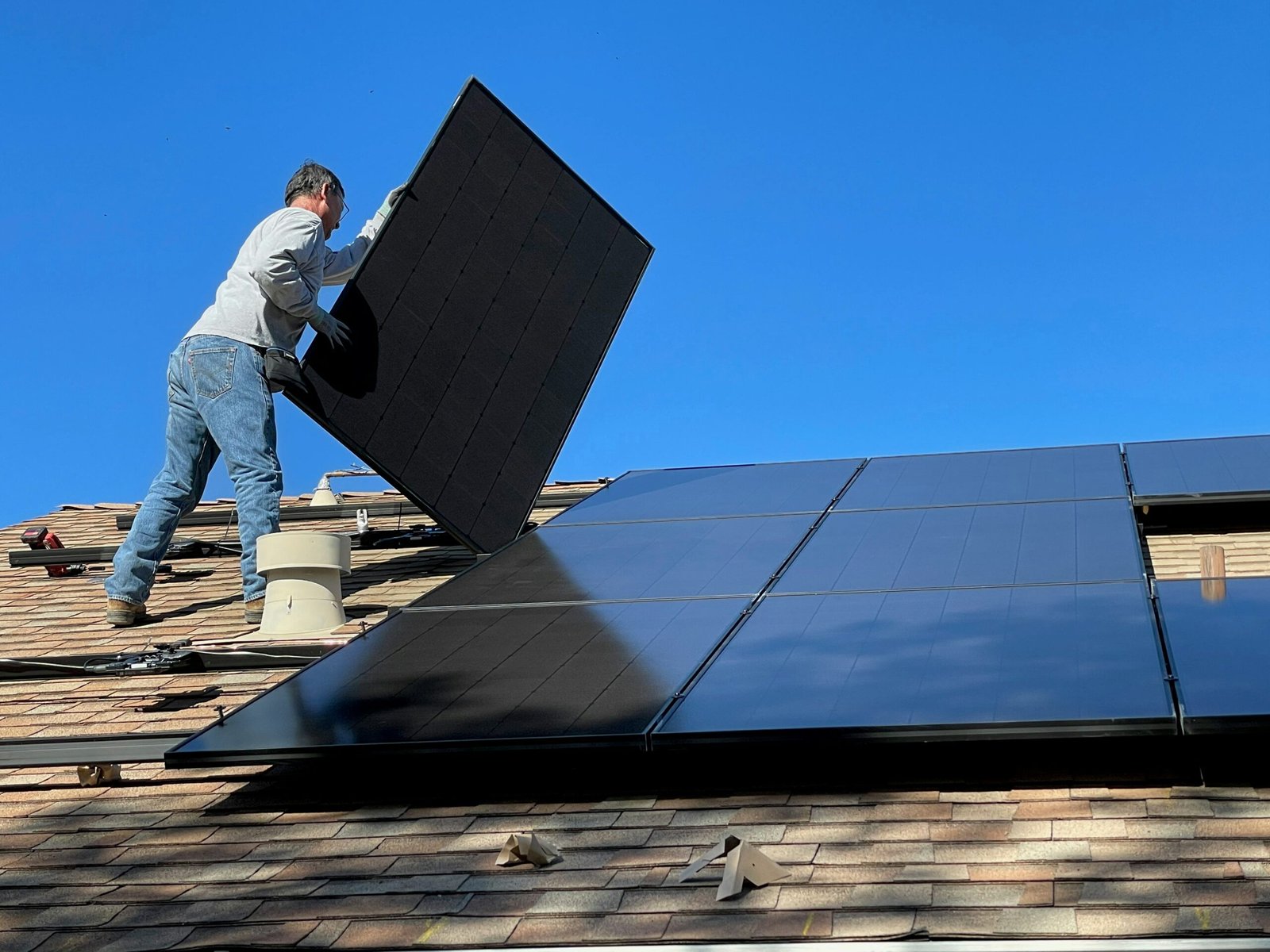
The Portable Solar Panel Tech You Need to Know in 2025 (Bifacial & More)
There’s a unique kind of magic in unfurling a portable solar panel at a remote campsite. It feels like alchemy—turning pure sunlight into tangible power that charges your phone, cools your drinks, and lights up your night. It’s the promise of true freedom.
But when you decide to buy one, that magic quickly gets buried under an alphabet soup of intimidating specs: Monocrystalline, ETFE, IP68, MC4, Bifacial… what on earth does it all mean? It’s enough to make anyone’s head spin.
I’ve been obsessed with this gear for years, and I’m here to tell you that it’s far less complicated than it seems. We’re going to peel back the layers, look at the genuinely exciting tech that’s changing the game (like panels that work on both sides), and by the end of this guide, you won’t just understand the specs—you’ll be excited by them.
Chapter 1: The Anatomy of a Great Panel (The Three Things That Matter)
Before we get into the cool types, let’s establish what makes any portable panel worth your money. It comes down to three things:
Efficiency (The Engine): This is the most important metric. It measures how good the panel is at converting sunlight into electricity. A higher efficiency percentage means you get more power from a smaller surface area. A 23% efficient panel will charge your gear faster than a 19% efficient panel of the same size. For portable panels, anything over 22% is excellent.
Durability (The Armor): These panels live a tough life. They get scraped, rained on, and packed away. You want one built to last.
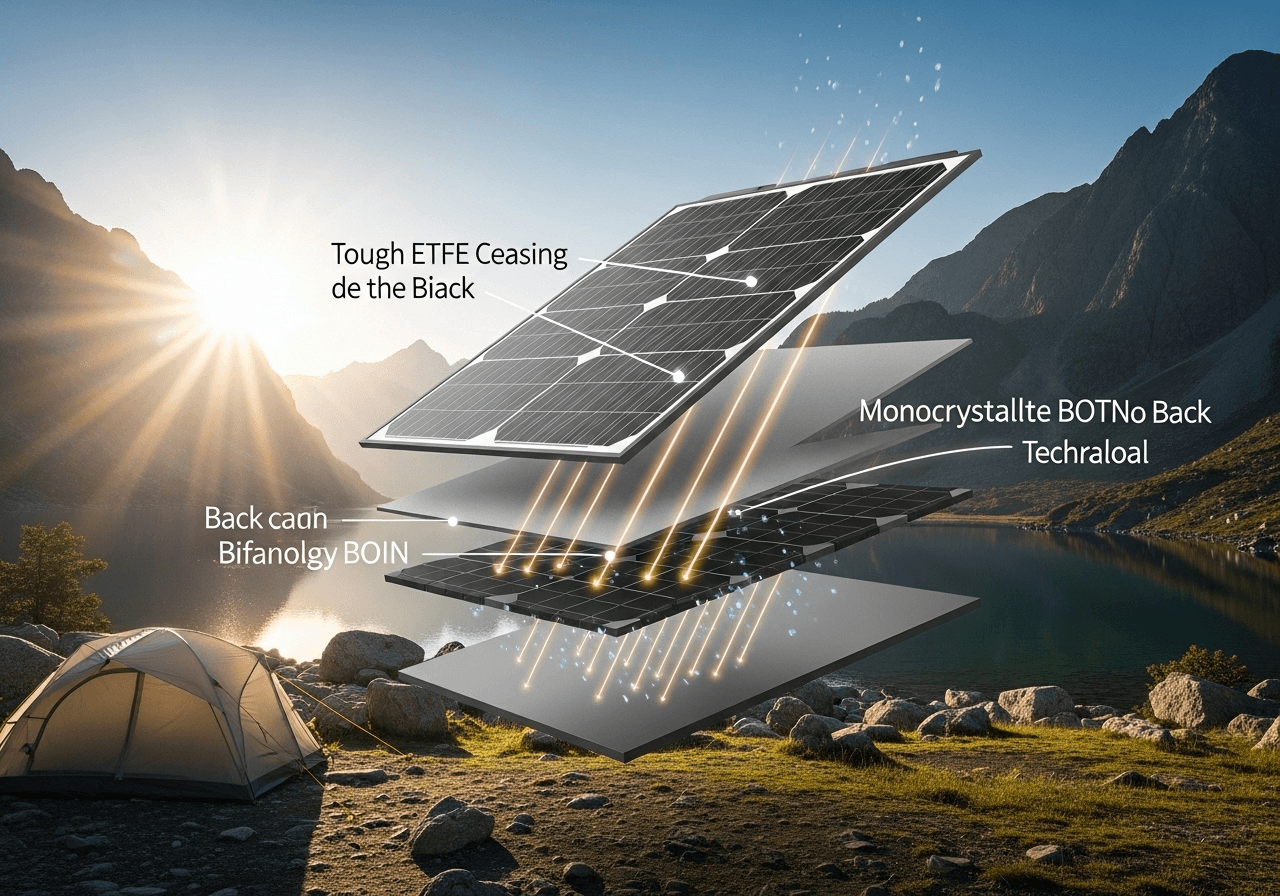
Look for ETFE Coating: This is a tough, multi-layer laminate that resists scratches, and dirt, and sheds water better than older PET coatings. It’s the gold standard.
Look for an IP67 or IP68 Rating: This is a dust and water resistance rating. An IP68 rating means the panel can technically be submerged in water and survive. You won’t be doing that, but it means you don’t have to panic if a sudden rainstorm hits.
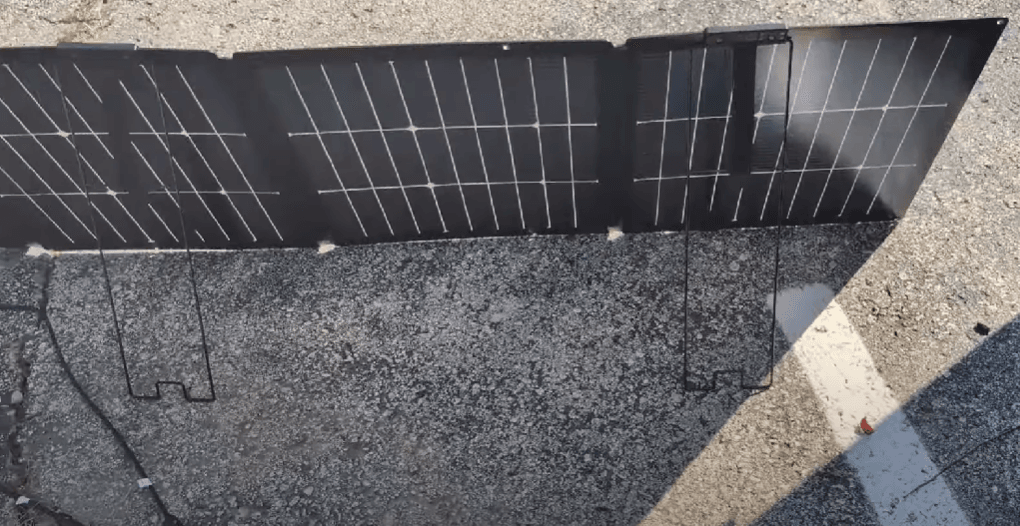
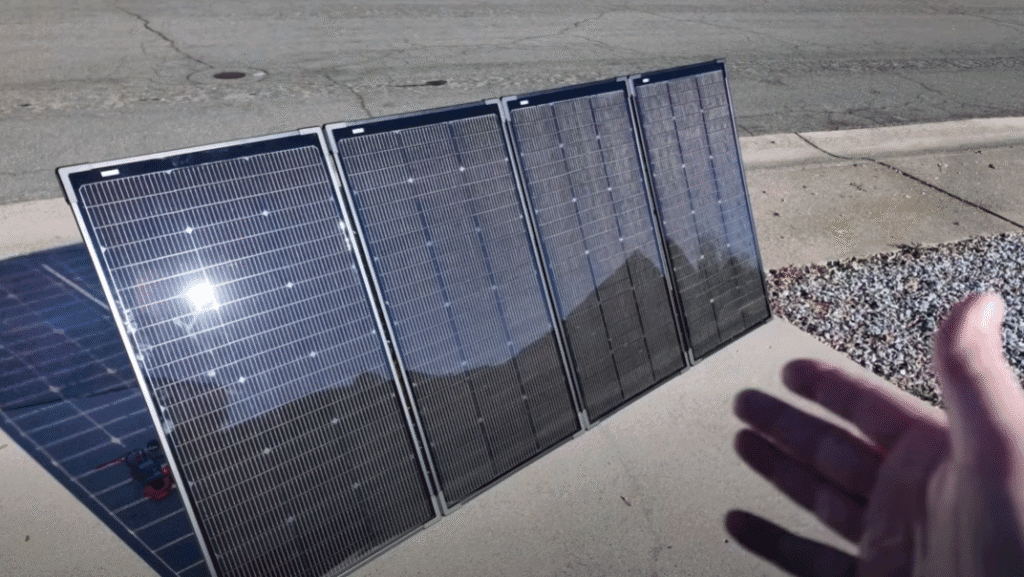
Portability (The Form Factor): How easy is it to carry and set up? Most good panels today have a “briefcase” design. They fold into a neat package with a handle, and built-in kickstands let you angle them towards the sun.
Chapter 2: The Tech That’s Changing Everything
This is where things get really exciting. The technology behind portable panels has leaped forward recently.
Monocrystalline: The Only Type You Should Consider
Years ago, you’d see chunky, blue-flecked “polycrystalline” panels. Forget about them. Today, every reputable portable panel uses monocrystalline cells. They are black, sleek, and far more efficient. It’s the standard.
Bifacial Panels: The Game-Changer You Need to Know About
This is, without a doubt, the coolest innovation in years.
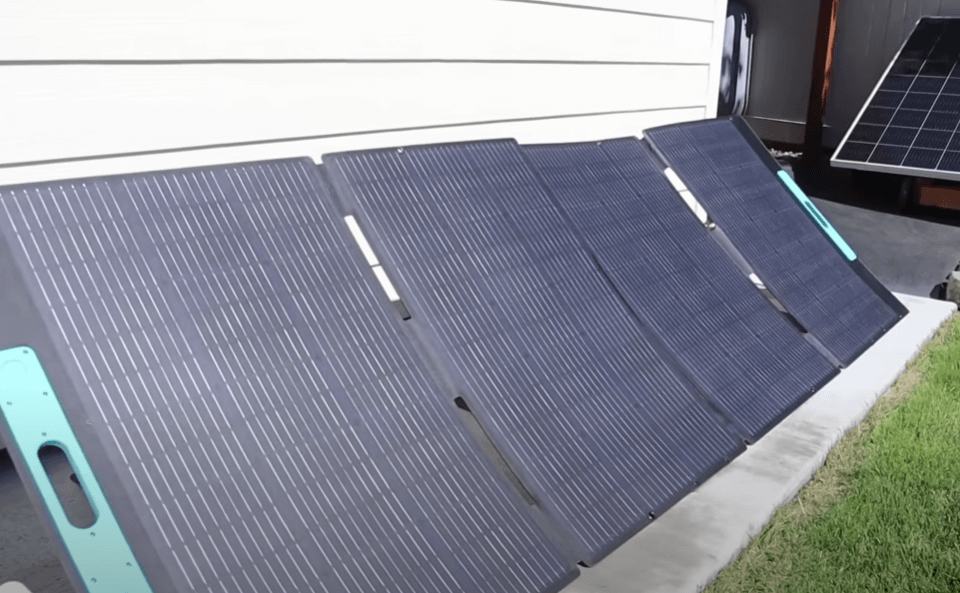
Traditionally, a solar panel is a one-trick pony—it only works on the front side. Bifacial panels, like the groundbreaking ones from brands like Nicesolar, have active solar cells on both the front and the back.
How it Works: The front side captures direct sunlight. The translucent back side captures reflected sunlight (known as “albedo”) bouncing off the ground. If you’re on bright sand, snow, or even a light-colored rock, the back side can generate a significant amount of extra power.
The Real-World Benefit: A bifacial panel can produce up to 25% more power in ideal conditions than a one-sided panel of the same wattage. That’s a massive, free performance boost. It means your gear charges faster, plain and simple.
Chapter 3: What Can You Actually Power? (From Watts to Reality)
Okay, so you see a panel rated for “100W” or “200W”. What does that really mean for you? Let’s connect the watts to the real world.
First, the honest truth: a 100W panel rarely produces 100 watts. That’s a lab number. In the real world, expect about 60-75 watts on a good, sunny day. This is why we always plan conservatively.
Here’s a simple guide to matching the panel size to your mission.
Panel Size (Rated Watts)
What it Realistically Recharges in One Sunny Day
Perfect For…
100W Panel
A small 300-500Wh power station. Will charge your phone ~20 times, a laptop 4-5 times, or run a powerful speaker all day.
The weekend camper, the digital nomad working from a park, or anyone needing to keep personal electronics alive.
200W Panel
A medium 700-1200Wh power station. Powerful enough to keep an electric cooler/fridge running and top off the station.
The family car camper, the overlander, or anyone who considers a portable fridge an essential piece of kit.
400W+ Panel Setup
A large 1500Wh+ power station. Can recharge a massive battery bank significantly, running multiple devices and appliances.
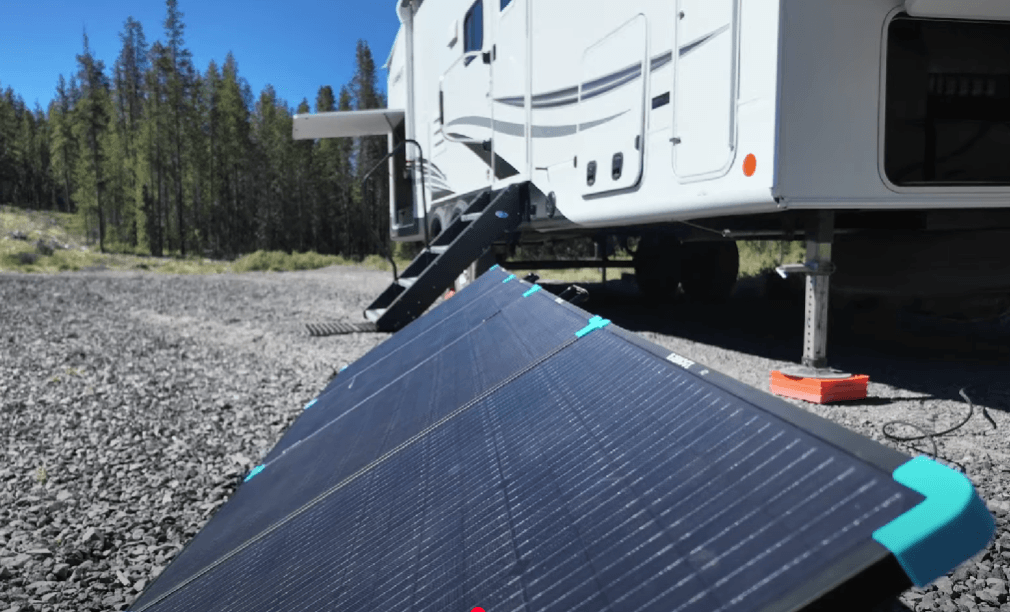
The serious off-grid enthusiast, the RV owner supplementing their main power, or for meaningful home emergency backup.
Chapter 4: Pro Tips to Make You a Solar Expert
Want to get every last drop of power out of your setup? These are the little things that make a big difference.
Chase the Sun: A panel lying flat on the ground is a lazy panel. You need to angle it directly at the sun. A good rule of thumb is to adjust it every hour or two, making sure its shadow is directly underneath it.
Watch for “Panel Killers”: A tiny bit of shade can have a huge impact. A single leaf or a branch shadow falling across one part of your panel can slash your power output by 30% or more. Keep it in full, direct sun.
Know Your Connectors (The Alphabet Soup): Panels connect to power stations with different plugs. The most common are MC4, Anderson Power Pole (APP), and various barrel plugs. This is crucial: Before you buy a panel and a power station from different brands, double-check that they can connect to each other, or that you have the right adapter.
The Bottom Line: Your Ticket to Freedom
Choosing a portable solar panel isn’t about finding the one with the most watts. It’s about understanding the technology, matching it to your dream adventure, and knowing how to use it effectively.
The jump to a modern, durable, bifacial panel can mean the difference between having just enough power and having power to spare. It’s the difference between rationing your phone battery and confidently charging up your laptop to watch a movie under the stars.
You’re not just buying a piece of glass and silicon. You’re buying a quiet, limitless source of energy. You’re buying self-reliance. And that is an incredible feeling.
Suhas Shrikant is the founder of Vecharged and an engineering enthusiast specializing in high-power off-grid solar systems. He has designed and built over a dozen custom systems and uses his hands-on, field-tested experience to create Vecharged’s expert guides and reviews.
Vecharged is the consumer protection and education initiative of Cleanpower.eco, an organization dedicated to providing a clear, unbiased, and authoritative voice in the clean energy transition. The experts at Cleanpower.eco recognized a critical crisis of trust: the shift to electric vehicles and solar power is one of the most important and expensive decisions a family will make. Yet, the landscape is flooded with biased reviews, confusing marketing, and paid-for endorsements. Vecharged was created to be the shield against that confusion. We were founded on a simple, non-negotiable constitution: We are radically independent. We accept no advertising, sponsorships, or paid placements from any product manufacturer. We have no commercial interest in the products we review. Our only metric for success is your empowerment. Our loyalty is to you, the consumer. Full stop. We ground our brutally honest, hands-on analysis in a deep, foundational understanding of the engineering. We are not just reviewers; we are your advocates.
The “Electric Revolution” in America didn’t just slow down last week; it completely redrew its map. Last week, Ford Motor Company officially confirmed a massive $19.5 billion strategic pivot, marking the most dramatic shift in the industry’s history since the launch of the Model T. In a move that has stunned the market, Ford is
The American clean energy landscape shifted on its axis on July 4, 2025. With the signing of the One Big Beautiful Bill Act (OBBBA), the rules for Solar and EV incentives were entirely rewritten. If you are a developer, fleet manager, or investor, you are no longer just in the business of energy; you are
You’re standing on the edge of a $15,000 decision, and the sales world is throwing buzzwords like “Solid-State” and “V2G” at you. Let me be blunt: most of it is noise designed to make you wait or overpay. As an expert who has been hands-on with these systems for a decade, I can tell you
Imagine turning that agonizing 2,000-foot climb into a few exhilarating minutes. That’s the e-MTB reality that has sent the US market soaring past the billion-dollar mark. The electric mountain bike (e-MTB) is no longer a niche toy—it’s the new trail conqueror, driving a market that grew from $1.05 billion in 2023 to $1.21 billion in