Imagine the thrill of gliding effortlessly above the water, propelled by nothing but an electric motor and a magical hydrofoil. That’s the world of eFoiling! While it may look intimidating, with some preparation and practice, most people can master this incredible new sport. Let’s transform your time on the water!
Before You Start
Find a Suitable Location: Seek out a calm lake, river or a protected ocean area without much boat traffic. Make sure the water’s deep enough to accommodate the eFoil’s mast and wings. [Image: A tranquil lake with mountains in the distance]
Check the Regulations: Learn about local rules or restrictions regarding eFoil use, and get any necessary permits.
Safety First: Always wear a helmet, an impact vest, and a personal flotation device (PFD).
Consider Lessons: Taking an eFoil lesson or demo with a qualified instructor can jumpstart your learning process and address any safety concerns.
Getting Started: The Basics
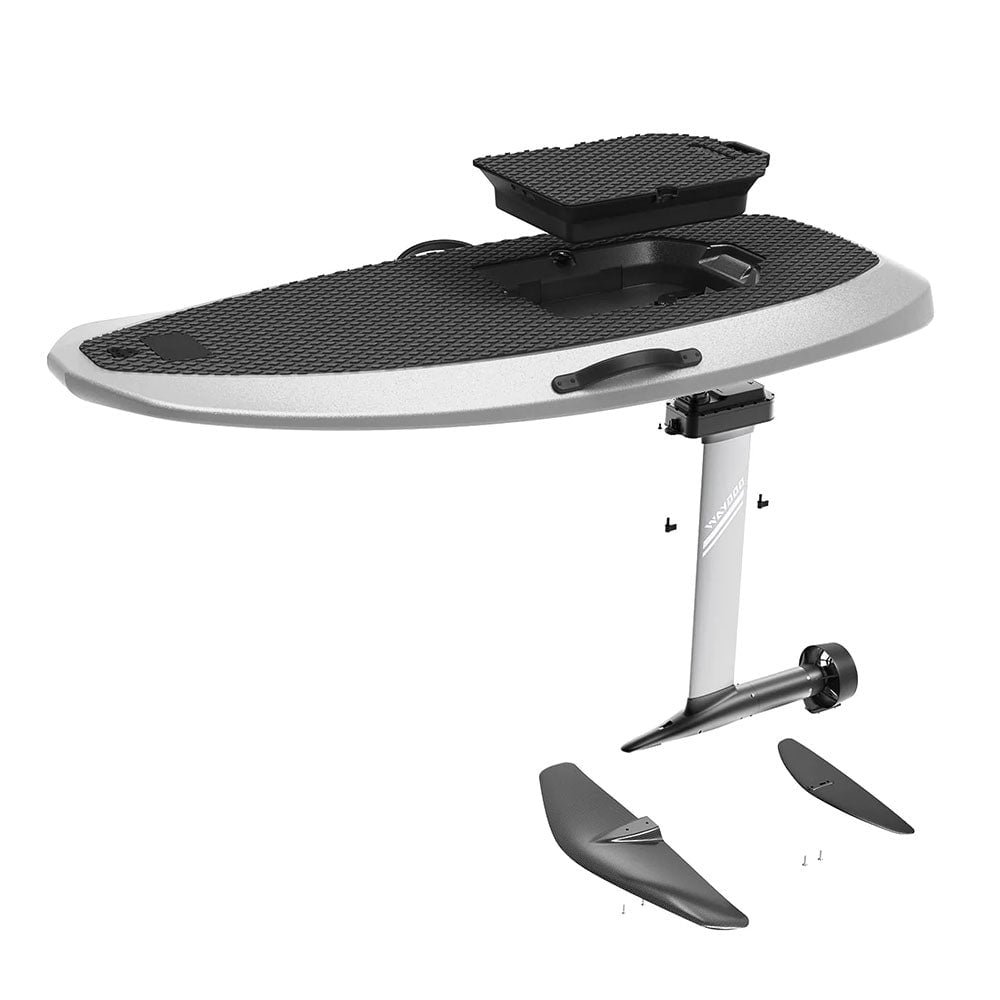
Assembling Your eFoil: Follow the instructions carefully to attach the mast, wings, and battery to the board. Check all connections and charge the battery fully.
Familiarizing Yourself: Carry your eFoil to shallow water. Practice using the wireless remote to control the throttle without getting on the board yet.
Body Positioning – Stage One: Gently climb onto the board in shallow water and lie down on your stomach with your hands near the front handle.
Slow and Steady: Start with the lowest speed setting on your remote. Slowly squeeze the throttle to start moving forward a short distance, then release. Repeat until you’re comfortable with the gentle acceleration.
Find Your Balance: Focus on keeping your weight centered on the board. Make small adjustments with your hips and knees to maintain stability
Rising Up: Your First Lift-Off
Progress to Your Knees: Once comfortable on your stomach, transition to kneeling on the board. Keep your weight slightly forward and try using the throttle for short bursts.
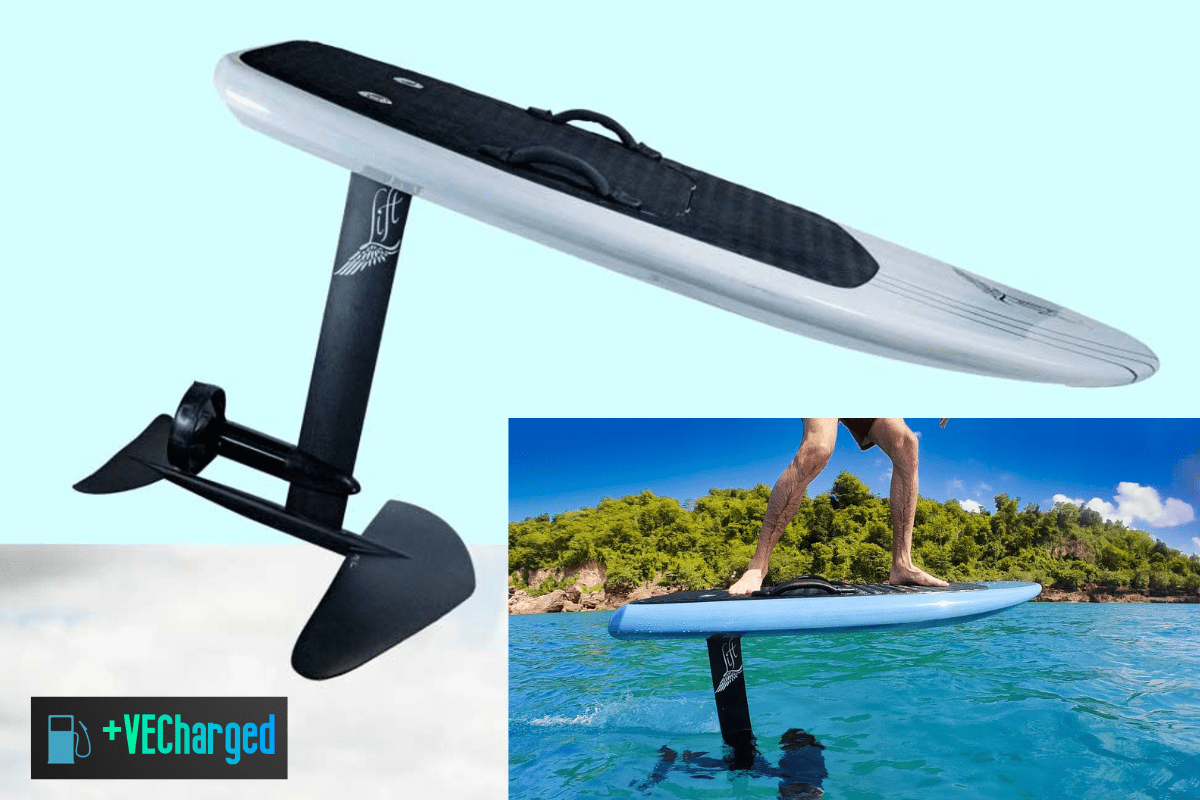
Feel the Lift: As you gain speed, you’ll start to feel the hydrofoils lift the board slightly. Don’t panic; gently shift your weight back to bring the eFoil back down.
Small Victories: Practice getting short ‘touches’ of flight before returning to the water.
Take a Break: eFoiling engages muscles you might not use often. Take breaks when you need to!
Level Up: Controlled Foiling
Standing Up: When you feel stable on your knees, it’s time to stand! Start with one foot at a time, keeping most of your weight on your front foot. Look at the horizon, not your feet.
Weight Distribution for Control: Subtle shifts forward and backward control your flight. Lean slightly forward to gain speed and lean back gently to slow down or descend.
Steering: Use a combination of your hips, shoulders, and feet to initiate turns. Start wide and gentle.
Important Reminders
Patience is Key: Learning to eFoil takes time and practice. Don’t get discouraged by early wipeouts!
Start Slow: Master the basics before attempting more aggressive speeds or maneuvers.
Respect the Water: Be aware of your surroundings and other watercraft.
Have Fun!: Enjoy the incredible freedom and sensation of eFoiling!
Suhas Shrikant is the founder of Vecharged and an engineering enthusiast specializing in high-power off-grid solar systems. He has designed and built over a dozen custom systems and uses his hands-on, field-tested experience to create Vecharged’s expert guides and reviews.
Vecharged is the consumer protection and education initiative of Cleanpower.eco, an organization dedicated to providing a clear, unbiased, and authoritative voice in the clean energy transition. The experts at Cleanpower.eco recognized a critical crisis of trust: the shift to electric vehicles and solar power is one of the most important and expensive decisions a family will make. Yet, the landscape is flooded with biased reviews, confusing marketing, and paid-for endorsements. Vecharged was created to be the shield against that confusion. We were founded on a simple, non-negotiable constitution: We are radically independent. We accept no advertising, sponsorships, or paid placements from any product manufacturer. We have no commercial interest in the products we review. Our only metric for success is your empowerment. Our loyalty is to you, the consumer. Full stop. We ground our brutally honest, hands-on analysis in a deep, foundational understanding of the engineering. We are not just reviewers; we are your advocates.
Selling an electric car is very different from selling a petrol or diesel vehicle. Buyers today care less about the odometer and more about battery health, charging history, warranty coverage, and software features. The good news is that a well-maintained EV can still command strong resale value if you prepare it properly. This guide gives
By Rahul — EV owner, reviewer, and long-time clean energy enthusiast Financing or leasing an electric car in early 2026 is not the same as it was just one year ago. The biggest shift was the end of all federal EV tax credits on September 30, 2025, including: Manufacturers can no longer claim any of
By Rahul — EV Enthusiast & Automotive Analyst at VeCharged ⚠️ Important Disclaimer (Must Read) The Clean Vehicle Credit program (new EV $7,500 credit + used EV $4,000 credit) ended on September 30, 2025. This single policy change fundamentally shifts the cost comparison between new and used EVs. If you’re planning to buy or sell
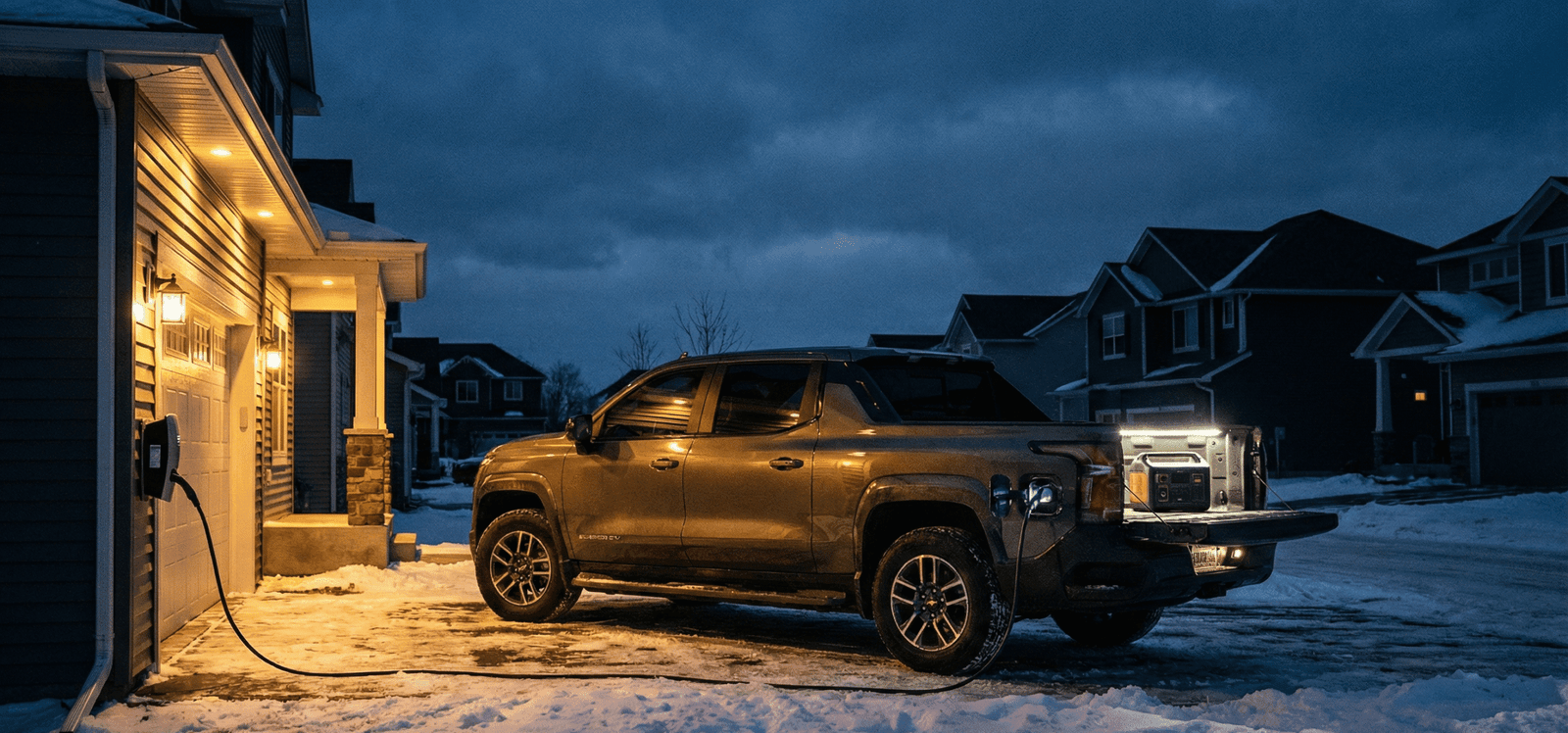
For the last decade, the electric vehicle revolution was defined by range, speed, and charging networks. As we close out 2025, the conversation is fundamentally shifting. For a growing number of buyers, the most important feature of their next car won’t be how it drives—but how it powers their life when it’s parked. Vehicle-to-Home (V2H)