The 1960s. In our collective memory, it’s a decade of raw, untamed power. The roar of a V8 muscle car, the smell of high-octane gasoline, the chrome glinting under the California sun. It’s an iconic aesthetic. But what if it’s a memory from the wrong timeline?
As an engineer, I’m fascinated by pivotal moments. In the early 20th century, the electric car was a real competitor to the internal combustion engine. It was quiet, clean, and simple. But a series of engineering and business decisions sent us down a different path.
This isn’t just a fantasy. This is a thought experiment. What if that other path had been chosen? What if the incredible progress and optimism of the 1960s had been powered by the hum of electric motors instead of the roar of engines? We used AI to open a window into that alternate history. What we saw was beautiful, quiet, and surprisingly close to the world we’re trying to build today.
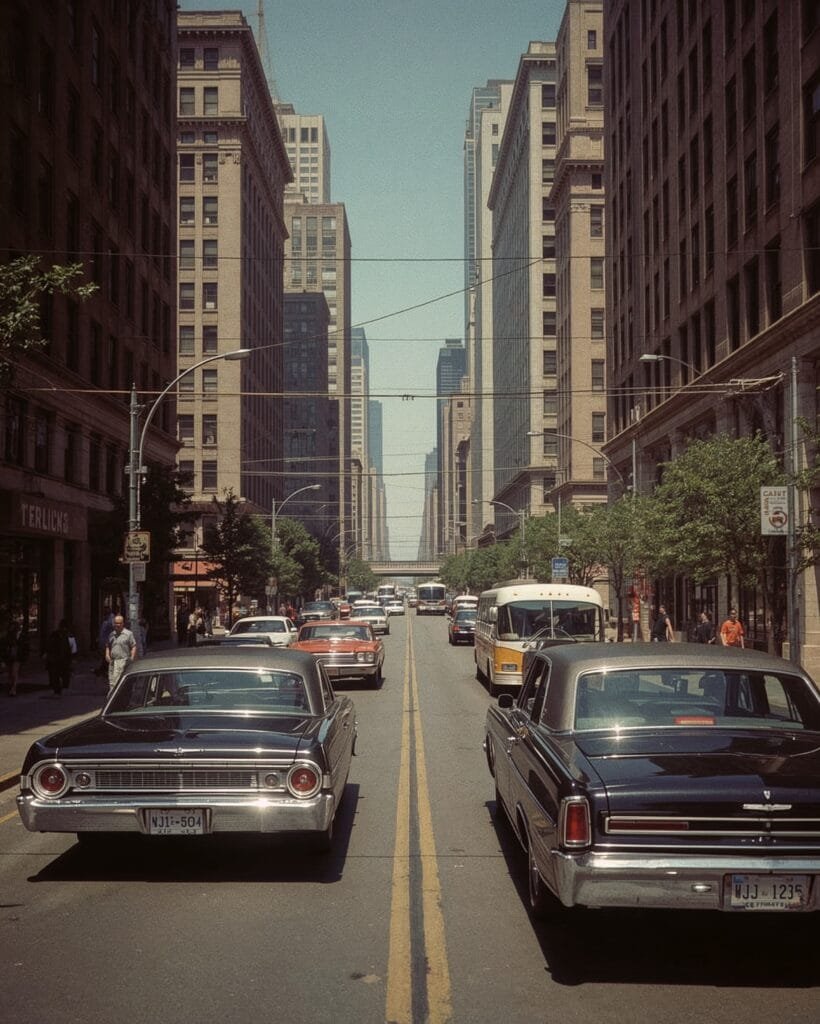
1. The Silent Cityscape
Imagine a city without the constant drone of engines, the haze of smog, or the smell of exhaust. In this timeline, the soundtrack of the city is the murmur of conversation and the gentle hum of electric traction. Progress is measured in clean air and quiet streets, not decibels.
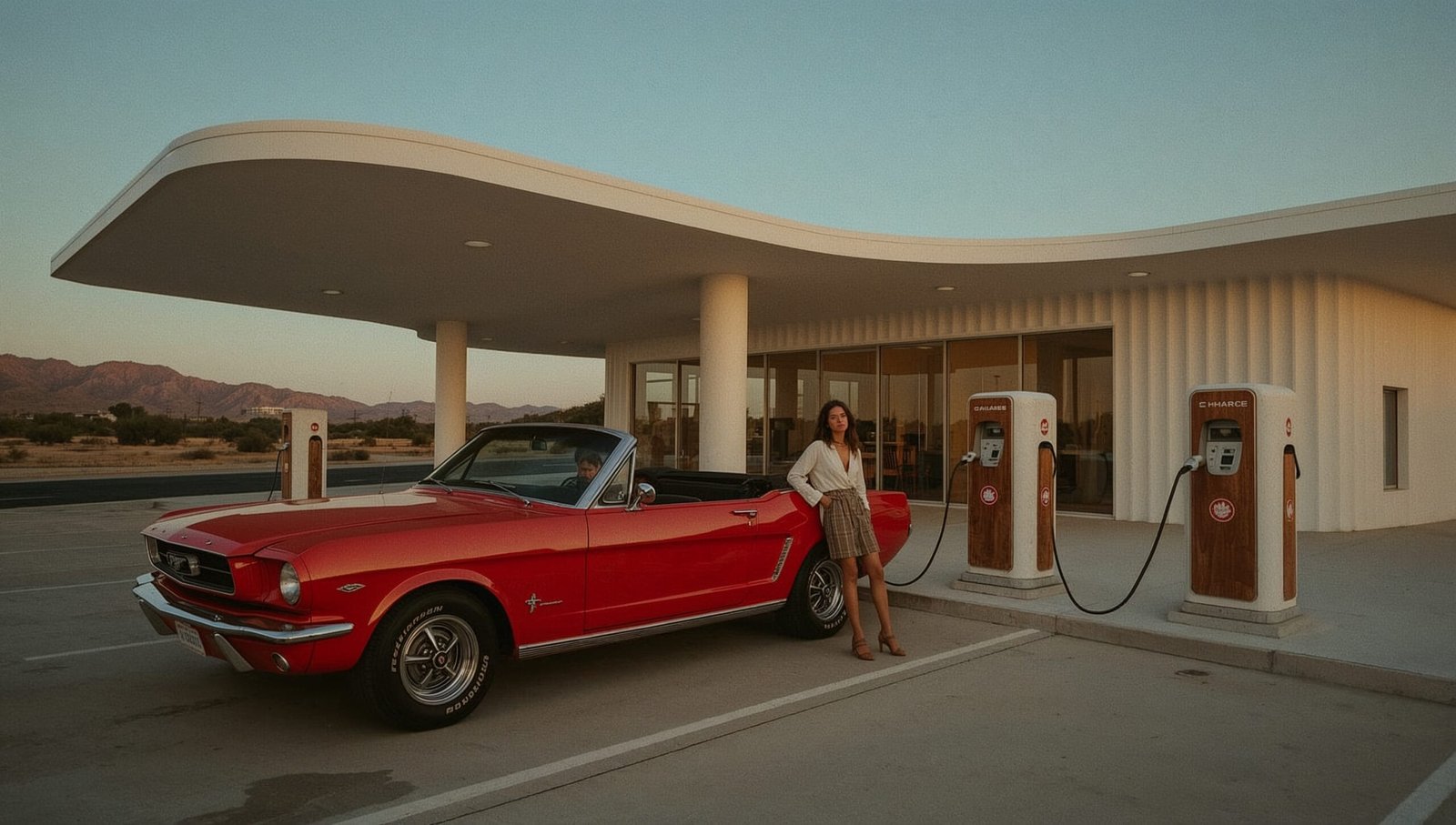
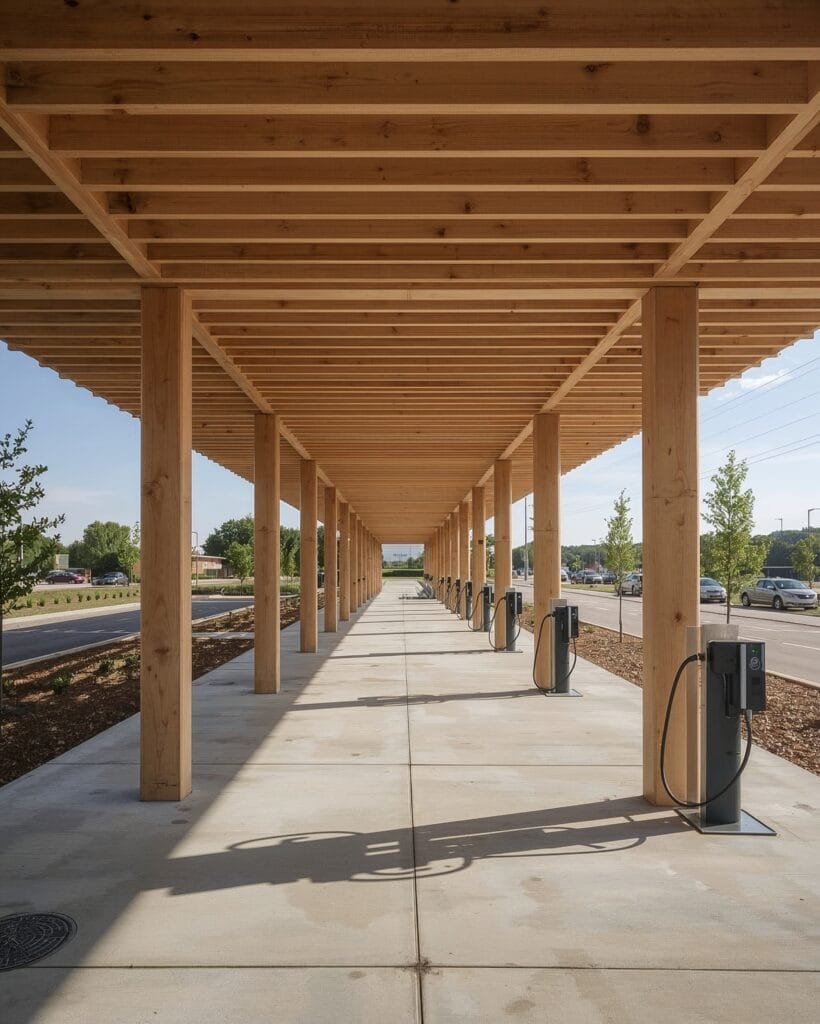
2. The Mid-Century Modern Charging Station
“Refueling” is no longer a dirty, 5-minute task. It’s a 30-minute break in a beautifully designed public space. These charging plazas became architectural landmarks, places to relax and enjoy the view while the national grid—America’s technological pride—silently topped up your car.
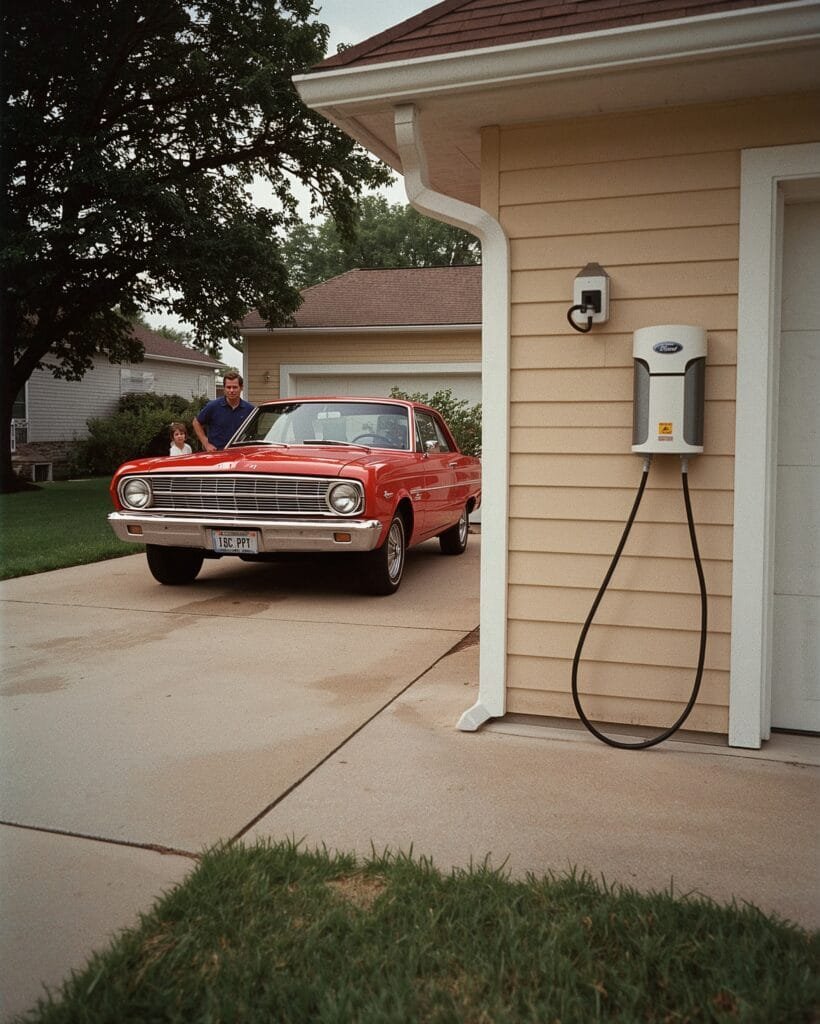
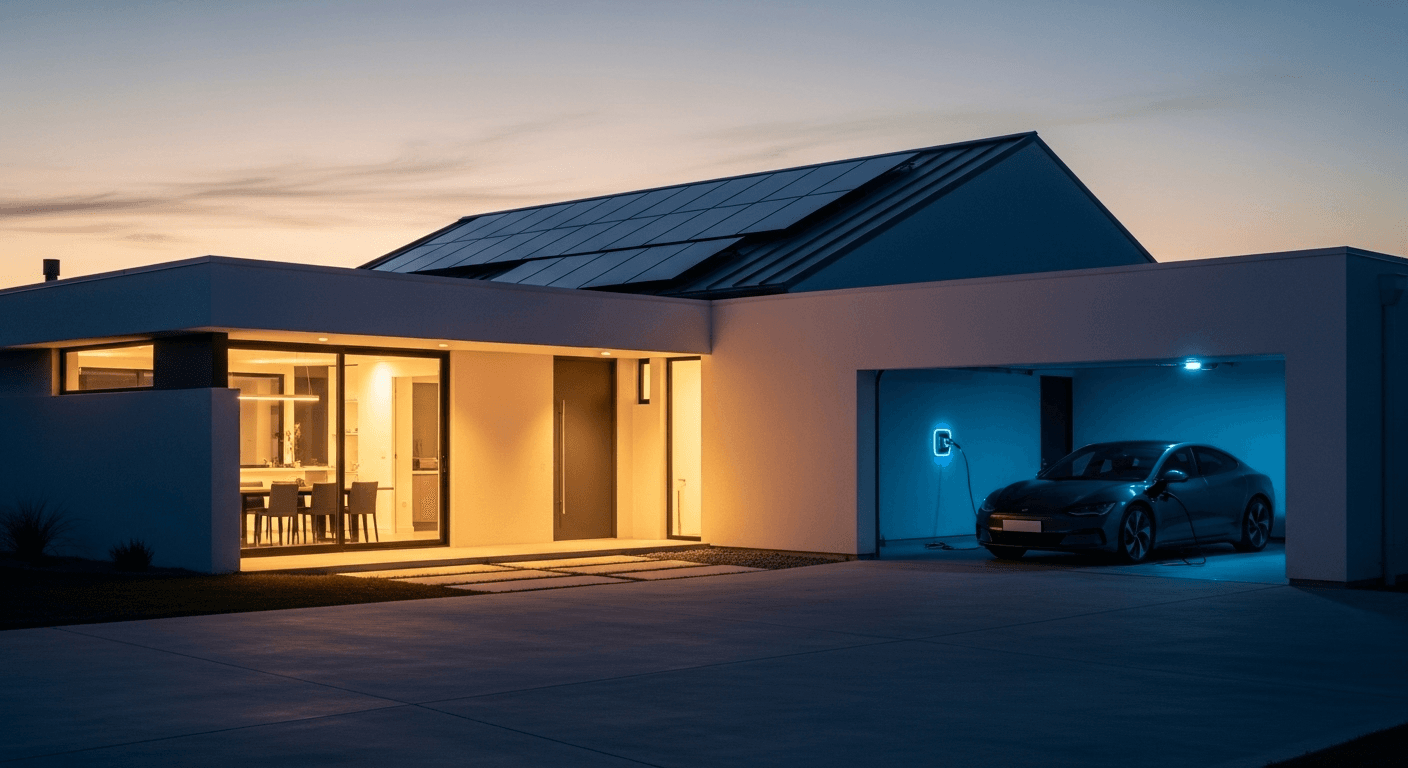
3. The Suburban Dream, Perfected
The two-car garage, the heart of American suburbia, is transformed. The greasy oil pans and lingering smell of gasoline are gone, replaced by the clean, quiet efficiency of a home charging port. The family car starts every single morning with a “full tank” from the wall in their home.
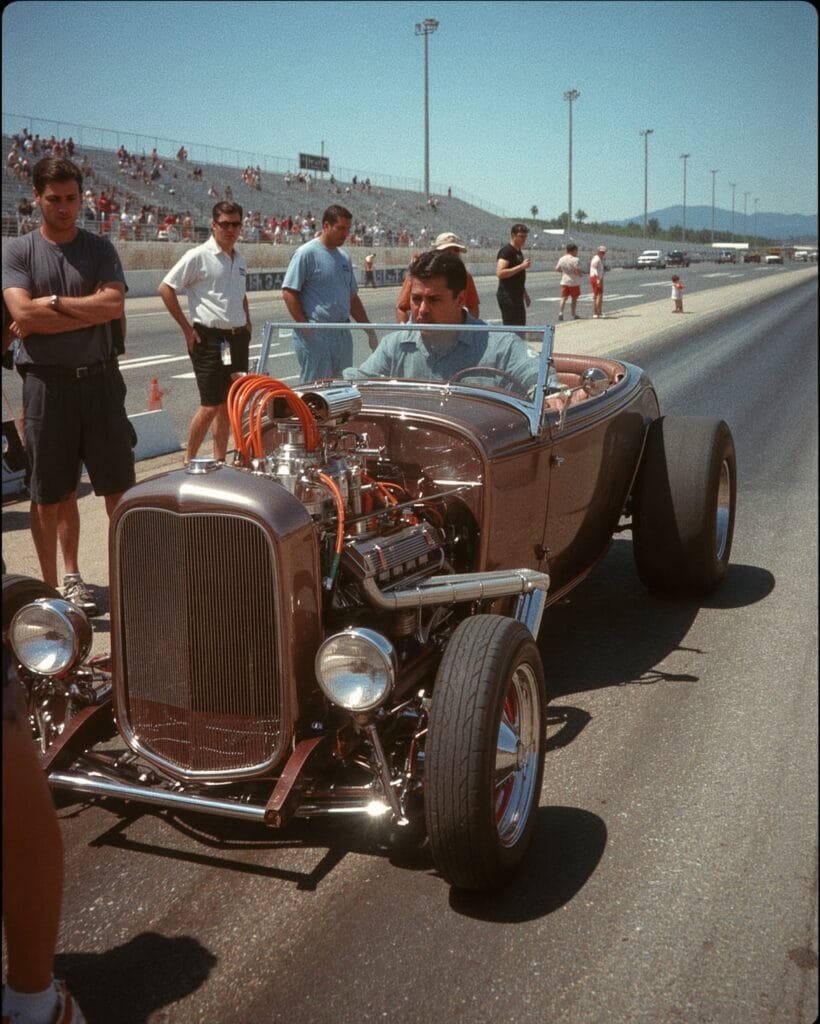
4. The Electric Hot Rod
The quest for speed never changes. But in this timeline, “hot-rodding” is about maximizing amps and optimizing motor controllers, not tuning carburetors. The result is silent, instant, neck-snapping torque that would feel familiar to any modern EV driver.
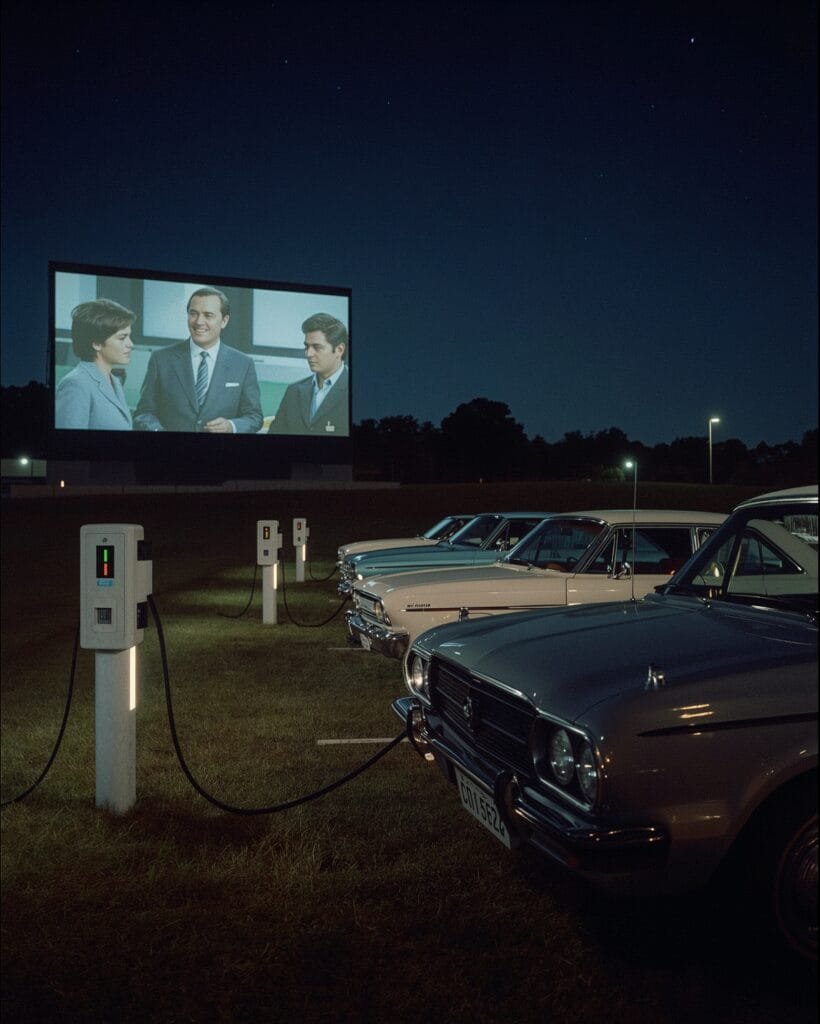
5. The Drive-In Movie, Reimagined
Vehicle-to-Load (V2L) technology wasn’t a 21st-century invention. In the 60s, it transformed the family car into a silent, mobile power source for picnics, camping trips, and the perfect night at the drive-in.
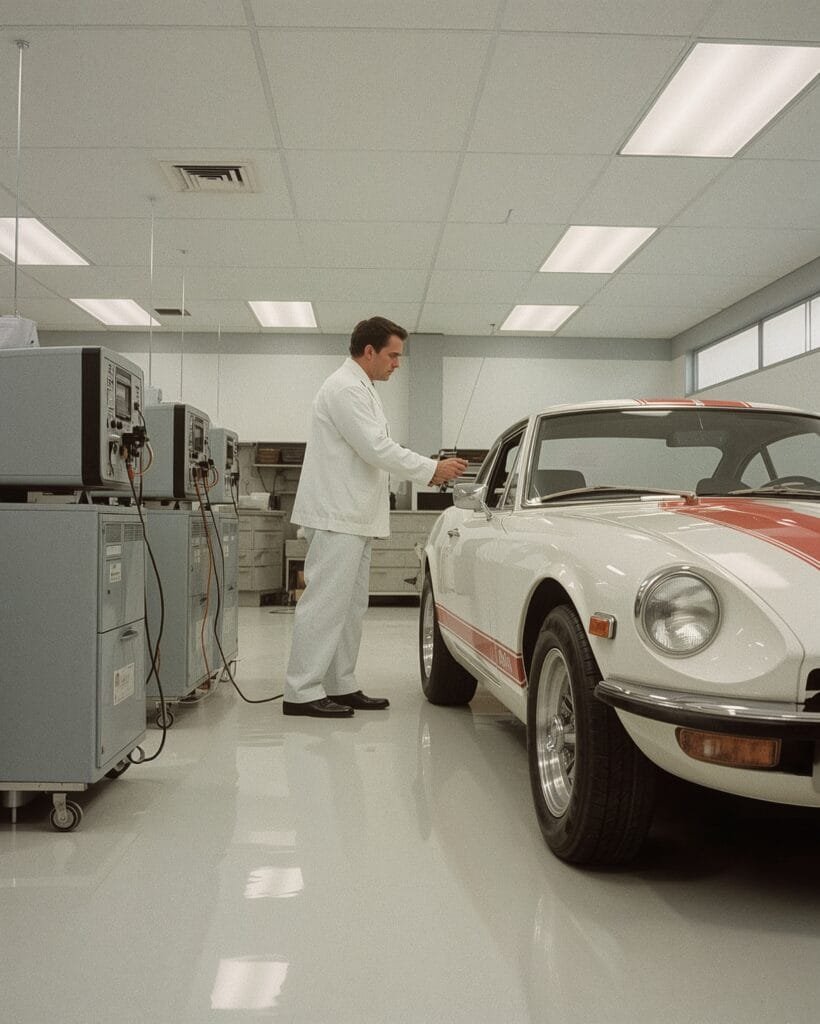
6. The Clean Service Station
The neighborhood mechanic became an electronics technician. Car repair was no longer about wrestling with heavy, greasy engine parts, but about diagnosing circuits and optimizing software.
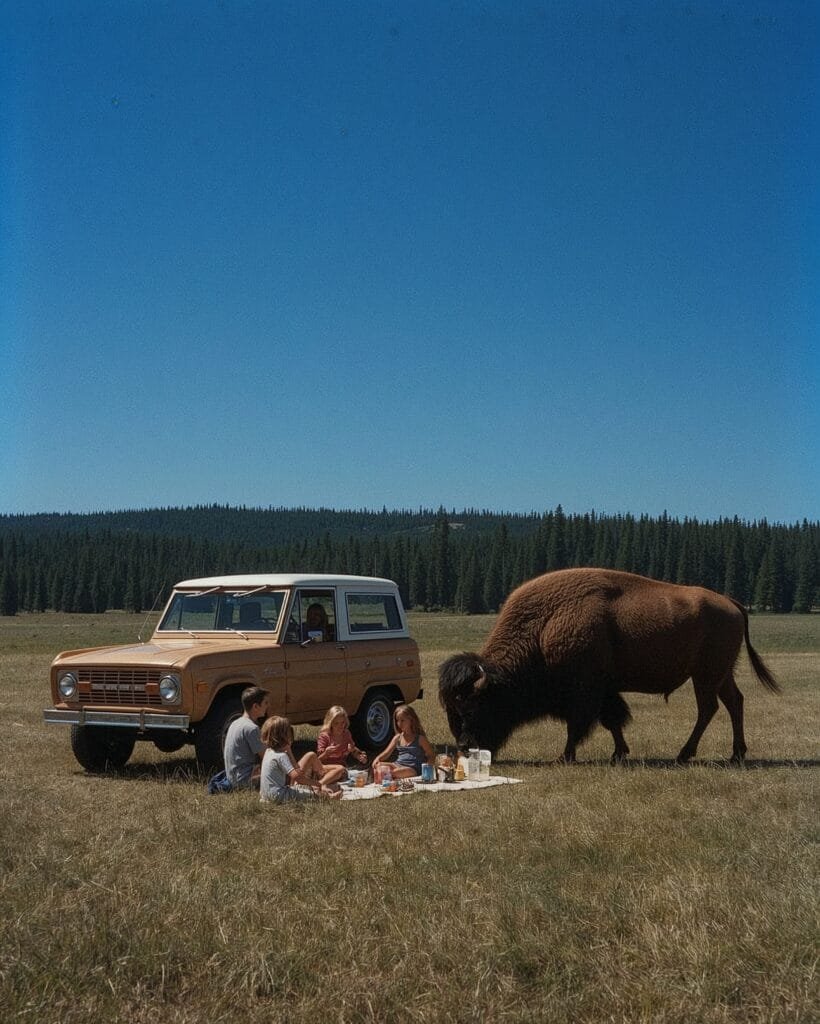
7. The National Parks, Respected
The mandate to protect America’s natural wonders was extended to the vehicles that entered them. The national parks were sanctuaries of silence, where the only sounds were the wind and the wildlife, completely undisturbed by the quiet, emission-free vehicles passing through.
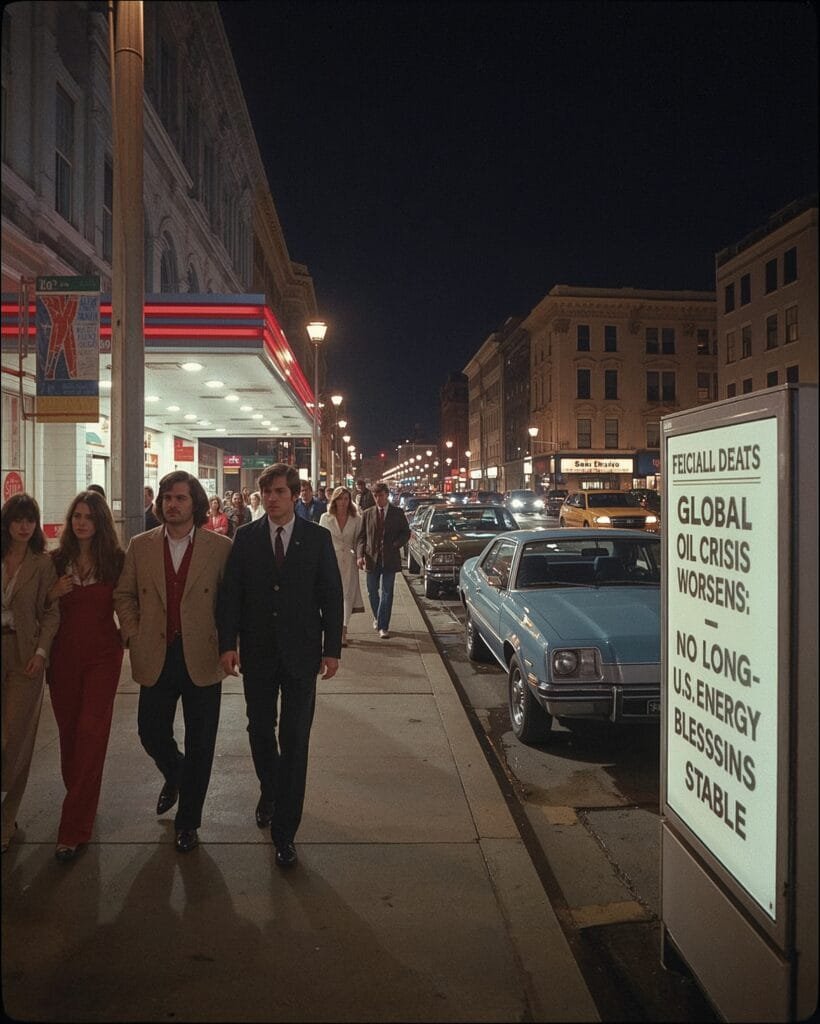
8. The Energy Crisis That Never Was
The Oil Crisis of 1973 was the event that defined a decade and exposed the fragility of a fossil-fuel-dependent economy. In this timeline, it was a non-event, a distant news story that had no bearing on a nation that had achieved energy independence 50 years prior.
9. The First Car
The freedom of getting your first car is a rite of passage. In this timeline, it was a quiet, clean, and simple freedom, without the constant need to budget for fuel or worry about complex maintenance.
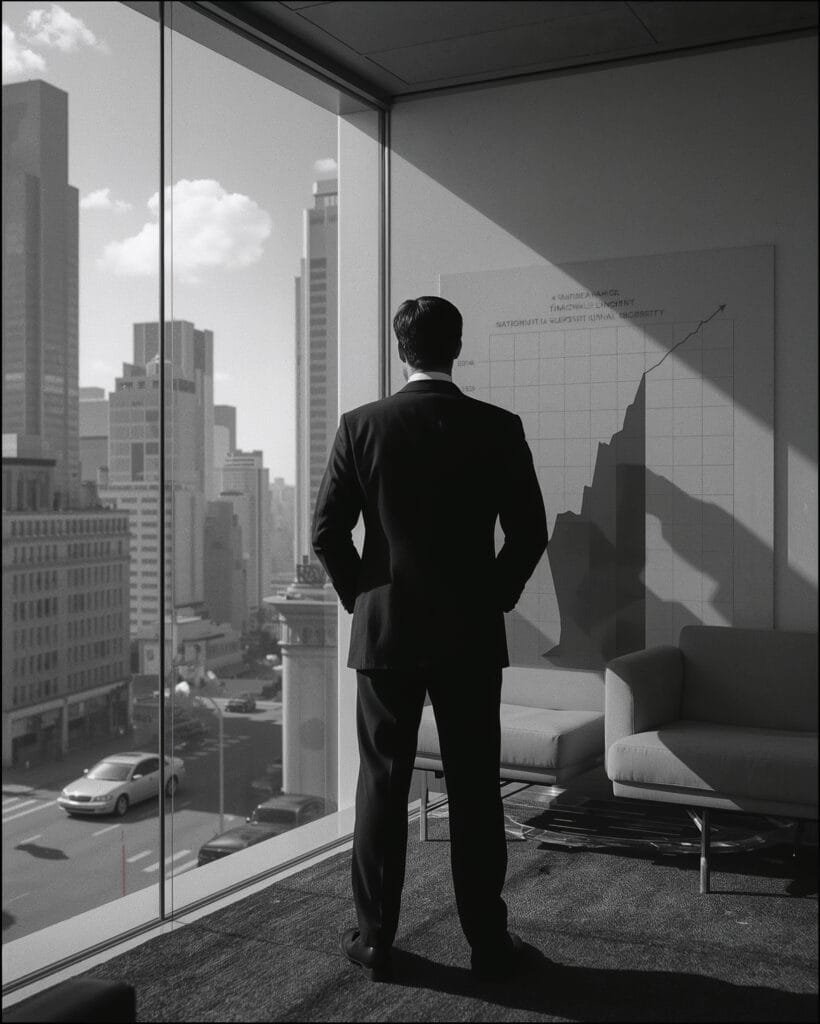
10. The Electric Executive
In this world, the titans of industry weren’t oil barons; they were the engineers and utility chiefs who built the world’s most robust and resilient electric grid. Power wasn’t measured in barrels, but in megawatts.
The Vecharged Verdict: A Future We Can Still Choose
This isn’t just a nostalgic dream. It’s a reminder that the world we live in is the result of engineering and business decisions made decades ago. The quiet streets, clean air, and energy independence of this alternate 1960s weren’t a fantasy—they were a possibility.
The good news? It’s still possible today. The technology to build this better, cleaner, and smarter world already exists. It’s a future we can still choose.
Suhas Shrikant is the founder of Vecharged and an engineering enthusiast specializing in high-power off-grid solar systems. He has designed and built over a dozen custom systems and uses his hands-on, field-tested experience to create Vecharged’s expert guides and reviews.
Vecharged is the consumer protection and education initiative of Cleanpower.eco, an organization dedicated to providing a clear, unbiased, and authoritative voice in the clean energy transition. The experts at Cleanpower.eco recognized a critical crisis of trust: the shift to electric vehicles and solar power is one of the most important and expensive decisions a family will make. Yet, the landscape is flooded with biased reviews, confusing marketing, and paid-for endorsements. Vecharged was created to be the shield against that confusion. We were founded on a simple, non-negotiable constitution: We are radically independent. We accept no advertising, sponsorships, or paid placements from any product manufacturer. We have no commercial interest in the products we review. Our only metric for success is your empowerment. Our loyalty is to you, the consumer. Full stop. We ground our brutally honest, hands-on analysis in a deep, foundational understanding of the engineering. We are not just reviewers; we are your advocates.
Selling an electric car is very different from selling a petrol or diesel vehicle. Buyers today care less about the odometer and more about battery health, charging history, warranty coverage, and software features. The good news is that a well-maintained EV can still command strong resale value if you prepare it properly. This guide gives
By Rahul — EV owner, reviewer, and long-time clean energy enthusiast Financing or leasing an electric car in early 2026 is not the same as it was just one year ago. The biggest shift was the end of all federal EV tax credits on September 30, 2025, including: Manufacturers can no longer claim any of
By Rahul — EV Enthusiast & Automotive Analyst at VeCharged ⚠️ Important Disclaimer (Must Read) The Clean Vehicle Credit program (new EV $7,500 credit + used EV $4,000 credit) ended on September 30, 2025. This single policy change fundamentally shifts the cost comparison between new and used EVs. If you’re planning to buy or sell
For the last decade, the electric vehicle revolution was defined by range, speed, and charging networks. As we close out 2025, the conversation is fundamentally shifting. For a growing number of buyers, the most important feature of their next car won’t be how it drives—but how it powers their life when it’s parked. Vehicle-to-Home (V2H)