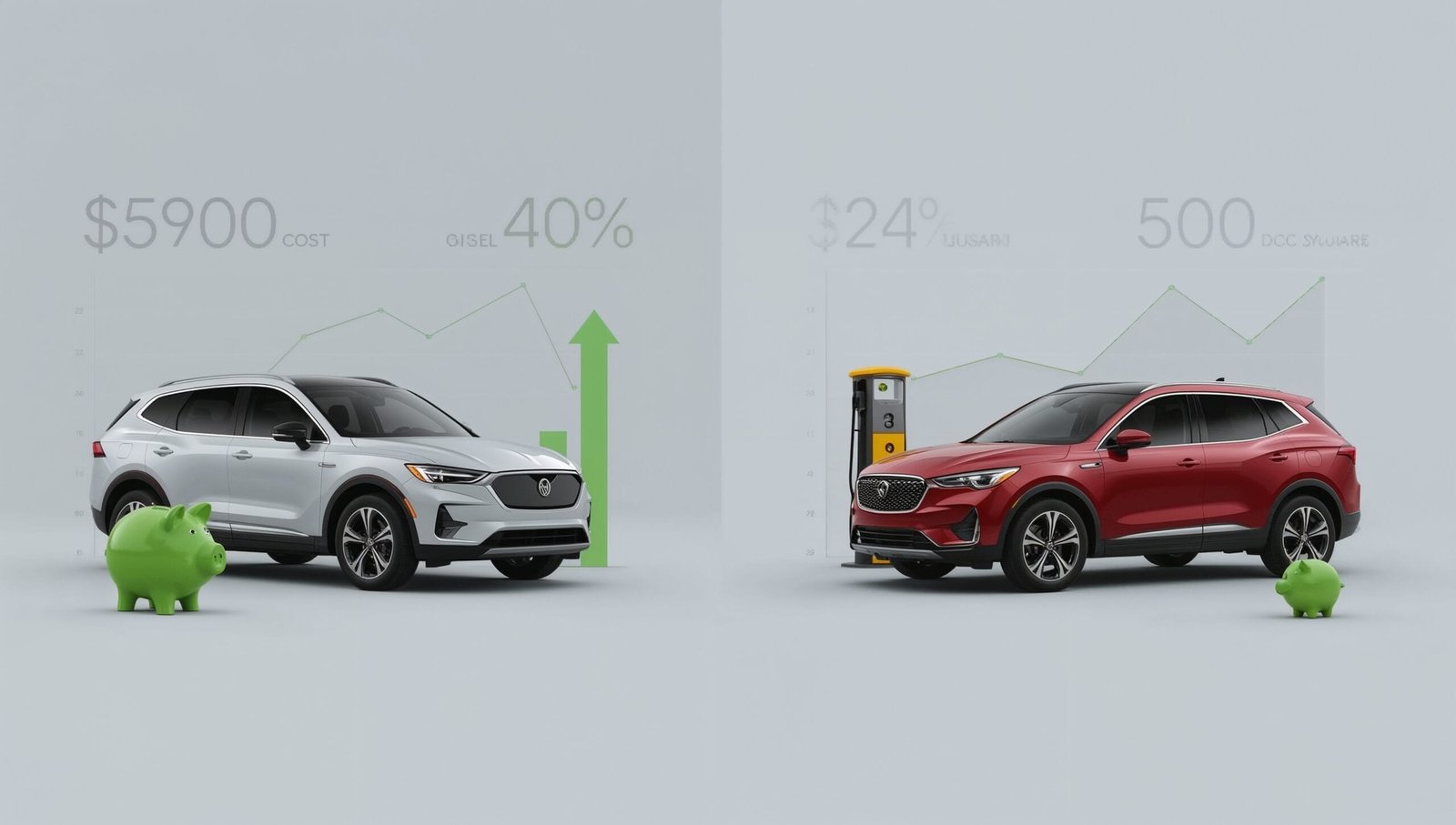
The Bottom Line: After a 5-year analysis of all costs—including depreciation, incentives, fuel, insurance, and maintenance—the average American driver will save approximately $6,000 to $10,000 by choosing a mid-range EV over a comparable gasoline-powered SUV. While the initial purchase price is higher, the significantly lower fuel and maintenance costs create substantial long-term savings.
Why This Analysis Matters in 2025 / 2026
The debate between EV and gas is no longer about just range anxiety or performance. It’s a critical financial decision. With fluctuating gas prices, a complex web of federal and state EV incentives, and changing insurance rates, a simple sticker price comparison is dangerously misleading. This guide provides a transparent, data-driven framework to calculate the total cost of ownership, empowering you to make a sound financial decision for your family.
The Contenders: A Real-World Showdown
To provide a true apples-to-apples comparison, we’ve selected two of the most popular, comparably equipped compact SUVs on the market:
Both vehicles offer similar size, features, and build quality, making them the perfect candidates for a cost analysis. All figures are national averages unless otherwise specified; your actual costs will vary.
Your Personalized EV Savings Calculator
Go beyond national averages. Input your own numbers to see your true 5-year cost of ownership.
Your Estimated 5-Year Total Savings
$0
Your Personalized 5-Year Fuel Cost
The 5-Year Cost Breakdown: Every Dollar Accounted For
We will analyze every expense over a 60-month ownership period, assuming an average of 13,500 miles (approx. 21,700 km) driven per year.
1. Purchase Price & Incentives (The Upfront Cost)
This is the most visible cost, but it’s heavily influenced by government incentives.
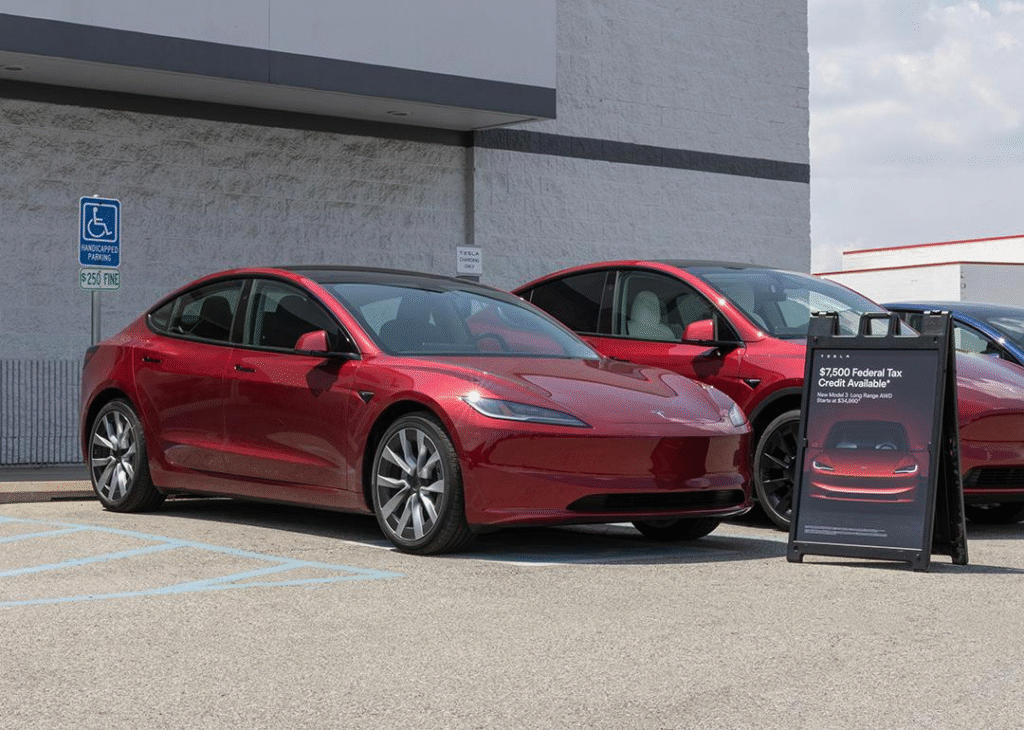
Analysis: Even after the federal tax credit, the EV carries a $7,000 initial price premium. State incentives (like those in California or Colorado) can reduce this further, but for most buyers, the EV starts in a deeper financial hole.
2. Depreciation (The Hidden Cost)
Depreciation is the single largest expense for any new car owner. We use 5-year resale value projections from industry data.
Vehicle
Net Upfront Cost
Est. 5-Year Resale Value
5-Year Depreciation Cost
Hyundai Ioniq 5 SE
$36,500
$19,500 (44%)
$17,000
Hyundai Tucson SEL
$29,500
$15,000 (51%)
$14,500
Analysis: Due to its higher initial cost, the Ioniq 5 is projected to lose more value in absolute dollars, costing an extra $2,500 in depreciation over 5 years.
3. “Fuel” Costs (Electricity vs. Gasoline)
This is where the EV begins its comeback. We assume a national average of $3.60/gallon for gasoline and $0.17/kWh for residential electricity.
Vehicle
Efficiency
Annual Miles
Annual Fuel Cost
5-Year Fuel Cost
Hyundai Ioniq 5 SE
3.4 miles/kWh
13,500
~$675
$3,375
Hyundai Tucson SEL
28 MPG
13,500
~$1,735
$8,675
Analysis: The EV is a clear winner here, saving over $5,300 in fuel costs over five years. For drivers in states with high gas prices like California, these savings can easily exceed $8,000.
4. Insurance Costs
Insurance rates for EVs are often slightly higher due to higher repair costs for specialized components.
Vehicle
Est. Annual Premium
5-Year Insurance Cost
Hyundai Ioniq 5 SE
~$1,950
$9,750
Hyundai Tucson SEL
~$1,700
$8,500
Analysis: The EV costs an estimated $1,250 more to insure over the 5-year period.
5. Maintenance & Repairs
EVs have fewer moving parts, no oil changes, and less brake wear, leading to significant maintenance savings.
Vehicle
Est. 5-Year Maintenance Cost
Hyundai Ioniq 5 SE
$1,800
Hyundai Tucson SEL
$4,500
Analysis: With no oil changes, spark plugs, or timing belts to replace, the EV saves a substantial $2,700 in maintenance.
The Grand Total: A 5-Year Financial Verdict
Let’s add it all up to see the true total cost of ownership.
Cost Category
Hyundai Ioniq 5 SE (EV)
Hyundai Tucson SEL (Gas)
Depreciation
$17,000
$14,500
Fuel (Electricity/Gas)
$3,375
$8,675
Insurance
$9,750
$8,500
Maintenance
$1,800
$4,500
Total 5-Year Cost
$31,925
$38,175
Conclusion: Despite a higher upfront cost and greater depreciation, the massive savings in fuel and maintenance make the Hyundai Ioniq 5 a full $6,250 cheaper to own over five years.
Frequently Asked Questions
1. What about the cost of installing a home charger?
We haven’t included this as it’s a one-time home upgrade, not a vehicle cost. A Level 2 charger installation typically costs between $700 and $2,000. Even when factoring this in, the EV remains the cheaper long-term option.
It’s extremely unlikely. All EVs sold in the US come with a minimum 8-year/100,000-mile battery warranty. Modern batteries are designed to last the life of the vehicle with minimal degradation.
3. How do different states affect the outcome?
States with high gas prices, high electricity rebates, and additional state EV tax credits (like California, Colorado, and Washington) will dramatically increase the savings of owning an EV. Conversely, states with very low gas prices and high electricity rates will narrow the gap.
Suhas Shrikant is the founder of Vecharged and an engineering enthusiast specializing in high-power off-grid solar systems. He has designed and built over a dozen custom systems and uses his hands-on, field-tested experience to create Vecharged’s expert guides and reviews.
Vecharged is the consumer protection and education initiative of Cleanpower.eco, an organization dedicated to providing a clear, unbiased, and authoritative voice in the clean energy transition. The experts at Cleanpower.eco recognized a critical crisis of trust: the shift to electric vehicles and solar power is one of the most important and expensive decisions a family will make. Yet, the landscape is flooded with biased reviews, confusing marketing, and paid-for endorsements. Vecharged was created to be the shield against that confusion. We were founded on a simple, non-negotiable constitution: We are radically independent. We accept no advertising, sponsorships, or paid placements from any product manufacturer. We have no commercial interest in the products we review. Our only metric for success is your empowerment. Our loyalty is to you, the consumer. Full stop. We ground our brutally honest, hands-on analysis in a deep, foundational understanding of the engineering. We are not just reviewers; we are your advocates.
Imagine flying effortlessly above the water’s surface, powered by nothing but silence and cutting-edge technology. That’s the magic of the Lift eFoil, a revolutionary electric hydrofoil surfboard that’s redefining the way we interact with water. What is a Lift eFoil? In simple terms, a Lift eFoil is a surfboard with a high-tech twist. Underneath
The Different Types of Outdoor Solar Lights Outdoor solar lights have become increasingly popular in recent years due to their energy efficiency and convenience. These lights harness the power of the sun to provide illumination for outdoor spaces, without the need for traditional electrical wiring or batteries. In this article, we will explore the different
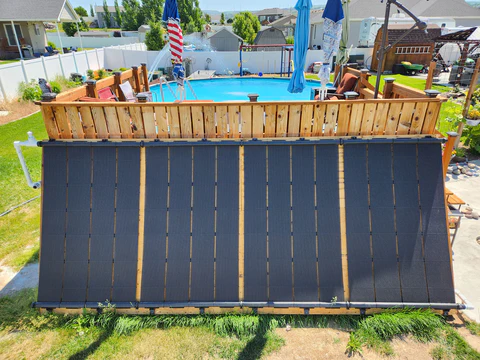
Benefits of Using a Solar Pool Heater Tired of your pool being too cold for half the year? Want to cut your energy bills and reduce your environmental impact? Solar pool heaters offer the perfect solution. They harness the sun’s free energy to extend your swim season, save you money, and boost your sustainability efforts.
Interactive: Roof Space & Panel Count Visualizer Desired System Size (kW) 8.0 kW Using 400W Panels — Panels Needed — m² Est. Roof Space Using 500W Panels — Panels Needed — m² Est. Roof Space The “bigger is better” argument seems obvious, but the reality of weight, roof space, and system design is far more
[…] savings: The average EV owner saves between $6,000 and $10,000 over five years compared to a comparable gas SUV, primarily through reduced fuel costs. With the national average […]
[…] savings: The average EV owner saves between $6,000 and $10,000 over five years compared to a comparable gas SUV, primarily through reduced fuel costs. With the national average […]
[…] Vecharged’s analysis also backs this up. They highlight that even though EVs might have a higher initial price tag and potentially a steeper depreciation curve, the money saved on fuel and maintenance makes them cheaper to own over a five-year span. They estimate that the average American driver could save somewhere between $6,000 and $10,000 by choosing a mid-range EV over a comparable gasoline SUV. So, while you might pay a bit extra for insurance upfront, you’re likely saving a lot more in other areas. […]










[…] savings: The average EV owner saves between $6,000 and $10,000 over five years compared to a comparable gas SUV, primarily through reduced fuel costs. With the national average […]
[…] savings: The average EV owner saves between $6,000 and $10,000 over five years compared to a comparable gas SUV, primarily through reduced fuel costs. With the national average […]
[…] Vecharged’s analysis also backs this up. They highlight that even though EVs might have a higher initial price tag and potentially a steeper depreciation curve, the money saved on fuel and maintenance makes them cheaper to own over a five-year span. They estimate that the average American driver could save somewhere between $6,000 and $10,000 by choosing a mid-range EV over a comparable gasoline SUV. So, while you might pay a bit extra for insurance upfront, you’re likely saving a lot more in other areas. […]