The question isn’t whether your EV needs oil, it’s how much money you save by eliminating the combustion system entirely. You are paying for a complex engine; the EV runs on physics.
5-Year EV Maintenance Savings Calculator
Estimate how much money you save by eliminating the engine.
1. Your Current Annual Maintenance Cost (ICE Vehicle)
Typical range is $800–$1,200 (includes oil, filters, spark plugs, etc.).
2. EV Maintenance Savings Factor
EVs eliminate ~40% to 50% of maintenance tasks/costs due to mechanical simplicity.
3. Your Total Savings
Estimated Annual EV Cost
$0
Total Savings Over 5 Years
$0
**VERDICT:** These savings are achieved by eliminating oil, spark plugs, and major engine component checks. They do not include fuel savings.
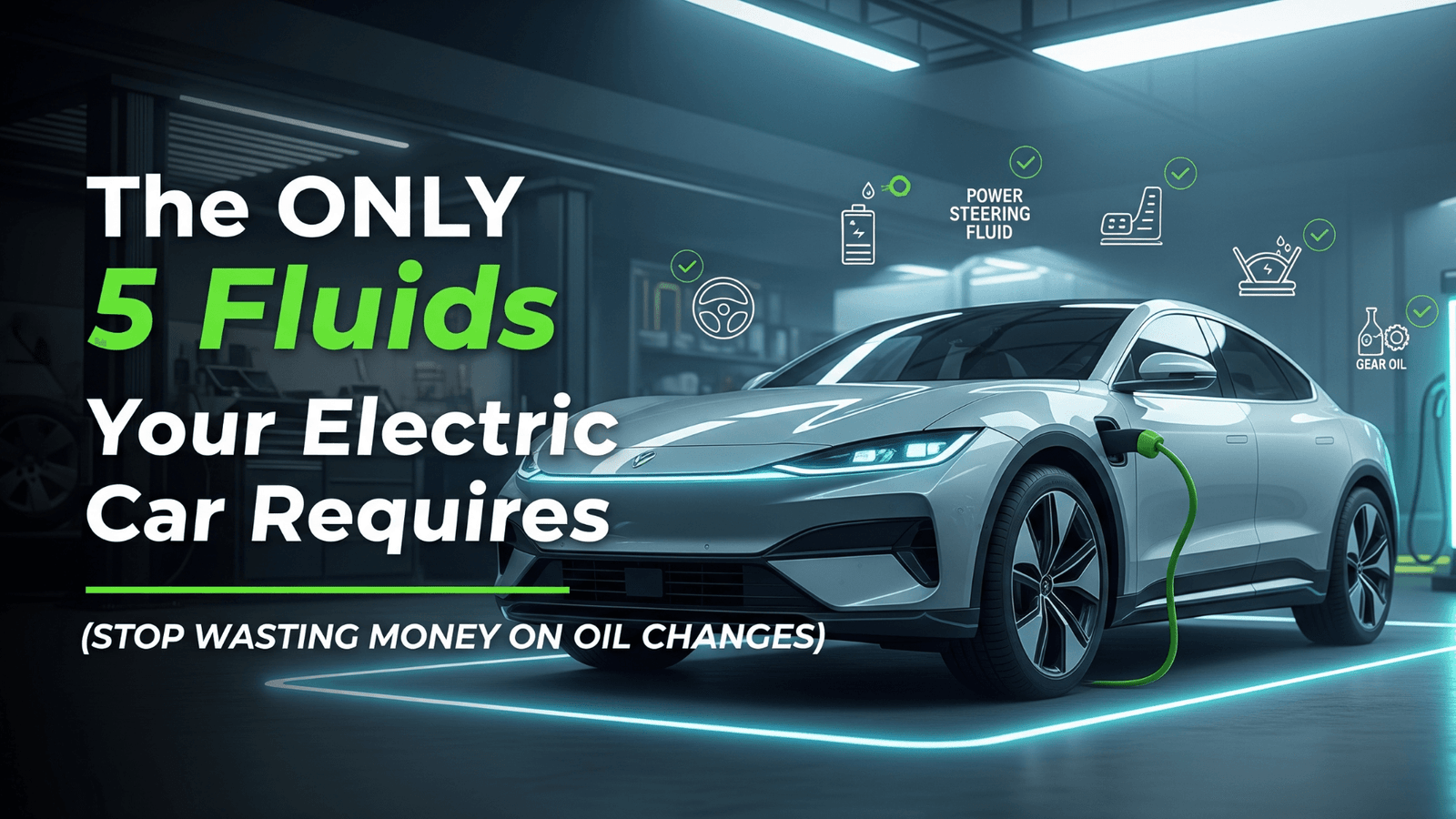
The dealerships and quick-lube centers want you to believe EV maintenance is just as expensive as gasoline. I am here to debunk that lie. Your electric car’s engineering simplicity saves you an average of $2,000 to 3,000 in scheduled maintenance costs over five years. I will detail the five essential fluid categories your EV requires and provide the definitive maintenance schedule.
THE GREAT DEBATE: Why Your EV Needs No Engine Oil
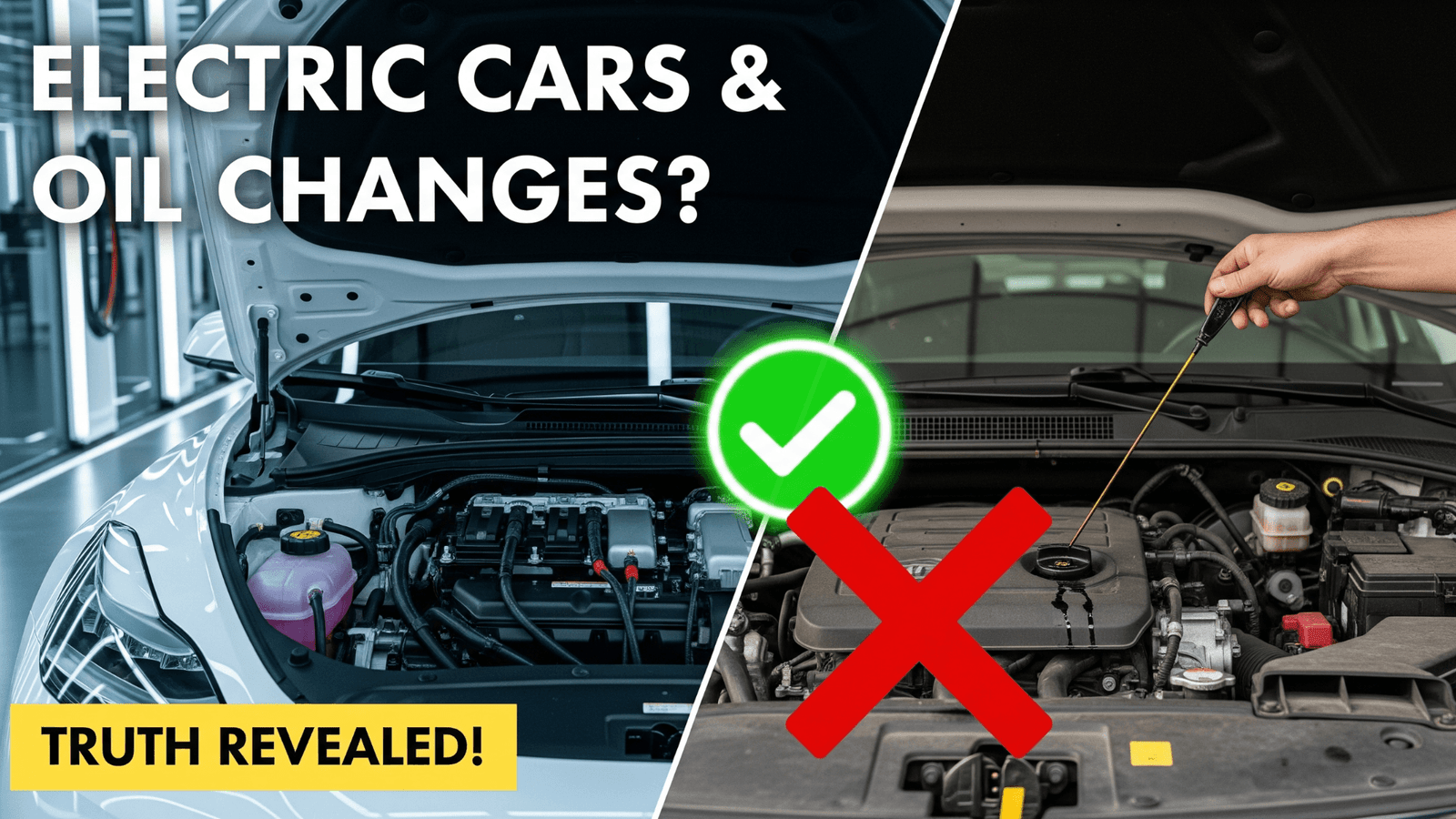
Do electric cars need oil changes?
No. Electric cars do not use engine oil. This is because your electric motor operates on electromagnetic principles and contains only one major moving part—the rotor—making engine oil completely obsolete.
Is maintenance higher on electric cars?
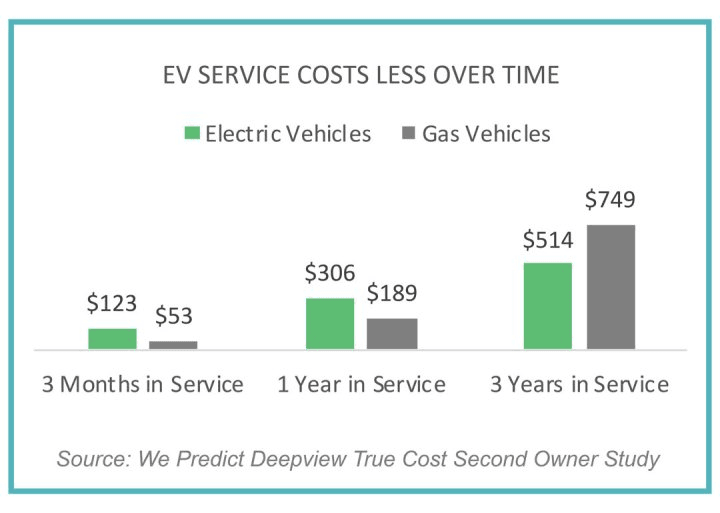
No, maintenance is significantly lower. EVs require approximately 40% less routine maintenance than comparable gasoline vehicles.
Cost Savings: The U.S. Department of Energy confirms EV maintenance costs average 6.1 cents per mile compared to 10.1 cents per mile for conventional vehicles. Consumer Reports analysis shows EV owners spend closer to 50% less on maintenance over the vehicle’s lifetime.
Warranty Security: Your EV battery is protected by an industry-standard 8-year/100,000-mile warranty guaranteeing a minimum of 70% capacity.
THE FIVE FLUIDS: Your Definitive EV Maintenance Checklist
While engine oil is eliminated, your EV retains fluids for cooling, safety, and mechanical lubrication. A proper audit must account for all five categories.
EV Maintenance Checklist (What Electric Cars Need)
Specialized, low-conductivity coolant to regulate the high-voltage battery temperature.
Varies widely; generally 3–5 years or 80,000–124,000 miles.
CRITICAL for Battery Health. Prevents thermal degradation during charging and preserves battery longevity.
2. Gearbox / Transmission Fluid
Specialized gear oil for the reduction gearbox/transaxle.
Varies widely; check manual (e.g., Porsche Taycan’s 2-speed transmission requires more frequent service than single-speed models).
Oversight Alert: Lubricates the gears connecting the motor to the axles. Replacement required based on manufacturer and transmission type.
3. Brake Fluid
Standard hydraulic fluid for the braking system.
Every 2–4 Years (Required due to chemical moisture absorption).
Safety Critical: Brake fluid degradation is unavoidable, even with 70% reduction in pad wear from regenerative braking.
4. HVAC Refrigerant
Refrigerant (e.g., R1234yf) for the Heat Pump/AC System.
As needed (Inspection recommended every 2 years).
Range Efficiency: Crucial for maintaining optimal battery temperature, which directly impacts range performance.
5. Windshield Washer Fluid
Standard washer fluid.
As needed.
Basic Safety.
THE LONG-TERM TCO: The Unbeatable Financial Advantage
What are the maintenance costs of electric cars?
Your EV saves you an estimated $2,000 to 3,000 over five years in scheduled maintenance costs alone.
Software Advantage: Unlike ICE vehicles, EVs receive over-the-air (OTA) updates that can improve performance, extend range, and fix critical bugs post-purchase—a benefit unavailable in traditional cars.
Depreciation Shield: Modern battery degradation averages only 1.8% per year, meaning your vehicle’s range remains highly viable throughout its warranty period.
Final Action: By focusing your maintenance budget on tire replacement and the five critical system fluids, you unlock the true financial superiority of electric ownership.
I’ve been driving, testing, and living with electric vehicles for years — from early compact EVs to today’s high-performance models. My journey into e-mobility started out of curiosity but quickly turned into a mission to help others make smarter EV choices. At VeCharged, I break down real-world ownership insights, cost analysis, and charging know-how so you can buy, sell, or switch to an EV with total confidence.
Vecharged is the consumer protection and education initiative of Cleanpower.eco, an organization dedicated to providing a clear, unbiased, and authoritative voice in the clean energy transition. The experts at Cleanpower.eco recognized a critical crisis of trust: the shift to electric vehicles and solar power is one of the most important and expensive decisions a family will make. Yet, the landscape is flooded with biased reviews, confusing marketing, and paid-for endorsements. Vecharged was created to be the shield against that confusion. We were founded on a simple, non-negotiable constitution: We are radically independent. We accept no advertising, sponsorships, or paid placements from any product manufacturer. We have no commercial interest in the products we review. Our only metric for success is your empowerment. Our loyalty is to you, the consumer. Full stop. We ground our brutally honest, hands-on analysis in a deep, foundational understanding of the engineering. We are not just reviewers; we are your advocates.
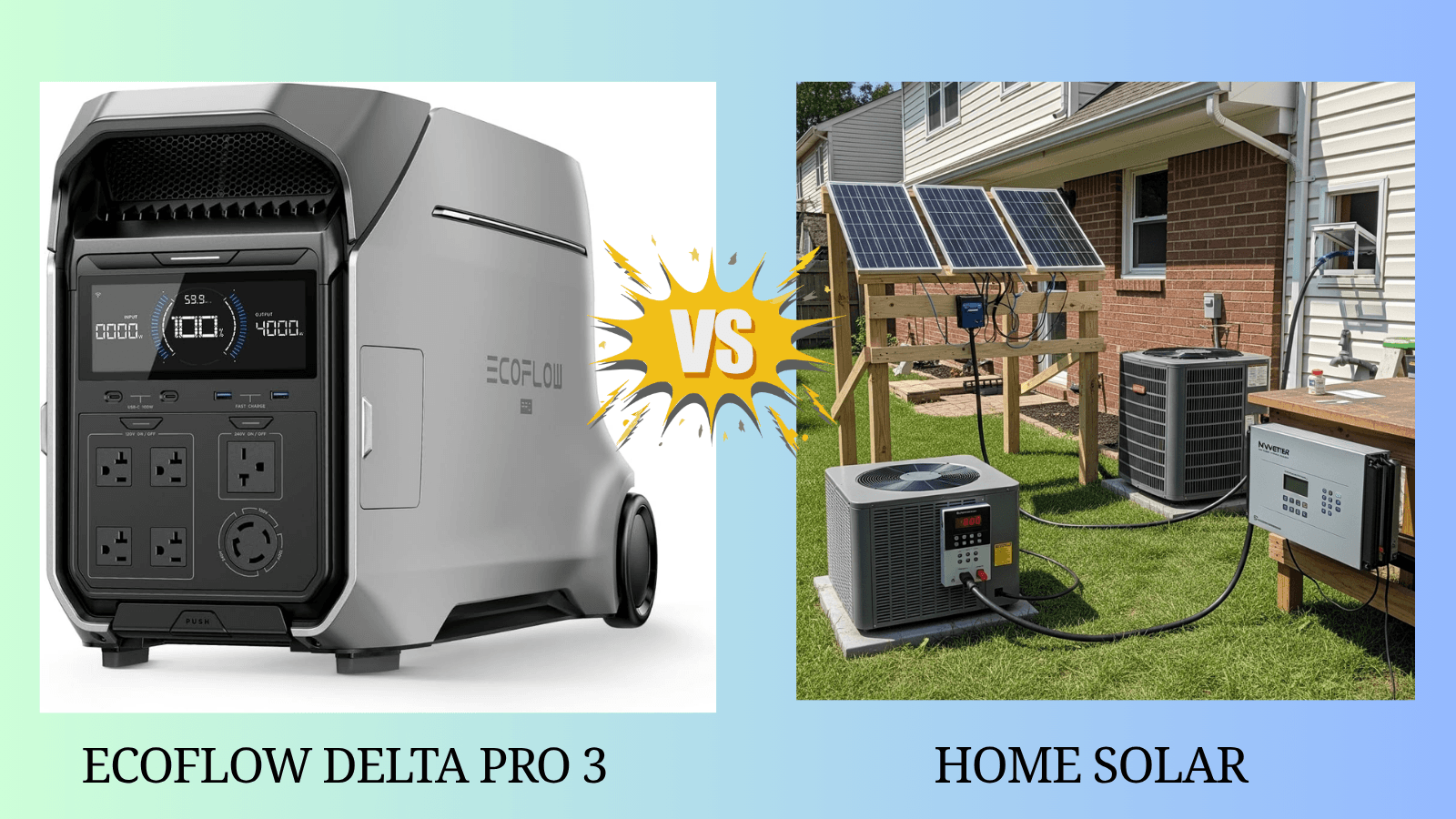
The new Delta Pro 3 is a triumph of portable power engineering. We review its incredible capabilities and then ask the expert question: For stationary home backup, can you achieve true power independence for the same money? In the rapidly escalating arms race of portable power stations, a few products stand out as true behemoths.
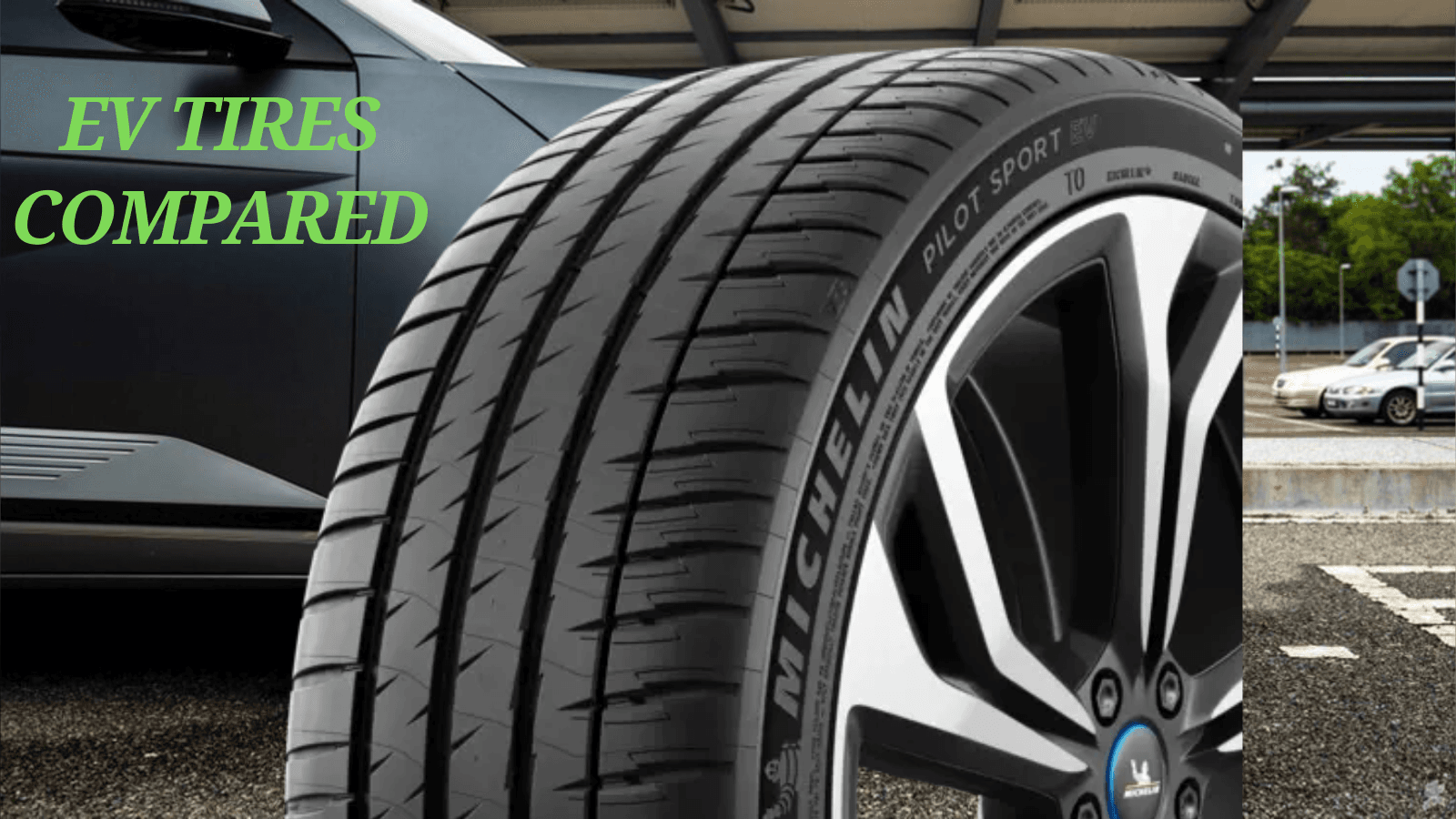
They may look like regular tires, but EV-specific rubber is a high-tech marvel designed to handle instant torque, immense weight, and silence. Here’s everything you need to know. Tires are often the most overlooked component of any vehicle. For most cars, they are simple consumables. But for an electric vehicle, the right tires are a
H.R. 1 has passed, phasing out the popular Residential Clean Energy Credit. Our guide provides the verified timeline, a cost-of-waiting calculator, and a clear action plan. [Fact Checked] If you’ve seen the term “big beautiful bill” trending online in connection with solar energy, you might believe good news is on the way. What you’ve heard
A deep dive into Toyota’s claimed 10-minute charge for a 1,200 km range, why this changes everything for the electric vehicle industry, and what it means for you. For over a decade, the electric vehicle revolution has felt like a steady climb up a steep mountain. Every year, batteries get a little better, range increases