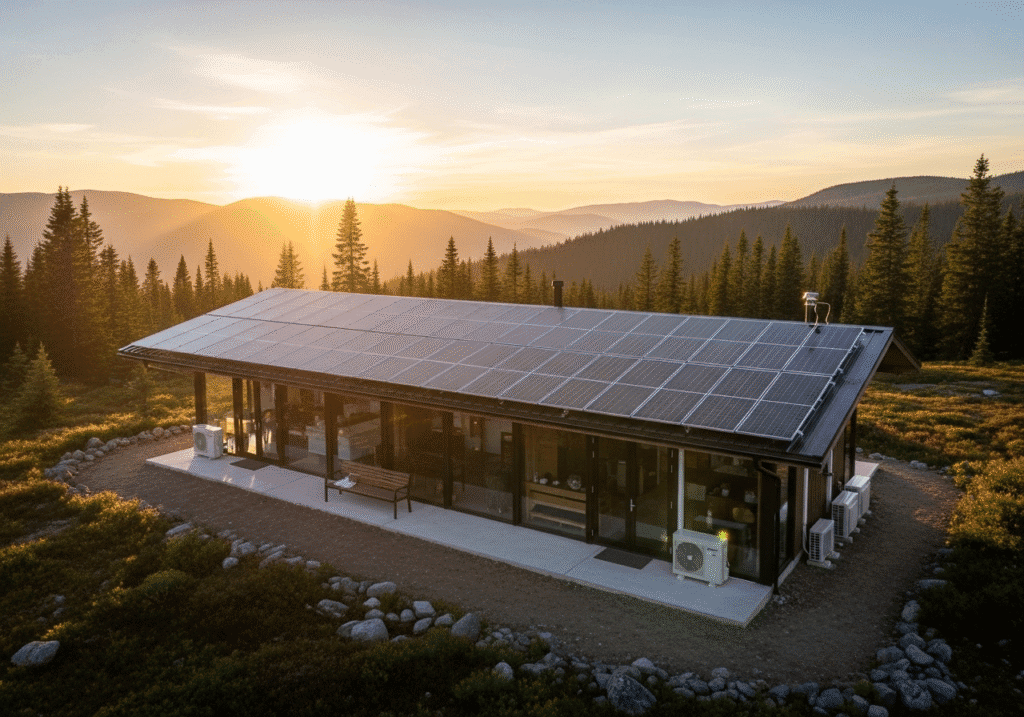
Everyone dreams of free, sun-powered air conditioning. As an engineer, I’m here to tell you it’s not only possible—it’s getting easier. But you have to respect the physics. This is the definitive guide to doing it right.
My name is Suhas, and as someone who designs and builds off-grid power systems, there is one question I get asked more than any other: “Can I run my air conditioner on solar?”
The answer is a resounding yes. But it is followed by a very important “but.”
Running your lights, your TV, or your laptop on solar is simple. Running an air conditioner is a different beast entirely. It’s a power-hungry appliance with a secret weapon that can bring lesser solar systems to their knees.
This is my definitive, no-nonsense guide to taming that beast. We will go beyond the basics and explore the different paths to achieving sun-powered cooling, from simple grid-tied savings to complete off-grid independence. My goal is to give you the knowledge to not just ask an installer for a system, but to understand and design the right system for your specific needs.
The Elephant in the Room: The Brutal Starting Surge
Before we talk about solutions, we must respect the problem. The biggest challenge with an AC isn’t its running wattage; it’s the inrush current, also known as Locked Rotor Amps (LRA).
When your AC’s compressor first kicks on, it demands a massive, instantaneous surge of power—often 3 to 5 times its normal running wattage—for a fraction of a second.
A 1-ton AC might run at 1200 watts, but it can start at over 5000 watts.
This is the surge that dims the lights in a house. For a solar inverter, this surge is a knockout punch if it’s not prepared. Your entire system must be designed around surviving this single moment.
The Three Paths to Solar-Powered Cooling
There is no “one-size-fits-all” solution. The right path for you depends entirely on your goals and your budget. I see it as three distinct philosophies.
Path 1: The Day-Tripper (Grid-Tied, No Battery)
This is the simplest and most affordable way to use solar to offset your AC costs.
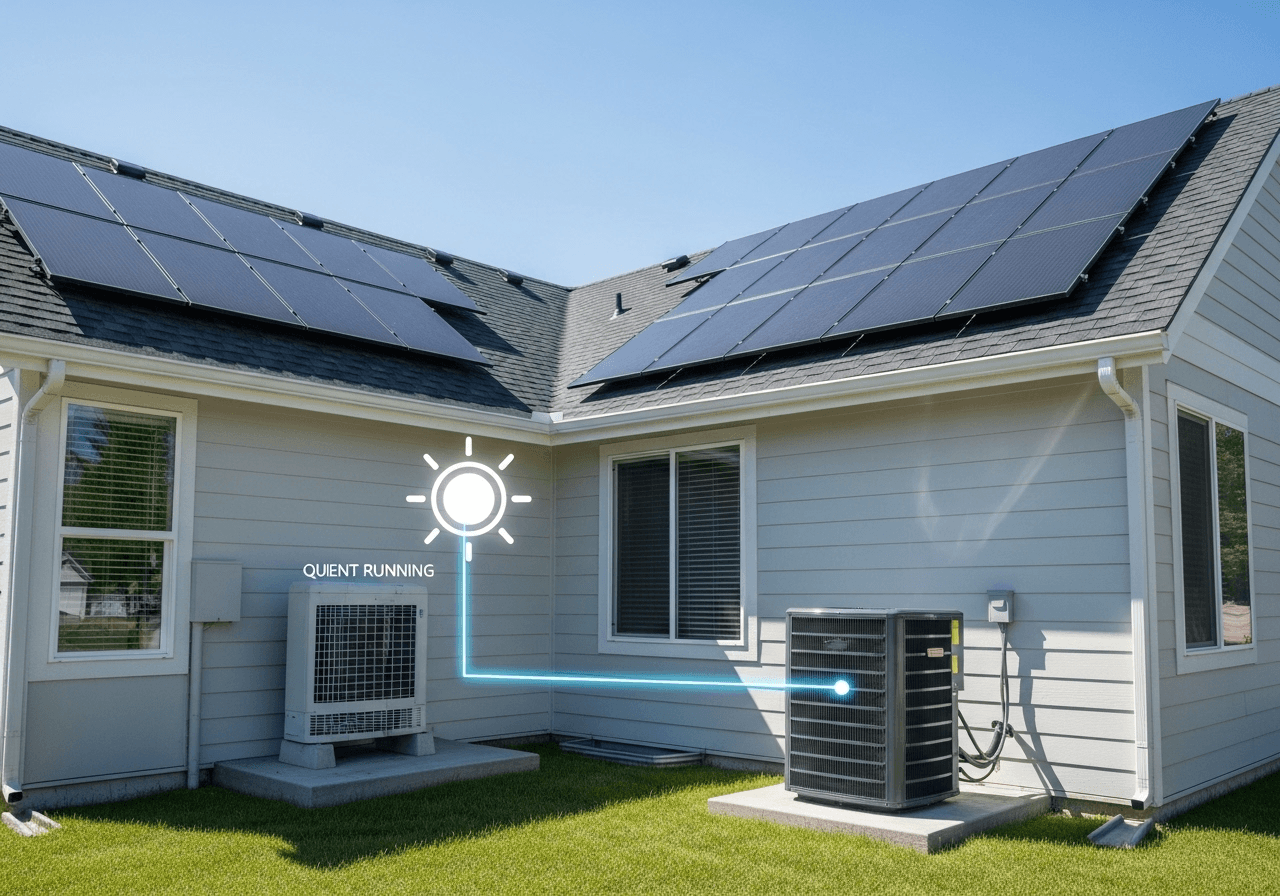
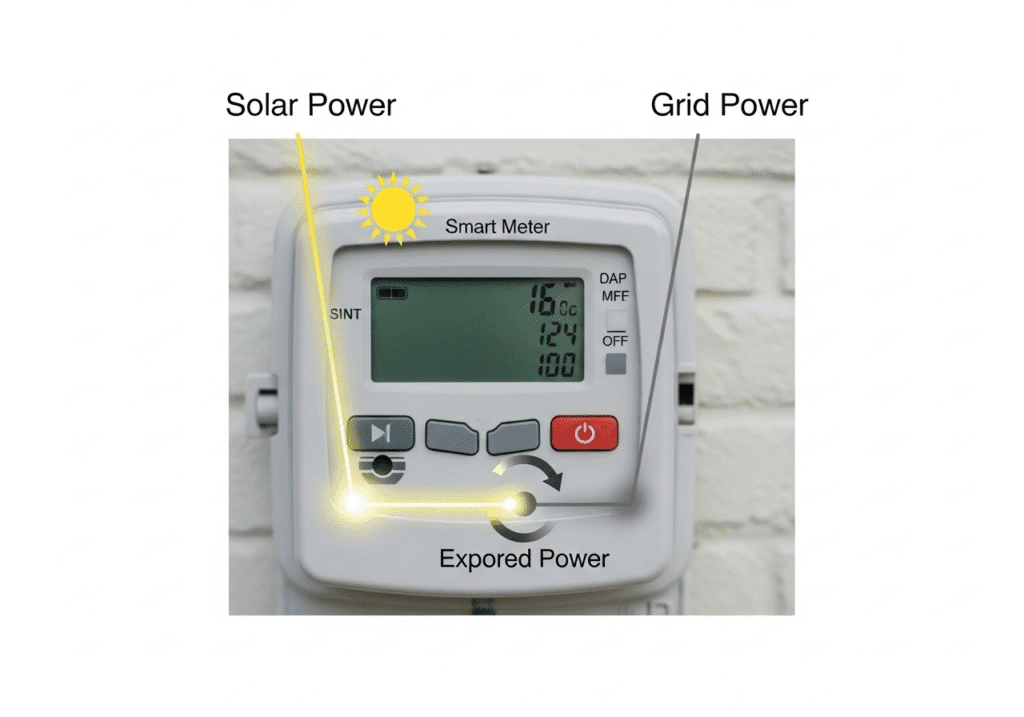
How it Works: During the day, your solar panels generate power. This power is immediately converted to AC by a string inverter and sent to your home’s electrical panel. Your air conditioner draws from this solar power first, only pulling from the grid if it needs more. Any excess solar power you generate is exported to the grid, often for credit.
The Bottom Line: You are directly using sun power to run your AC, which can dramatically lower your electricity bill, especially in the summer.
The Crucial Limitation: This setup provides zero power during a blackout. If the grid goes down, your inverter is legally required to shut down for safety, and your solar panels become useless until the grid is restored.
Path 2: The Pragmatist (Grid-Tied with Battery – The Hybrid System)
This is the new gold standard for residential solar and the setup I recommend for most homeowners. It offers the best of both worlds: savings and security.
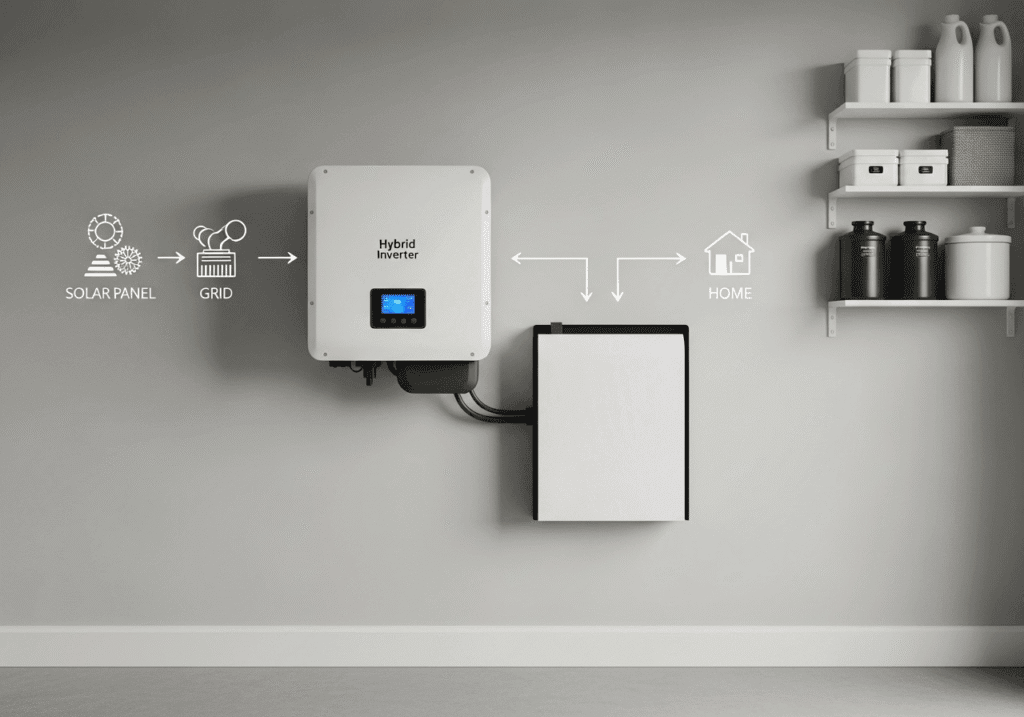
How it Works: This system uses a smart hybrid inverter. The inverter intelligently manages power from your solar panels, a home battery, and the grid. You can program it to follow a priority list—for example:
Power the home directly from solar.
Use excess solar to charge the battery.
Once the battery is full, export excess to the grid.
At night, run the home from the battery.
Only pull from the grid when the battery is depleted.
The Bottom Line: You get significant bill savings and the peace of mind that if the grid fails, your system will instantly switch over to your battery, keeping your AC and other essential circuits running seamlessly.
Path 3: The Purist (Fully Off-Grid)
This is the ultimate expression of energy independence, but it demands the most robust and expensive system.
How it Works: You are completely disconnected from the utility grid. Your system must be capable of generating 100% of your power needs and storing enough energy to get you through several cloudy days in a row.
The Bottom Line: To run an air conditioner off-grid requires a massive investment in both solar panels and, most importantly, batteries. The system must be oversized to handle not just the daily load but also consecutive days of bad weather. This is a serious engineering commitment.
My Expert “Secret Weapon”: The DC Air Conditioner
Now, I want to let you in on a solution that is well-known in the off-grid community but less so to the general public: the DC Air Conditioner.
Remember how an inverter’s job is to convert DC power to AC? Every time you make that conversion, you lose some energy as heat (typically 5-15%). A standard AC unit forces you to do this.
A DC air conditioner, however, is designed to run directly on the raw DC power produced by your solar panels and stored in your batteries.
The Result: By skipping the conversion process entirely, a DC air conditioner can be 20-40% more efficient than a standard AC unit of the same size. For an off-grid system, this is a game-changing efficiency gain that can reduce the required size of your battery bank, saving you thousands of dollars.
My Advice: If you are planning a hybrid or fully off-grid system where running an AC is a priority, you should absolutely factor a DC mini-split into your budget.
Blueprint: How to Size Your System to Run an AC
Let’s get practical. Here’s a simplified guide to calculating the component sizes.
I have designed and built “The AC Solar Blueprint Architect.” This isn’t just a calculator; it’s a dynamic simulator that instantly shows users the real-world consequences of their choices. It makes the abstract concepts of surge wattage, battery autonomy, and solar array size tangible and easy to understand.
AC Solar Blueprint Architect
Design the perfect system for your cooling needs. Adjust the inputs and see your custom blueprint generated instantly.
6 hrs
2 days
Your Recommended System Blueprint
Inverter (Continuous)
— W
Inverter (Surge)
— W
Battery Bank
— kWh
Solar Array
— kW
(~– panels)
Adjust the settings to get my expert analysis on your system design.
My Final Word: A System, Not a Product
Running an air conditioner on solar is not about buying one magic product. It’s about designing a balanced system where each component—the panels, the inverter, the batteries—is correctly sized for the job.
Whether you choose the simplicity of a grid-tied system to lower your bills or invest in the resilience of a battery-backed hybrid system, you now have the expert knowledge to ask the right questions and demand a solution that truly meets your needs. The dream of cool, sun-powered air is within your reach.
Suhas Shrikant is the founder of Vecharged and an engineering enthusiast specializing in high-power off-grid solar systems. He has designed and built over a dozen custom systems and uses his hands-on, field-tested experience to create Vecharged’s expert guides and reviews.
Vecharged is the consumer protection and education initiative of Cleanpower.eco, an organization dedicated to providing a clear, unbiased, and authoritative voice in the clean energy transition. The experts at Cleanpower.eco recognized a critical crisis of trust: the shift to electric vehicles and solar power is one of the most important and expensive decisions a family will make. Yet, the landscape is flooded with biased reviews, confusing marketing, and paid-for endorsements. Vecharged was created to be the shield against that confusion. We were founded on a simple, non-negotiable constitution: We are radically independent. We accept no advertising, sponsorships, or paid placements from any product manufacturer. We have no commercial interest in the products we review. Our only metric for success is your empowerment. Our loyalty is to you, the consumer. Full stop. We ground our brutally honest, hands-on analysis in a deep, foundational understanding of the engineering. We are not just reviewers; we are your advocates.
Let’s be brutally honest. The electric bike revolution in America isn’t being led by classic brands like Schwinn or Trek. While they hold significant market share, the real story, the one driving explosive growth and getting millions of new riders on the road, is the rise of a new guard: fast-moving, hyper-aggressive, and incredibly affordable
By Rahul — EV Engineer, long-time electric car owner, and clean-energy nerd at Vecharged I’ve Driven Electric Cars for a Decade & Here’s What I’ve Learned When I bought my first electric car back in 2015, people warned me — “Batteries don’t last in American summers.”They weren’t entirely wrong. Early EVs like the Nissan Leaf
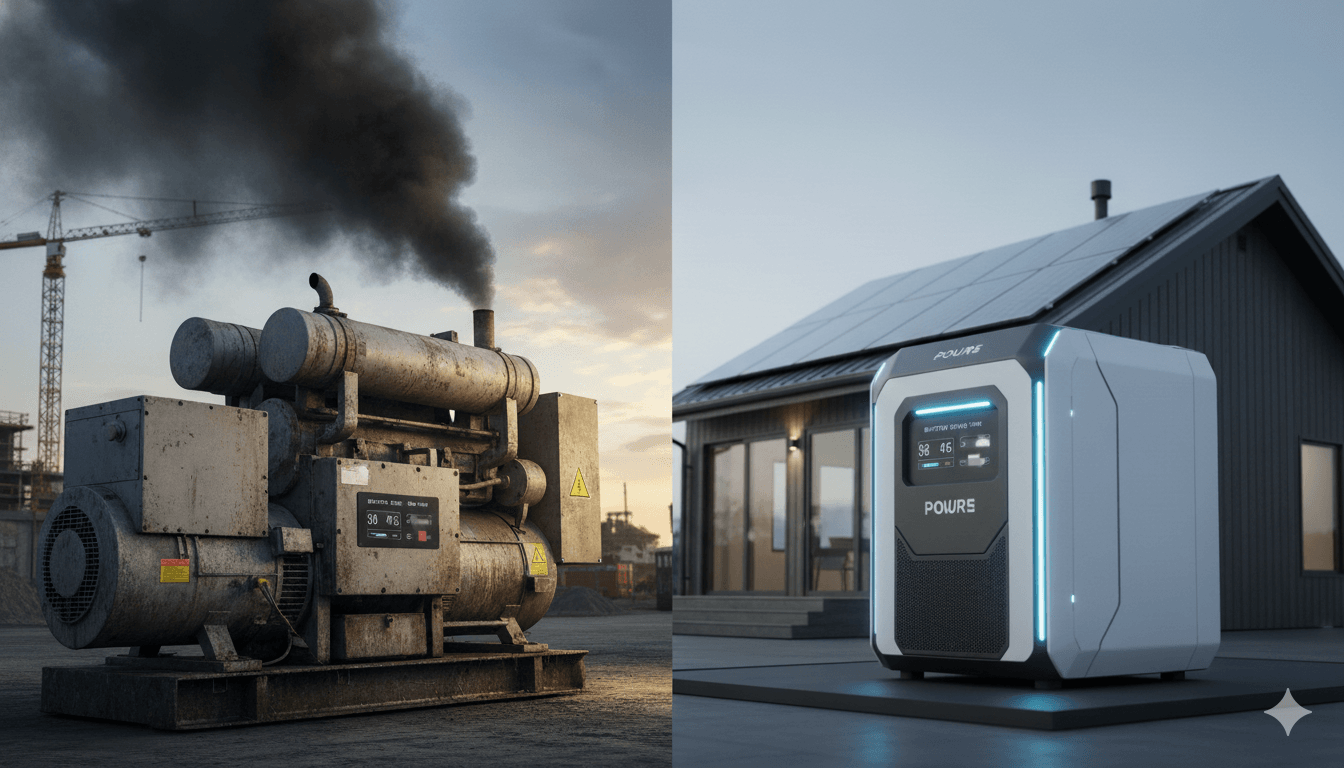
Let’s be brutally honest. The power goes out. You hear your neighbor’s “cheap” diesel generator roar to life as a loud, smelly, but effective solution. You, on the other hand, are considering a modern, silent battery power station, but the high upfront price makes you hesitate. Are you being smart by saving money with the
If you’re shopping for a used electric vehicle, you are holding a golden ticket to freedom from the gas pump. But I have a critical warning for you, and it could save you the cost of a down payment. The single most valuable component—the battery—is also the easiest to hide. You can’t see its true
[…] This article covers step-by-step calculations, but for a deeper dive into system types and solar engineering, check out Vecharged’s comprehensive guide. […]






[…] This article covers step-by-step calculations, but for a deeper dive into system types and solar engineering, check out Vecharged’s comprehensive guide. […]
[…] […]
[…] مرتبط با ویدیوچگونه کولر را با انرژی خورشیدی راه اندازی کنیم: راهنمای…آیا می توانم کولر را با انرژی خورشیدی راه اندازی کنم؟ […]